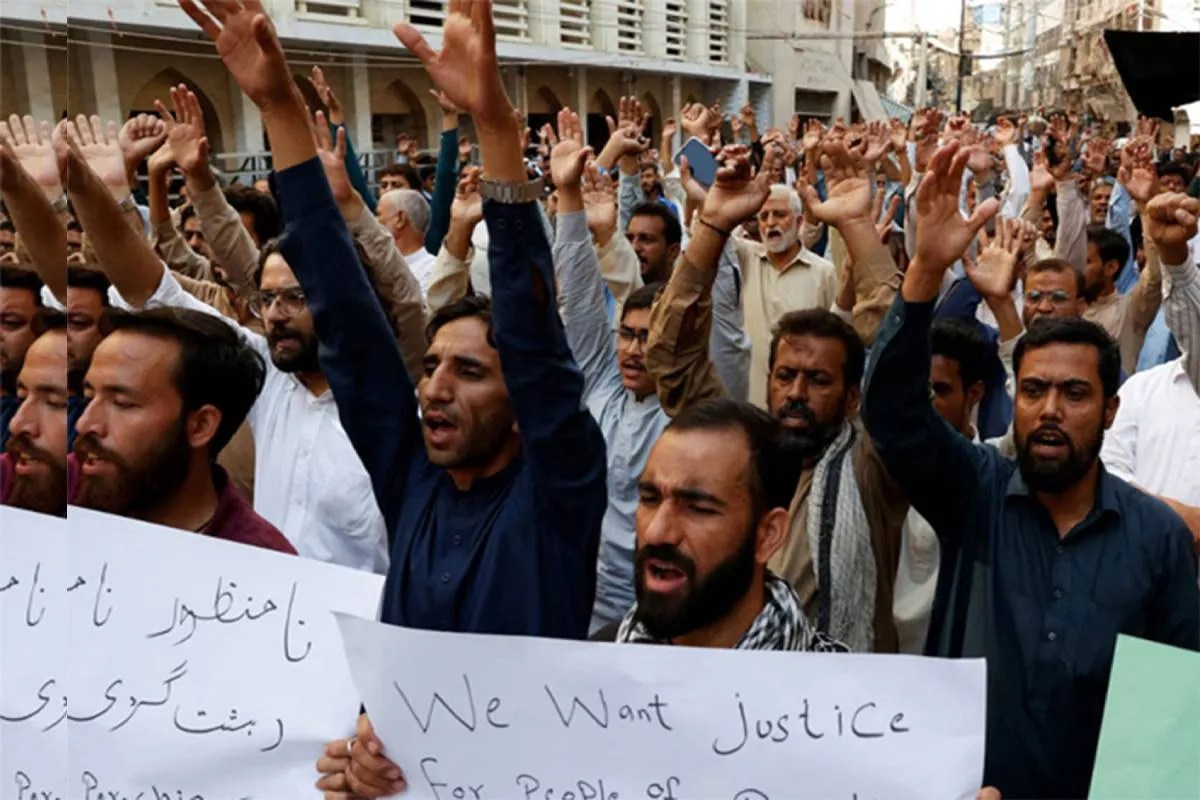
Thousands of public sector workers just marched on Parliament House in Islamabad, and the response from the state was brutal. Tear gas, baton charges, and mass arrests flooded the streets right before the presentation of the federal budget. If you think this is just another routine labor dispute over a paycheck, you're missing the bigger picture. This clash exposes a massive, systemic crisis in how Pakistan sets its financial priorities while its citizens drown in inflation.
The Grand Alliance of government employees organized this massive demonstration because ordinary workers literally can't afford to eat. Yet, instead of finding economic solutions, the administration chose force. The optics are terrible, but the underlying numbers are even worse.
The Breaking Point for Public Workers
Let's look at what actually triggered this chaos. Workers from every corner of the country—including Balochistan, Khyber Pakhtunkhwa, and Gilgit-Baltistan—converged on the capital. They aren't asking for luxury. They're demanding salary hikes that match the skyrocketing cost of living and protesting harsh pension reforms that threaten to wipe out their retirement security.
When inflation runs rampant, a fixed government salary becomes a economic death sentence. Workers are angry because recent policy shifts have stripped away vital safety nets. For instance, the government ended the long-standing practice of giving job opportunities to surviving family members if an employee dies in service. They also suspended group insurance payments upon retirement. Imagine paying into an insurance pool from your paycheck for decades, only to have the state cancel your payout when you retire. It's a blatant betrayal, and that's exactly why people are risking jail time to fight back.
A Misallocation of National Resources
The real tragedy here is where the money actually goes. While ordinary clerks, teachers, and healthcare staff are told there's no money in the budget for salary adjustments, other sectors face no such scarcity.
Pakistan's debt servicing eats up the largest chunk of the federal budget. Right behind it is the defense sector, which consistently gobbles up over 20% of national government expenditures. When interest payments and military allocations take the lion's share, civilian infrastructure and public sector salaries get left with pennies.
The state claims it needs to cut costs to satisfy international lenders and stabilize the economy. Fine. But why do those budget cuts always fall squarely on the shoulders of lower-wage employees? Forcing school teachers in Sindh to boycott classes or driving secretariat staff to block roads in Islamabad shows that the government's priorities are completely upside down. You can't build a stable nation by starving the very people who keep the administrative machinery running.
Brutality Over Dialogue
Instead of sitting down with union leaders to negotiate an honest compromise, the capital administration deployed riot police. They set up heavy barricades around the Secretariat Block and Parliament House. When the crowd pushed forward, the police unleashed tear gas and heavy lathi charges.
This heavy-handed approach never works. It didn't work during similar protests in past budget cycles, and it won't work now. Chasing underpaid civil servants down the street with batons doesn't fix inflation. It just hardens their resolve. The Grand Alliance has already vowed to continue their agitation across the country until their demands are met. The state is trying to use fear to suppress an economic reality, but hunger is always stronger than fear.
What Needs to Happen Now
The government needs to stop treating its own workforce like an enemy combatant. If the state wants to prevent total administrative paralysis, it must take immediate, concrete steps:
- Reopen direct negotiations with the Pakistan Workers Federation and the Grand Alliance leadership without preconditions.
- Restore the group insurance payouts for retiring workers who already paid their annual premiums.
- Implement a tiered salary increase that specifically protects lower-scale employees from current inflation rates, even if it requires cutting luxury perks for high-ranking bureaucrats.
Ignoring the problem or using police violence will only ensure that the chaos spreads from Islamabad to every provincial capital. The federal budget shouldn't just be an exercise in balancing numbers for foreign lenders; it needs to be a blueprint for keeping the population alive.