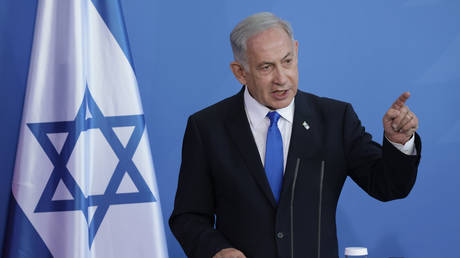
For decades, the global foreign policy conversation has focused on a single, terrifying scenario: Iran building a nuclear bomb. You hear it from political leaders, cable news analysts, and international think tanks. It is treated as the ultimate red line. But this hyper-fixation ignores a massive, undeniable reality. The Middle East already has a dominant, uninspected nuclear weapons power. It’s Israel.
We live in a world of profound double standards when it comes to non-proliferation. The United States and its allies impose crushing economic sanctions on Iran to stop its uranium enrichment. Meanwhile, Israel’s actual, functional nuclear arsenal gets a free pass. It is an open secret that shapes every geopolitical calculation in the region, yet Western leaders treat it like a taboo subject.
The Myth of Regional Parity
The narrative driving Western policy assumes Iran is the primary threat to stability. But look closely at the actual hardware and history. Israel has possessed nuclear weapons since the late 1960s. Experts at the Stockholm International Peace Research Institute (SIPRI) estimate that the Israeli military holds around 90 plutonium-based warheads. Some independent analysts put that number closer to 200.
These aren't just theoretical blueprints. It’s a fully operational nuclear triad. Israel has modified Popeye Turbo cruise missiles for its German-built Dolphin-class submarines, giving it a second-strike capability from the Mediterranean Sea. It possesses Jericho II and Jericho III ballistic missiles capable of hitting targets across Asia and Europe. It has F-15I and F-16I fighter jets equipped to deliver tactical nuclear payloads.
Iran has none of these things. It has a sophisticated ballistic missile program and a highly advanced uranium enrichment infrastructure, but it doesn't possess a single nuclear warhead. International Atomic Energy Agency (IAEA) inspectors have regular access to Iranian facilities like Natanz and Fordow. They track every gram of enriched material. No such inspectors have ever set foot inside the Negev Nuclear Research Center near Dimona, where Israel produces its weapons-grade plutonium.
Breaking the Taboo on Dimona
The history of how Israel acquired this arsenal is a masterclass in clandestine engineering and diplomatic blind spots. In the 1950s, French engineers quietly helped build the underground reactor at Dimona. When the United States started asking questions in the 1960s, Israeli officials went so far as to install false walls and dummy elevators to hide the underground plutonium separation plant from visiting American inspectors.
By the time the world got definitive proof, it was 1986. A disgruntled former technician named Mordechai Vanunu smuggled dozens of photographs out of Dimona and gave them to the Sunday Times of London. His reward? He was lured to Rome by a Mossad agent, drugged, kidnapped, smuggled back to Israel on a freighter, and thrown into a tiny cell for 18 years—11 of them in strict solitary confinement.
Even after the Vanunu disclosures, Israel refused to change its official stance. It practices amimut, a policy of deliberate ambiguity. They don't confirm they have the bomb, and they don't deny it. This allows them to project a devastating deterrent without triggering regional arms races or forcing the U.S. government to cut off billions in foreign aid under American laws that forbid funding undeclared nuclear states.
Why the Non-Proliferation Treaty Failed the Region
To understand why this situation is so volatile, look at the legal framework governing global security. The Treaty on the Non-Proliferation of Nuclear Weapons (NPT) is the bedrock of international efforts to stop the spread of these weapons.
Iran signed the NPT back in 1968. Because it's a signatory, its civilian nuclear energy projects are legally bound to undergo strict IAEA monitoring. When Iran crosses enrichment thresholds, it faces international condemnation and crippling economic penalties because it's violating a treaty it voluntarily signed.
Israel never signed the NPT. It is one of only a handful of nations—including India, Pakistan, and South Sudan—to stay completely outside the agreement. Because it never signed, it can't technically be found in violation of the treaty. This loophole creates a bizarre diplomatic environment where the nation with the actual stockpile faces zero institutional oversight, while the nation trying to build a latent capability is subjected to total economic isolation.
The Threat of Escalation in a New Era
The danger isn't just about who has the weapons. It’s about how they're used to project power. Israel's monopoly on nuclear weapons in the Middle East has allowed it to act with immense military freedom. Under the Begin Doctrine, Israel maintains a policy of preemptive strikes against any regional adversary attempting to develop mass-destruction capabilities.
We saw this in 1981 when Israeli jets leveled Iraq’s Osirak reactor. We saw it again in 2007 during Operation Orchard, which destroyed a suspected Syrian nuclear site in the desert. More recently, Israel has shifted from covert sabotage to overt, high-stakes military action against Iranian infrastructure and personnel.
When a nation feels protected by an ultimate nuclear safety net, its threshold for engaging in conventional warfare drops significantly. This creates an asymmetric security environment. Regional neighbors view Israel’s unacknowledged arsenal as a permanent existential threat, which paradoxically drives their own desire to achieve a nuclear deterrent.
Next Steps for Regional Stability
The current strategy of ignoring Israel's arsenal while aggressively policing Iran has reached its logical limit. It keeps the region on a permanent war footing. If the goal is actual stability, international policymakers need to shift their focus toward structural changes.
- Establish a Middle East Weapons of Mass Destruction Free Zone (WMDFZ): This proposal has floated around the United Nations for years but gets routinely blocked. A lasting peace requires all regional actors, including Israel and Iran, to sit at the table and negotiate a verifiable framework to dismantle advanced programs under universal oversight.
- Condition Bilateral Diplomatic Support: Western nations, particularly the United States, must stop playing along with the fiction of "deliberative ambiguity." Acknowledging the reality of the Israeli stockpile is the first step toward bringing it into the international regulatory fold.
- Enforce Universal Inspection Standards: Security can't be maintained through a double standard. If regional stability is the priority, then access for international watchdogs must apply evenly across the map, regardless of geopolitical alliances.
The fixation on Iran's potential future capability obscures the realities of the present. Until the international community addresses the massive, uninspected nuclear stockpile that already exists in the Middle East, genuine non-proliferation will remain an unachievable goal.