The maritime corridor through the Middle East has officially transformed from a high-risk commercial route into a deadly combat zone for neutral civilian workers.
With three Indian seafarers killed in a series of targeted military strikes off the coast of Oman, India has broken its quiet diplomatic stance. External Affairs Minister Dr. S. Jaishankar has formally confronted US Secretary of State Marco Rubio, lodging a fierce protest. The tragedy has ignited massive outrage across the Indian geopolitical landscape, exposing a dangerous deterioration of safety standards in international waters.
This isn't an isolated accident. It’s an unprecedented crisis.
For months, global trade discussions centered around regional skirmishes, but the killing of innocent mariners on merchant ships brings the human cost into sharp focus. Former diplomat Ambassador Veena Sikri noted that the international community faces deep structural failures that threaten the foundational rules of global trade.
The Incidents in the Gulf of Oman
The timeline of attacks reveals a relentless and terrifying pattern of escalation. Within less than a single week, three separate commercial vessels staffed by Indian crews were hit in the Gulf of Oman.
- June 8: The Palau-flagged oil tanker Marivex, carrying 24 Indian seafarers, was targeted and completely disabled. While the crew was rescued safely, the message was clear.
- June 10: Disaster struck when another Palau-flagged tanker, the Settebello, was targeted. This attack claimed the lives of three of the 24 Indian sailors on board, turning a tense political standoff into a lethal humanitarian tragedy.
- June 11: The Guinea-Bissau-flagged tanker Jalveer, staffed by 20 Indian nationals, came under fire.
The sheer frequency of these strikes shows that civilian vessels are no longer collateral damage. They're being directly caught in the crossfire of major state actors.
Blame Games and Visual Evidence
The political fallout from the incident has devolved into an international finger-pointing match, exposing deep friction between the US, Iran, and India. US President Donald Trump publicly claimed that Iran carried out a drone attack against Indian ships leaving the Strait of Hormuz, calling the action totally unacceptable.
Tehran fiercely pushed back against the narrative. The Iranian Embassy in India released a scathing public statement, calling Trump's accusations completely baseless and labeling it a pathetic attempt to divert public attention from the brutal fact that American military forces had struck three Indian vessels in less than a week.
The physical evidence on the water points away from Washington's official narrative. Ambassador Veena Sikri clarified that the drone theory doesn't hold water under scrutiny. Survivors rescued from the vessels explicitly stated they weren't hit by drones. They were hit by heavy missiles.
Visual evidence and onboard footage confirm the destruction came from sophisticated missile platforms, not regional drone swarms. The global maritime community is increasingly acknowledging that these were highly destructive strikes by US naval assets operating in the Gulf, not Iranian proxy operations.
The Diplomatic Confrontation
India’s reaction has been swift, blunt, and devoid of standard diplomatic pleasantries. New Delhi initially summoned US Charge d’Affaires Jason Meeks to deliver a stark message: lethal military strikes against commercial vessels carrying Indian citizens are entirely unacceptable.
Following that, EAM Dr. S. Jaishankar directly phoned US Secretary of State Marco Rubio. Jaishankar didn't mince words, reiterating India's strongest protest over the lethal strikes executed by the US Navy in the Gulf.
"Such lethal actions against commercial shipping are not justified under any circumstances," Jaishankar stated bluntly.
This high-level friction arrives at a highly volatile moment. A massive regional peace deal between the US and Iran is reportedly on the verge of being finalized in Geneva. The proposed pact has reached its final hours, with rumors that Vice President JD Vance might fly out to witness the electronic signing.
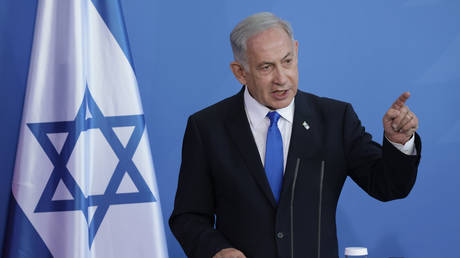
The tragic deaths of Indian mariners have inserted a severe crisis into these talks. Sticking points remain, particularly regarding the inclusion of Lebanon in the peace deal and the reluctance of Israeli Prime Minister Benjamin Netanyahu to endorse the current terms.
By aggressively confronting Marco Rubio right now, India is sending a clear signal. It won't allow its citizens to become acceptable collateral damage for Western military operations, even during sensitive, late-stage peace negotiations.
Global Maritime Outrage and What Happens Next
The anger isn't limited to New Delhi. The International Maritime Organization (IMO) in London has stepped in, issuing an urgent declaration reminding global militaries that seafarers, commercial vessels, and sea lines of communication must be protected under all circumstances.
India provides a massive chunk of the global merchant navy workforce. If Indian seafarers refuse to sail through the Gulf of Oman or the Strait of Hormuz due to unprovoked military strikes, global energy supply chains will instantly freeze.
The immediate next steps require more than just stern diplomatic phone calls. India must demand a transparent, independent international maritime investigation to officially document the missile fragments and establish absolute legal accountability.
New Delhi needs to coordinate directly with the IMO to establish mandatory, ironclad safety corridors protected by international coalitions. If global superpowers want to secure global trade, they must start by keeping their own missile systems away from civilian crews.