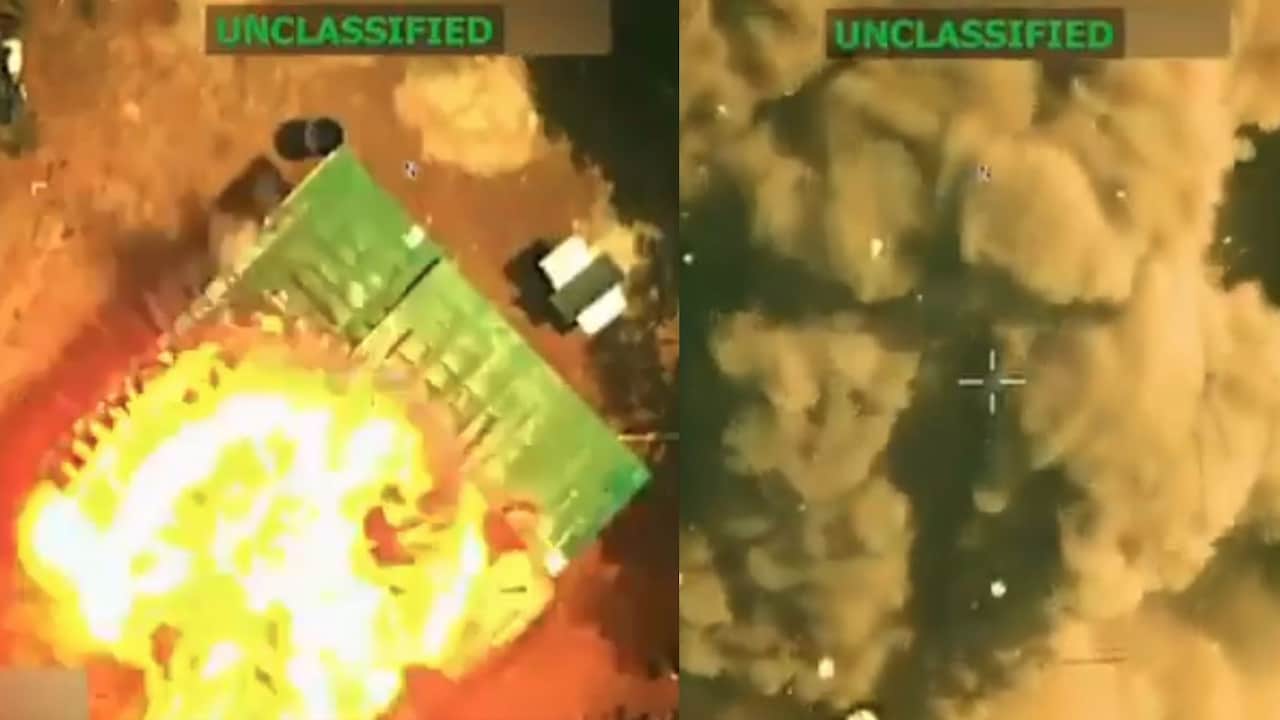
The footage is brief, grainy, and definitive. A single projectile cuts through the sky, striking a green-roofed structure in the southeastern state of Bolívar, Venezuela. Within a fraction of a second, the building vanishes into a plume of orange fire and grey smoke.
President Donald Trump wasted no time claiming credit on Truth Social, broadcasting the unclassified video to the public. He announced that a "swift and lethal kinetic strike" executed by U.S. Southern Command had eliminated Héctor Rusthenford Guerrero Flores, widely known as "Niño Guerrero"—the top boss of the Tren de Aragua criminal syndicate.
This isn't just another successful counter-terrorism press release. It marks a dramatic shift in how the United States projects military power within the Western Hemisphere. For years, the idea of American drones or manned aircraft dropping precision munitions on targets inside Venezuela was unthinkable. Today, it's reality. Understanding how we reached this point requires looking past the political rhetoric to see how a Venezuelan prison gang became America's primary security target.
The Birth of a Transnational Threat
To understand why the U.S. military targeted a building in Bolívar, you have to look at where Tren de Aragua began. This wasn't born in a boardroom or a classic cartel mansion. It started over a decade ago inside the walls of the Tocorón prison in Aragua, Venezuela.
Under the leadership of Niño Guerrero, Tocorón didn't function like a correctional facility. It operated as a corporate headquarters. Gang leaders built an empire behind bars, constructing a literal city for themselves that included:
- A fully stocked private zoo
- A digital casino and betting rings
- A regulation-sized baseball field
- Upscale restaurants and nightclubs
- A lavish private suite for Guerrero himself
From this fortified sanctuary, the gang engineered a highly sophisticated extortion network. As economic collapse forced millions of Venezuelans to flee the country, Tren de Aragua capitalized on the crisis. They didn't just traffic drugs; they trafficked people. They seized control of migrant routes heading south into Chile, Peru, and Colombia, and eventually, north toward the United States border.
Unlike traditional Colombian or Mexican cartels, Tren de Aragua's business model relied on predatory street-level dominance. They specialized in human smuggling, forced prostitution, contract killings, and hyper-violent local extortion. When their members integrated into American cities, they brought these brutal tactics with them.
How Washington Rewrote the Rules of Engagement
The path to the strike in Bolívar was paved by a series of aggressive legal and military policy shifts in Washington. The administration faced immense pressure to address high-profile crimes linked to undocumented gang members, such as the tragic killings of Laken Riley in Georgia and Jocelyn Nungaray in Texas.
The strategy changed from a domestic law enforcement issue to an international armed conflict.
First came the formal designation of Tren de Aragua as a Foreign Terrorist Organization. This designation unlocked financial tools but, more importantly, altered the rules of engagement. By invoking the Alien Enemies Act of 1798, the administration treated the syndicate not as independent criminals, but as a foreign army invading American soil.
The geopolitical landscape of Venezuela shifted entirely. Earlier this year, a U.S. military operation removed Venezuelan President Nicolás Maduro from power, flying him to the United States to face federal drug trafficking indictments. His former deputy, Delcy Rodríguez, assumed the interim presidency.
The resulting power dynamic explains why this airstrike was possible. Rather than condemning American intervention, the current Venezuelan communications ministry openly confirmed their participation in the operation, labeling it a "combined operation" involving specialized technological support and intelligence-sharing between both nations.
The Reality Behind the Airstrike Strategy
While the Truth Social footage offers a clean narrative of military precision, the boots-on-the-ground reality in Bolívar was chaotic. Local Venezuelan authorities reported that the kinetic strike was accompanied by intense, close-quarters firefights between security forces and heavily armed gang elements protecting the compound.
The location itself is telling. Bolívar is a mineral-rich region known for vast, illegal gold mining operations. When Venezuelan police raided the Tocorón prison in late 2023, Guerrero escaped through a secret tunnel network before a formal dragnet could secure him. He didn't flee to Europe or a luxury hideout; he retreated to the lawless mining sectors of southeastern Venezuela to rebuild his financial base through illegal gold extraction and extortion.
Defense Secretary Pete Hegseth confirmed that the strike took place earlier in the week, with intelligence analysts taking days to verify that Guerrero was indeed inside the structure during the explosion.
Geopolitical Friction Points
Despite the celebratory tone out of Washington, the operation exposes deep fault lines within the intelligence community. The administration has repeatedly argued that Tren de Aragua operated as a direct proxy of the Maduro regime to destabilize American cities. However, a declassified assessment from the National Intelligence Council concluded that while Maduro's government frequently tolerated or exploited the gang's financial networks, it did not direct their day-to-day criminal operations.
There's also the question of methods. The U.S. military has dramatically scaled up its use of force in the Caribbean and Pacific, executing maritime strikes on small smuggling vessels that have resulted in over 200 casualties since September. This aggressive posture has drawn sharp criticism from international legal experts who question the legality of using wartime military force against criminal syndicates outside of a declared war zone.
What Happens Next for Tren de Aragua
If history proves anything, it's that decapitation strikes rarely destroy deeply entrenched criminal networks. They fragment them.
Niño Guerrero was an exceptionally capable organizer who managed to unify disparate prison factions into a structured corporate hierarchy. With him removed from the equation, expect an immediate internal power struggle. The gang's decentralized cells operating in cities like New York, Chicago, and Miami run largely on local autonomy. The loss of their central figurehead won't magically dissolve these local networks; instead, it may make them more volatile and unpredictable as local lieutenants vie for dominance.
For communities and local law enforcement dealing with the fallout of transnational gang activity, tracking these localized shifts is crucial. Watch the leadership dynamics within regional chapters, monitor changes in human smuggling pricing along the southern border, and track how Venezuelan security forces manage the remaining gang strongholds in the gold fields of Bolívar. The strike changed the leadership, but the network remains.