When you think about organ donation, you think about the profound sacrifice of the donor. For decades, living liver donors signed up for a brutal bargain. They gave away a piece of their healthy organ to save someone else, but the personal price was incredibly high. We are talking about a massive, painful incision slicing right across the abdomen, months of slow recovery, structural risks, and a giant permanent scar.
That old bargain is finally being torn up.
A team at the University of Hong Kong just dropped a bombshell announcement that changes how we think about this field. Surgeons at Queen Mary Hospital have successfully completed a clinical trial of 48 fully robot-assisted procedures since June 2025. The headline? Zero long-term or post-operative complications.
This isn't just a minor technical update. It is the world's first successful systematic run of robotic living-donor liver transplants. By removing the traditional massive open surgery requirements, Hong Kong is proving that the massive physical toll historically forced onto living donors is no longer mandatory.
The Brutal Reality of the Traditional Approach
To understand why this clinical trial matters, you have to look at what donors used to endure. The liver is a highly vascular organ. It bleeds easily. It hides behind the ribs.
Traditional open donor surgery requires an incision often called a Mercedes-Benz incision because of its three-pronged shape. The surgeon has to cut through heavy layers of muscle and lift the ribcage just to get clear access to the liver. Once inside, they have to meticulously divide the delicate blood vessels and bile ducts.
The donor isn't even the sick person in this scenario. They are a completely healthy individual volunteering for major trauma. This reality has always limited the pool of people willing or able to step up. Recovery frequently took months. Chronic pain at the incision site was common.
Laparoscopic surgery tried to solve this, but it ran into a hard wall of technical limitation. Traditional straight-stick laparoscopic tools don't bend. The liver requires complex angles and micro-stitching. If a surgeon makes a tiny mistake during a laparoscopic donor harvest, controlling a major bleed through a tiny tube becomes an absolute nightmare. Because of that risk, many centers simply refused to abandon open surgeries for living donors.
How the Robotic System Solves the Precision Problem
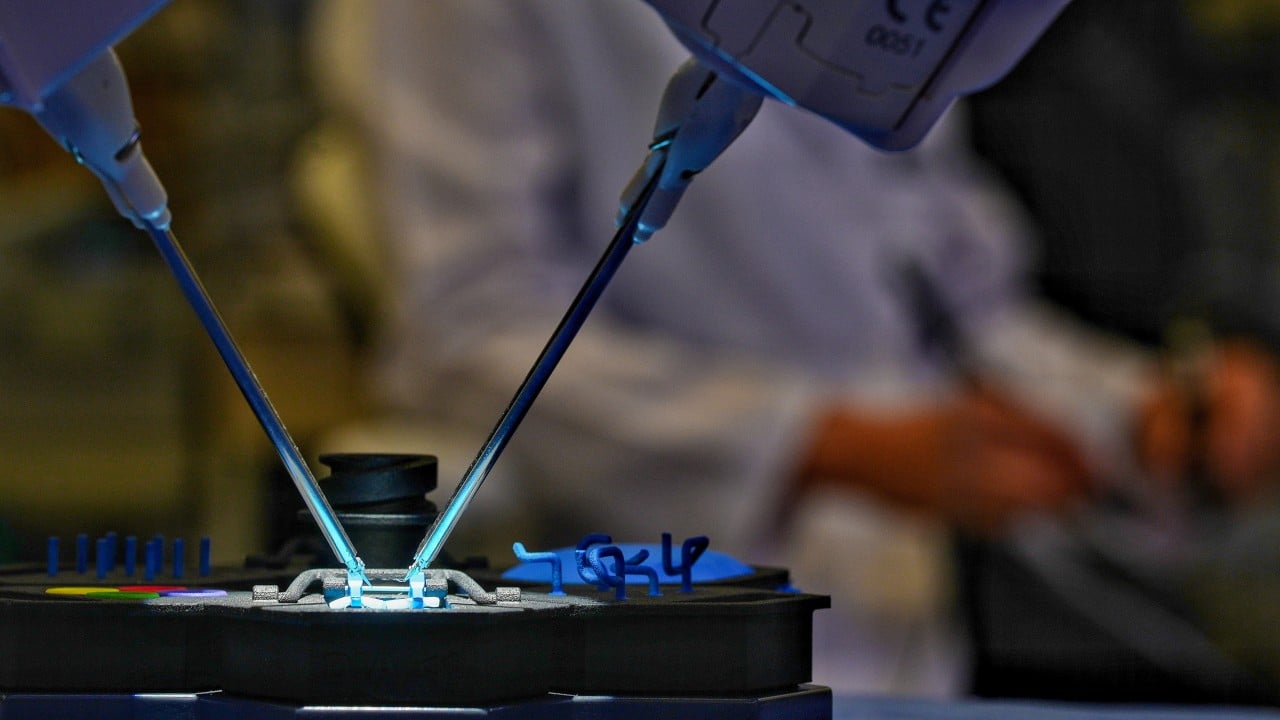
The HKU team changed the equation by leaning heavily into robotic microsurgery. The robotic platform doesn't replace the surgeon. Instead, it translates the surgeon’s hand movements into hyper-precise micro-movements inside the patient's body.
There are three major reasons why the robot succeeds where traditional laparoscopy struggles.
First, it gives the surgeon a high-definition, three-dimensional view inside the abdomen. Instead of looking at a flat monitor across the room, the operating surgeon sits at a console with a deep, magnified view of every tiny capillary and bile duct.
Second, the robotic wrists can rotate in ways the human wrist cannot. They can twist and articulate in tight spaces behind the liver, allowing the team to isolate the exact lobe needed for the transplant without pulling or tearing adjacent tissues.
Third, the machine filters out natural human tremors. When you are stitching a bile duct that is only a few millimeters wide, even a microscopic hand twitch can cause a leak. The robot keeps the needles perfectly steady.
The physical benefit to the donor is immediate. Instead of a massive open wound, the liver piece is retrieved through a small, low incision that can be easily hidden, combined with a few tiny port holes for the instruments.
Breaking Down the Data
The numbers coming out of the Queen Mary Hospital trial show this isn't a fluke.
- Total procedures completed: 48
- Trial window: June 2025 to June 2026
- Major long-term complications: Zero
- Post-operative mortality: Zero
In traditional open liver donations, a certain percentage of donors face bile duct leaks or fluid collections that require additional hospital stays or minor corrective procedures. Wiping out long-term complications across nearly 50 consecutive cases is an extraordinary achievement for a new surgical framework.
The immediate ripple effect is clear. Donors are getting out of the hospital days faster than their open-surgery counterparts. They are returning to their normal lives, jobs, and families without the crushing fatigue and muscle weakness that follows a traditional abdominal wall division.
Why This Matters for the Global Organ Shortage
Every country handles organ shortages differently, but Asia faces a distinct challenge. Deceased organ donation rates in places like Hong Kong have historically lagged due to deep-rooted cultural beliefs about keeping the body intact after death. Because of this, living donation is often the only viable lifeline for patients suffering from end-stage liver failure or aggressive hepatocellular carcinoma.
When the barrier to becoming a donor is incredibly high, patients die on the waitlist. Healthy family members want to help, but the fear of a major, life-altering surgery naturally gives people pause.
By making the donor experience safer and vastly less painful, Hong Kong is fundamentally lowering that barrier. If donating a portion of your liver feels more like a modern minimally invasive procedure and less like surviving a major physical trauma, more people will say yes. It shifts the entire psychology of living donation.
The Next Critical Steps
The success of this 48-patient trial doesn't mean every hospital can start doing this tomorrow. There are real structural hurdles that the global medical community must face before this becomes the global baseline.
Surgeons need specialized training. The transition from open surgery to robotic consoles requires hundreds of hours of simulation and supervised practice. You cannot just buy the machine and expect these outcomes. The HKU team succeeded because they built upon a foundation of microsurgery experience.
Hospital systems must invest heavily in the infrastructure. The hardware is expensive, and the specialized instruments used during each surgery add to the immediate baseline cost of the procedure. However, proponents argue that shorter hospital stays and zero long-term complications save massive amounts of money down the line.
Medical boards must establish clear standardized protocols. Right now, there is no single global rulebook for robotic recipient and donor pairings. The data from Hong Kong will likely form the backbone of those future international guidelines.
If you or a loved one are currently navigating the realities of liver disease or exploring the possibility of a living donation, you should actively track these updates. Ask your transplant center about their timeline for adopting advanced robotic protocols. Look into participating in clinical registries if you are in a region where these programs are scaling up. The era of the massive abdominal scar is drawing to a close, and the data out of Hong Kong proves it is about time.