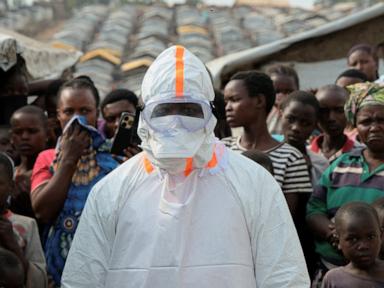
The headlines look terrifying. On Wednesday, France confirmed its first case of the Ebola virus within its borders. A French doctor, fresh off a humanitarian mission in the Democratic Republic of the Congo (DRC), tested positive after operating right in the trenches of the latest outbreak.
If you live in Europe or North America, your immediate instinct might be to panic. Images of past epidemics flash through your mind. But let's look at the actual reality.
You aren't about to catch Ebola on the Paris Métro. The French Health Ministry acted instantly, isolating the doctor under strict biosafety protocols the second they landed. The risk to the general public in Europe remains incredibly low.
The real story here isn't about a looming European apocalypse. It's about what this specific case tells us about a massive, terrifying shift in how the virus behaves in Africa. This isn't the same Ebola we fought a decade ago.
The Zero Vaccine Reality of the Bundibugyo Strain
When most people think of Ebola, they think of the Zaire strain. That's the monster responsible for the horrific West African epidemic from 2014 to 2016. Because of that crisis, scientists developed highly effective weapons like the Ervebo vaccine. We got used to the idea that we could deploy these shots to build a ring of immunity around an outbreak zone.
This time, that playbook is totally useless.
The current outbreak, which the World Health Organization (WHO) flagged as a global health emergency on May 17, is driven by something different: the Bundibugyo strain.
- No approved vaccines: The shots sitting in global stockpiles don't protect against Bundibugyo.
- No proven treatments: The monoclonal antibody therapies used in recent years don't work here either.
- Harder to track: It historically presents with slightly milder initial symptoms than Zaire, meaning people travel further before realizing they're dangerously ill.
Basically, medical workers in the DRC are fighting a wildfire with empty hands. Without a vaccine to halt transmission chains, the virus has exploded. Since the outbreak was declared on May 15, the numbers have climbed at a speed that has completely blindsided health agencies.
A Record-Breaking Monthly Explosion
Congo has seen plenty of Ebola outbreaks, but this one is shattering records for all the wrong reasons. According to the latest data from the Congolese Health Ministry, there are 1,094 confirmed cases and 277 deaths.
The WHO pointed out that this is the largest number of confirmed cases ever recorded within the first month of an Ebola outbreak. Let that sink in. It's spreading faster than the epidemics that wiped out entire villages in the past.
Worse, health officials openly admit they're flying blind. Because the epicenter is centered in the northeastern Ituri province—a region plagued by violent conflict and massive displacement camps—tracking the virus is a logistical nightmare. The official count of roughly 1,100 cases is almost certainly a massive underestimate. The true peak of this crisis is likely weeks, if not months, away.
The virus has already spilled over the DRC border into Uganda. Now, via a dedicated humanitarian doctor, it made the leap to Paris.
What Happens in Paris Doesn't Stay in Paris
Here's exactly how the French system responded, and why you don't need to worry about community spread in Europe.
The medical worker knew the risks and monitored themselves closely. Upon arrival in France, specialized transport moved the patient directly into a secure infectious disease unit. Contact tracing kicked off within hours. Anyone who shared airspace or close proximity with the doctor is currently being forced into a strict 21-day home isolation period overseen by regional health agencies.
Remember, Ebola isn't COVID-19 or the flu. It isn't airborne. You can't catch it from someone coughing near you in an airport terminal. It requires direct contact with infected bodily fluids—blood, vomit, or sweat. Because the doctor was isolated almost immediately, the chance of a secondary chain of infection in France is nearly flatlined.
But the imported case highlights a massive geopolitical tension. Following the news, some political factions across Europe immediately demanded tight travel restrictions and border closures targeting central Africa.
The European Union quickly rejected those calls, sticking to current WHO advice. History shows that sealing borders doesn't stop a virus. It just forces desperate people to travel through illegal, unmonitored channels, making contact tracing impossible. It also stops incoming medical aid, which is the last thing the DRC needs right now.
The Real Danger Facing Global Healthcare
If the risk of a European outbreak is low, why does this imported case matter so much? Because it threatens the single most important resource we have to fight the virus: human beings.
The patient in Paris isn't a random tourist; they're a doctor on a humanitarian mission. When frontline medical workers get infected despite using personal protective equipment, it sends a chill through the entire global health community. It means the biosecurity protocols in these underfunded, chaotic field hospitals are failing under the sheer volume of patients.
If international doctors, nurses, and logisticians feel that volunteering in the DRC is a suicide mission with zero backup options, they'll stop going. If they stop going, the outbreak in Ituri will completely slip its leash.
The US Centers for Disease Control and Prevention (CDC) just committed $107 million in emergency funding to shore up defenses in the DRC and Uganda. It's a start, but money alone can't build field hospitals or trace contacts in a conflict zone. We need boots on the ground.
Your Immediate Next Steps
While health authorities manage the containment in Paris, the global situation requires awareness rather than panic. If you track global health risks or manage international travel, keep these reality checks in mind:
- Check travel insurance clauses: If you or your team travel for aid or business in central Africa, audit your medical evacuation policies immediately. Many standard policies contain strict exclusion clauses for outbreaks deemed a public health emergency of international concern.
- Ignore the airborne myths: Disinformation thrives during Ebola scares. Do not buy into social media panic claiming the virus mutated to spread through the air. Stick to updates from the WHO or the European Centre for Disease Prevention and Control (ECDC).
- Watch the vaccine pipeline: The true metric of when this global threat ends is clinical trial data. Researchers are scrambling to get experimental Bundibugyo vaccines into human trials. Watch the progress of those trials, not the isolated case counts in Europe, to see which way this crisis is truly heading.