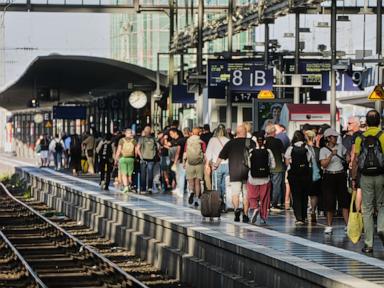
Imagine standing on a crowded platform at Berlin Central Station late on a Tuesday night, watching departure boards blink out one by one. No announcements. No backup options. Just a sudden, eerie quiet as every single train across an entire European economic powerhouse grinds to a dead stop. This wasn't a coordinated cyberattack or a catastrophic summer storm. It was worse. It was a routine, scheduled maintenance job gone wrong.
The nationwide German railway outage on June 23, 2026, paralyzed the entire country's rail network for over two hours. Long-distance ICE trains, regional lines, and city commuter S-Bahn networks in major hubs like Hamburg, Munich, and Stuttgart all froze. When a simple, pre-planned component swap can instantly break a nation's transportation backbone, we have a massive infrastructure problem that goes way beyond Germany.
How a Scheduled Fix Sparked the German Railway Outage
National railway operator Deutsche Bahn started reporting severe network issues around 10:30 PM local time. For safety reasons, dispatchers had to hold every single train at its nearest station. This wasn't a localized glitch. It hit the entire country simultaneously.
For two and a half hours, passengers sat stranded inside stationary carriages or lined up in massive queues at information desks. Some travelers ended up spending the night in makeshift stationary train cars because nearby hotel rooms booked up instantly. Deutsche Bahn scrambled to hand out taxi and hotel vouchers, but the damage to its reputation was already done.
The system came back online step-by-step after midnight when engineers spun up an emergency backup system. By Wednesday morning, traffic was moving again, though ripple-effect delays plagued commuters for the rest of the day.
The shocking part came when DB InfraGO, the infrastructure division of Deutsche Bahn, addressed the public. The head of the division, Philipp Nagl, admitted that the catastrophic communication failure resulted from a scheduled technical swap of a specific component. They knew they were changing the part. They planned it. Yet, the system collapsed anyway.
The Hidden Vulnerability of Railway Communications
To understand why this happened, you have to look at the specific technology that failed. The breakdown happened within the Global System for Mobile Communications-Railway network, commonly known as GSM-R.
This is not the standard 4G or 5G network you use on your smartphone. GSM-R is a secure, dedicated digital radio network used across Europe for internal rail operations. It allows train drivers to talk directly with traffic control centers, transmits emergency signals, and feeds data into automatic train protection systems.
If a train driver cannot talk to the control tower, the train cannot move. It is a fundamental safety rule. Running a train without a functioning GSM-R system is like flying a commercial airliner with a dead radio and no radar.
What makes this specific German railway outage so terrifying is how centralized the vulnerability is. A single component swap in a routine maintenance window managed to trigger a cascading failure that the system's redundancies failed to catch. Deutsche Bahn CEO Evelyn Palla confirmed to local media that they had to rely on a fallback emergency system to stabilize the network and get trains moving again.
Years of Underinvestment Catching Up Fast
This historic infrastructure failure did not happen in a vacuum. Travelers in Germany have complained about deteriorating rail service, constant delays, and broken air conditioning units for years. The myth of flawless German punctuality died a long time ago.
The truth is that the state-owned network has suffered from severe underinvestment for decades. The government skipped vital digital upgrades to save money, leaving technicians to patch together aging analog tracks with modern digital layers.
Deutsche Bahn is currently undertaking an aggressive, highly disruptive overhaul of its main transit corridors to fix these historical errors. They are ripping up old tracks and replacing signaling systems across major routes. But as this recent outage shows, working on live, highly integrated systems is incredibly risky. When you try to upgrade a digital network that is already under immense stress, the margin for error drops to zero.
Real World Lessons for Navigating Transit Disasters
If you rely on major rail networks, you cannot assume the system will always work. Large-scale IT glitches are becoming more common as public transit relies heavier on centralized software. Here is what you need to do to protect yourself when a network collapses.
- Ditch the Paper, Check the Live Map: Download the DB Navigator app or your local operator's app before you travel. During the June 23 incident, physical station boards froze, but live digital tracking gave passengers the earliest hints of the freeze.
- Know Your Passenger Rights Immediately: Under European rail passenger rights, if your train is delayed by more than 60 minutes, you are entitled to free refreshments and a partial refund. If you get stuck overnight, the operator must pay for a hotel or alternative transport.
- Do Not Pay Out of Pocket Safely: If a station agent offers a taxi voucher, take it. If you buy your own ticket or grab an independent Uber without authorization during a crisis, getting reimbursed by a bureaucratic state railway can take months.
- Look for the Emergency Train Option: When networks freeze completely, operators often open up parked trains on the platforms as temporary overnight shelters. It beats sleeping on a concrete station floor.
The Big Picture Beyond the Tracks
We live in a world where we take infrastructure for granted until it stops working. This incident proves that scheduled maintenance can be just as dangerous as an unexpected hardware failure if the underlying architecture lacks true isolation.
Engineers will spend weeks analyzing why the GSM-R component swap caused a total nationwide block. For the rest of the world, this is a clear warning sign. If your critical national systems are so tightly wound that a routine part replacement can park an entire country, it is time to rebuild the foundation.
If you are planning a trip through central Europe over the coming months, expect more turbulence. The overhauls will continue, and as we just saw, the road to modernization is going to be incredibly bumpy. Keep your travel apps updated, keep an eye on alternative bus routes, and always have a backup plan ready.