India and South Korea are quietly moving past standard diplomatic pleasantries. If you think their latest meetings are just about handshakes and boilerplate press releases, you're missing the bigger picture. The reality of global supply chains and shifting maritime security is forcing New Delhi and Seoul into an aggressive economic and defense huddle.
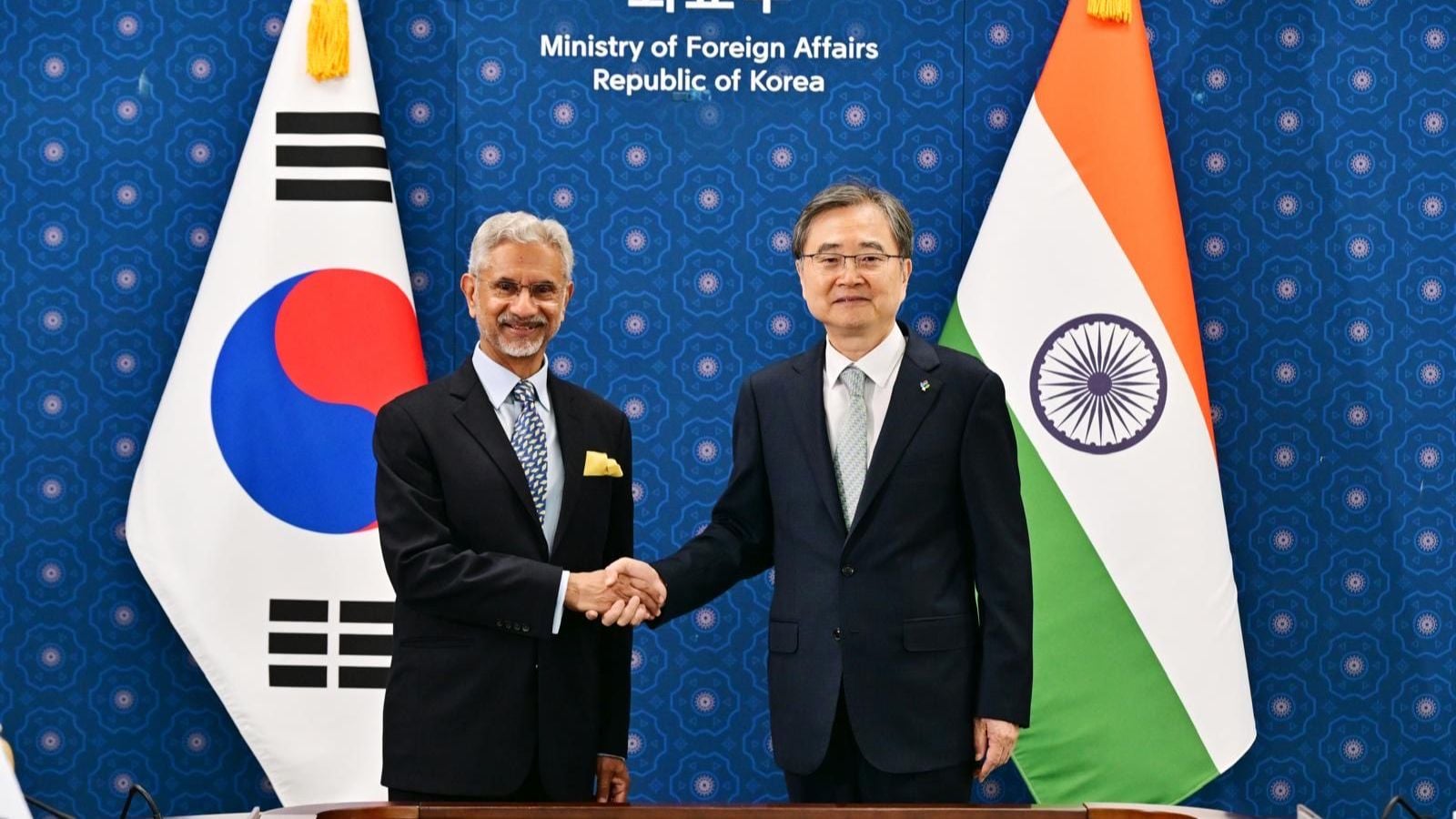
External Affairs Minister S. Jaishankar's three-hour session with South Korean Foreign Minister Cho Hyun in Seoul highlights a serious pivot. This isn't just a routine check-in. It's a calculated response to a messy global landscape where relying on a single dominant neighbor for manufacturing or tech components is no longer safe.
Moving Past the Trade Deficit Friction
For years, the trade relationship between these two nations was stuck in a predictable rut. India complained about a widening trade deficit under the Comprehensive Economic Partnership Agreement (CEPA). South Korea felt frustrated by regulatory hurdles in the Indian market. Those complaints haven't vanished, but the priorities have changed.
The discussions focused directly on concrete follow-up actions from South Korean President Lee Jae-myung’s state visit to India back in April. Instead of vague promises, the focus is now on explicit sectors:
- Shipbuilding partnerships to capitalize on India's coastal infrastructure push.
- Fintech integrations that connect India's massive unified payments interface architecture with Korean tech.
- Semiconductor ecosystem development to shield both economies from East Asian supply blockades.
The launching of "Korea Week" in India shows New Delhi is trying to actively resolve on-the-ground operational headaches for Korean conglomerates like Hyundai and Samsung. It's a pragmatic play. India wants high-tech manufacturing ecosystems, and South Korea needs massive, stable markets outside of China's economic orbit.
Defense and the K-9 Vajra Connection
You can't talk about India and South Korea without looking at defense hardware. The marquee symbol of this military industrial collaboration is the K-9 Vajra self-propelled howitzer. India didn't just buy these weapons; Larsen & Toubro manufactured them locally with transferred technology from South Korea's Hanwha Aerospace.
India-South Korea Strategic Focus Areas:
1. Defense Industrial Production (K-9 Vajra expansion)
2. Critical Tech & Semiconductors
3. Clean Energy & Green Hydrogen Supply Chains
4. Shipbuilding and Maritime Logistics
The talks in Seoul laid the groundwork for the next batch of these artillery units. Beyond specific hardware, both sides are trying to revive their joint vice-ministerial 2+2 defense and foreign affairs dialogue. Why? Because the Indo-Pacific region is getting increasingly volatile. South Korea’s updated Indo-Pacific Strategy aligns directly with India’s maritime security vision. Both nations recognize that open sea lanes in the Indian Ocean and the South China Sea are vital for their economic survival.
Clean Energy and Trilateral Alliances
The cooperation is shifting toward next-generation vulnerabilities. Clean energy and supply chain resilience dominated the extended working lunch in Seoul. South Korea excels in hydrogen fuel cell technology and advanced battery manufacturing. India offers massive scale, low-cost production potential, and ambitious green hydrogen targets.
Both ministers also evaluated the emerging trilateral technology dialogue involving India, South Korea, and the United States. This framework focuses heavily on space exploration, low-orbit satellite communication, and artificial intelligence safety. It's an explicit acknowledgment that modern security isn't just about infantry and naval ships anymore. It's about who controls the code and the silicon chips.
What Happens Next
Don't expect an overnight explosion in bilateral trade figures, but watch these specific areas for immediate next steps:
- CEPA Upgrade Negotiations: Keep an eye on the upcoming trade rounds aimed at reworking tariff structures to address India's deficit while easing market access for Korean tech companies.
- Jeju Forum Deliverables: Jaishankar's keynote address at the Jeju Forum for Peace and Prosperity will likely outline the precise security boundaries India expects South Korea to support in the wider Indian Ocean region.
- Reciprocal Corporate Dialogues: Look for Seoul to announce a dedicated industrial single-window framework for Indian tech and pharmaceutical firms attempting to scale up operations inside South Korea.