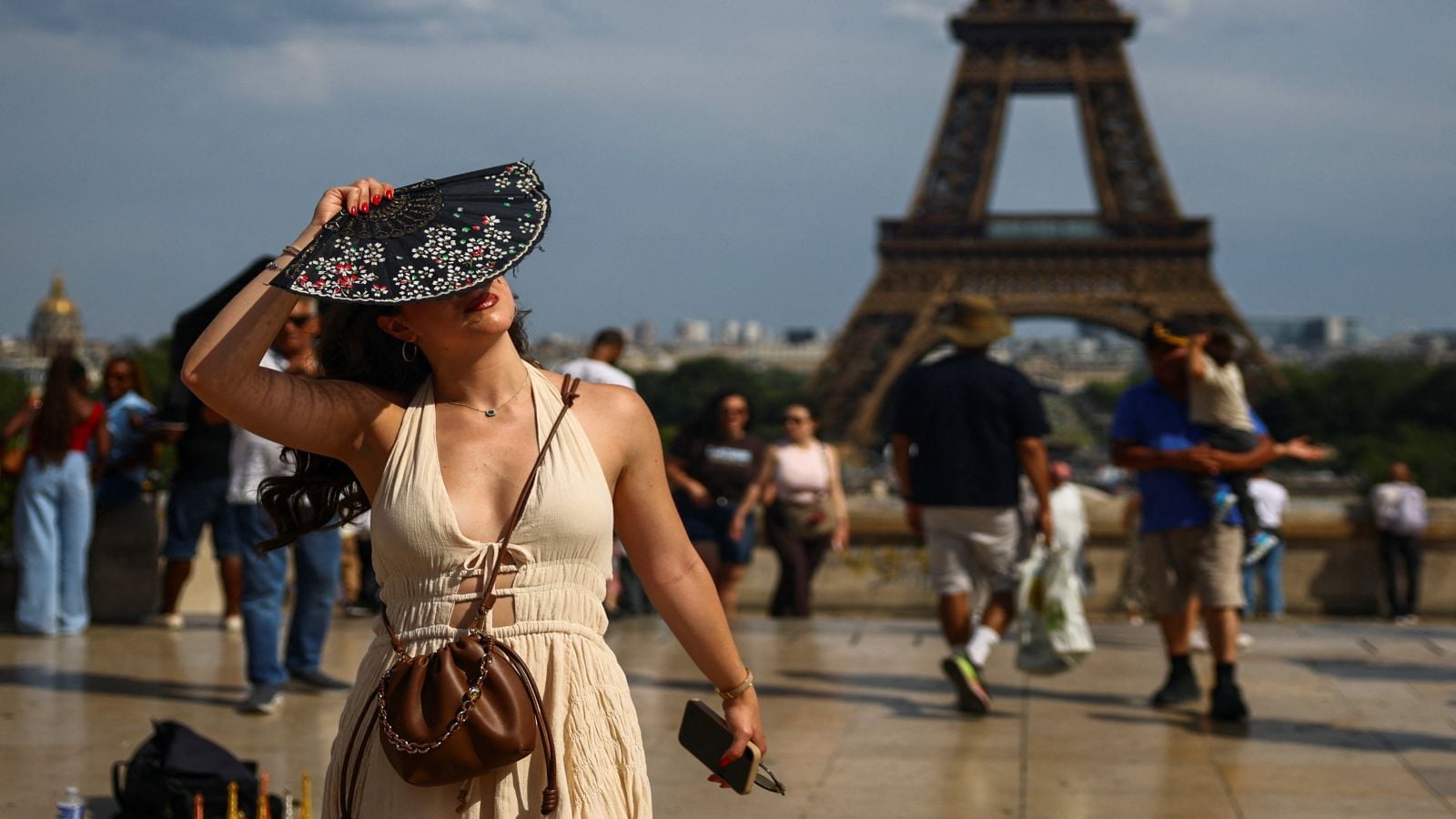
You saved for months to see Paris. You bought the tickets, packed your bags, and envisioned walking up the steps of the Eiffel Tower. Then you get there, and the gates are locked.
The monument is shutting down at 4 pm because it is too hot. If you liked this piece, you should read: this related article.
That is the reality for thousands of tourists right now as an early summer heatwave paralyzes France and large swaths of Western Europe. Temperatures are climbing past 40°C. The infrastructure is buckling. Landmarks are locking their doors. It feels like the entire continent is grinding to a halt because of a bit of sunshine.
People from hotter parts of the world often laugh at this. They wonder why a modern, wealthy country cannot handle a standard summer day. But Western Europe simply was not built for this kind of weather. The current crisis proves that old architecture, old rail lines, and an absolute lack of air conditioning have turned a beautiful vacation destination into a dangerous heat trap. For another look on this development, check out the recent coverage from The New York Times.
The Iron Lady Suffocates
On Tuesday, France recorded its hottest June day ever. The national average temperature indicator hit 29.8°C, breaking the dark milestones set during the deadly heatwaves of 2003 and 2019. In the southwest town of Pissos, the mercury touched a staggering 44.3°C.
Paris itself is baking. The concrete and stone buildings absorb the heat all day and radiate it back out all night. France just had its hottest night on record, which means nobody is getting any relief.
The Eiffel Tower operating company, SETE, had to make a tough call. They closed the tower at 4 pm on Tuesday and planned to do the same on Wednesday. Usually, during the high season, you can stay up there until nearly 1 am. Not this week. When you have a giant structure made of 324 meters of latticed iron sitting under a blazing sun, it turns into a vertical radiator. The staff cannot work in it. The visitors are melting.
The Louvre followed suit. Starting Wednesday, the world’s most visited museum is cutting its hours and shutting down two hours early at 4 pm. Museum management admitted that the historic palace is vulnerable. It simply cannot adapt to rapid climate shifts. When you pack thousands of breathing human bodies inside a centuries-old stone fortress with minimal cooling, the indoor air becomes unbreathable. Your afternoon with the Mona Lisa is canceled.
Why the Trains Stop Running
It is not just the tourist sites. The transit system is a mess.
If you tried to take a train across France or the UK this week, you probably faced massive delays or cancellations. Rail operators are cutting services aggressively. This is not because the drivers want to go to the beach. It is a matter of basic physics.
Most rail networks in Europe use steel rails laid on wooden or concrete sleepers. When the air temperature hits 40°C, the steel rails can easily reach 50°C or 60°C under the direct sun. Steel expands when it gets hot. If it expands too much, the tracks bend and warp out of shape. This is called track buckling. If a high-speed train hits a buckled track, it derails.
To prevent this, rail companies introduce speed restrictions. Slower trains put less stress on the tracks. But slower trains mean schedules collapse.
At the same time, the overhead electric wires that power the trains start to sag in the extreme heat. If they sag too low, they can get tangled in the train's power equipment, tearing down miles of wire and shutting the line down for days.
Then you have the electrical substations and signaling systems. They rely on cooling fans that are currently blowing hot air around. In Brittany, a power transformer failure left 68,000 households without electricity because the equipment simply overheated and quit.
The Nuclear Paradox
You would think France would just crank up its massive network of nuclear reactors to power millions of fans. It cannot.
The heatwave has actually forced the shutdown of the Golfech nuclear power plant in southwestern France. Nuclear plants need a massive, steady supply of cold water to cool their reactors. They pull this water from nearby rivers, run it through the system, and pump it back out.
Right now, the Garonne River is too warm. French environmental laws state that if river water hits 28°C, nuclear plants must scale back or shut down completely. Pumping boiling hot water back into a river would instantly cook the local fish population and destroy the ecosystem. So, precisely when the country needs the most electricity to stay cool, the energy grid loses capacity.
The Real Reason Europe Can't Handle the Heat
Go to Houston, Dubai, or Singapore during a 40°C heatwave, and life moves indoors. You walk from an air-conditioned apartment to an air-conditioned car to an air-conditioned mall.
In Paris, London, or Frankfurt, that infrastructure does not exist.
Less than 5% of European homes have air conditioning. For decades, the logic was simple: it only gets truly hot for a few days a year, so why waste money on expensive cooling systems? European homes were built to keep heat in. Thick brick walls, double-glazed windows, and heavy insulation are fantastic for surviving a freezing January. In June, those same design features turn apartments into pizza ovens.
The hospitality sector is not much better. Plenty of mid-range hotels, Airbnb rentals, and local restaurants rely entirely on open windows and weak plastic fans. When the outside air is 40°C, opening a window just lets the furnace inside.
A Tragic Human Toll
This is not a minor inconvenience for travelers. It is a public health emergency. More than half of France is currently under a red heatwave alert, the highest possible level.
The human cost is already mounting. French Prime Minister Sébastien Lecornu called an emergency cabinet meeting after a horrific spike in drownings. At least 40 people have drowned in France over a five-day period.
Most of the victims are young people. Desperate to escape the stifling heat in their apartments, they are jumping into unsupervised lakes, canals, and fast-flowing rivers. They dive in, their bodies experience cold shock from the deeper water, and they go under.
In the town of Carpentras, two young children died from heatstroke after their mother found them inside the family car. The interior of a locked car can hit lethal temperatures in minutes when it is 40°C outside.
Across Europe, the numbers are grim. Spain reported over 100 heat-related deaths last month alone as this system built up. The current weather pattern is drawing a massive block of scorching air straight up from North Africa, and a high-pressure system is trapping it over the continent like a lid on a boiling pot. Meteorologists call it an Omega Block. It means the heat is not moving anytime soon.
How to Survive a European Heatwave
If you are stuck in Europe right now, you need to abandon your original itinerary. Stop trying to push through the heat to see the sights. It is a quick way to end up in a French hospital.
- Follow the water, but be smart: Do not swim in canals or unmonitored rivers. Stick to public pools or designated swimming areas with lifeguards.
- Seek out stone and subterranean spots: Historic churches and cathedrals stay remarkably cool because of their massive stone walls. Crypts and underground passages, like the Paris Catacombs, offer natural air conditioning.
- Change your clock: Do your walking between 7 am and 10 am. By noon, you should be indoors or resting in a shaded park.
- Hydrate correctly: Tap water in France is perfectly safe. Carry a reusable insulated bottle and fill it at the historic Wallace fountains scattered across Paris. Avoid alcohol, even though the local cafes will be packed with people drinking chilled wine.
The continent is changing. The assumption that summer in Europe means pleasant 25°C days is dead. Until the cities invest billions in upgrading their rail lines, retrofitting their historic landmarks, and installing widespread cooling, expect every major summer heatwave to bring the region to its knees.
Pack your bags for the weather of the future, or stay home until autumn.