Washington was about to have a rare, genuine moment of bipartisan celebration. Instead, it got a classic reality-TV plot twist.
On Wednesday morning, June 24, 2026, workers in Statuary Hall at the U.S. Capitol were literally setting up the signing desk, complete with the presidential seal. Republican and Democratic lawmakers were already gathering, eager to claim credit for the 21st Century ROAD to Housing Act. It was a massive deal—the most comprehensive federal housing affordability package in decades. It passed the Senate 85-5 on Monday and sailed through the House on Tuesday night. Even Trump’s own White House press secretary, Karoline Leavitt, had been publicly praising it less than 24 hours prior, calling it a "promise made, promise kept."
Then came the Truth Social post.
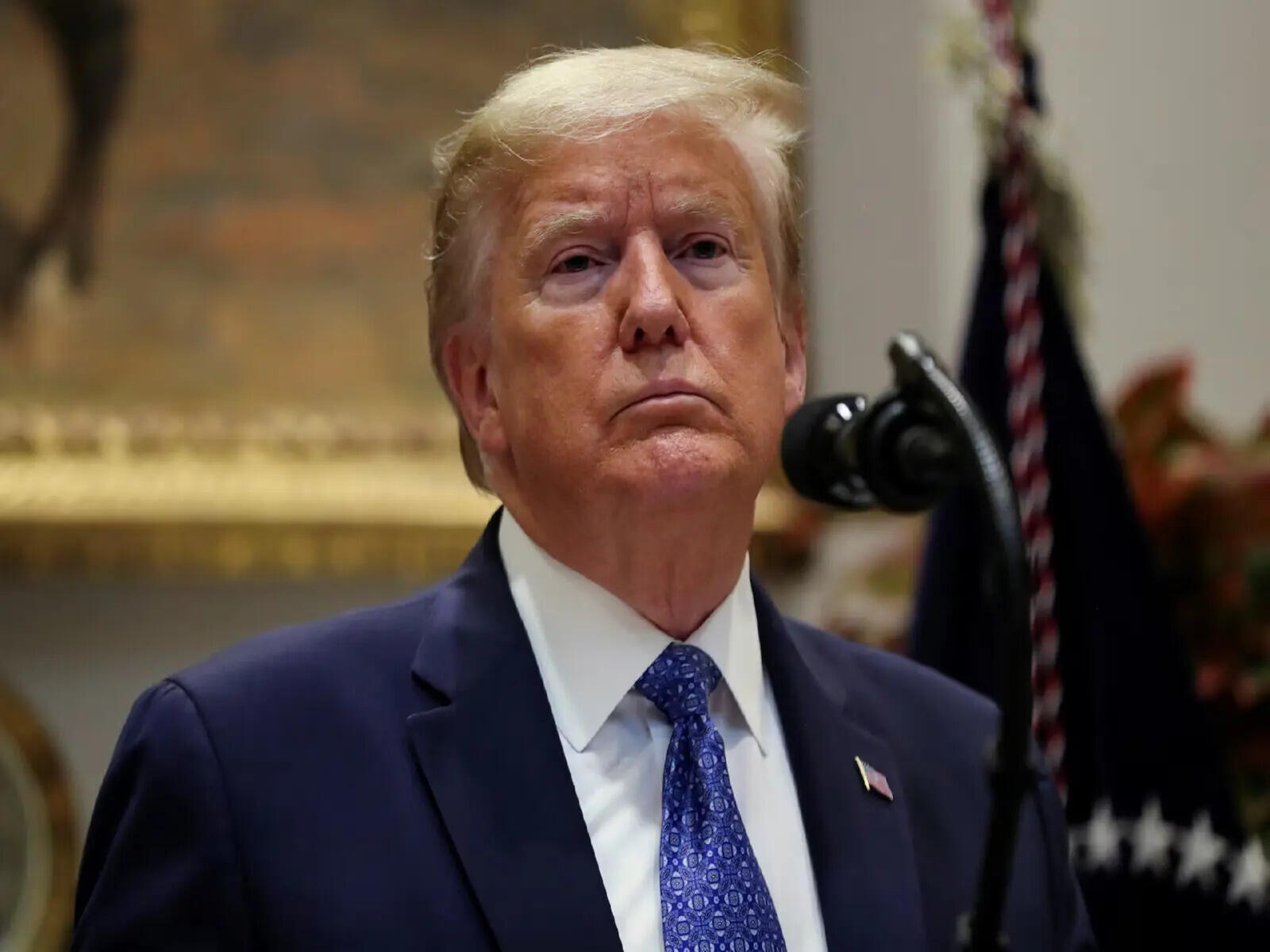
At 10:52 AM, less than two hours before the ceremony, Donald Trump abruptly called the whole thing off. He announced that the housing bill was "hereby cancelled" until Congress passes the SAVE America Act, a highly controversial election and voter ID bill. He dismissed the landmark housing legislation as being of "minor importance."
It was a staggering move that blindsided his own party leadership. House Majority Leader Steve Scalise and Financial Services Committee Chairman French Hill were literally mid-press conference, bragging to reporters about "what legislating looks like," when news of the cancellation broke.
Here is what is actually going on behind the scenes, why Trump is risking a massive win right before the 2026 midterm elections, and what happens to the housing bill now.
The Cold Hard Reality of the 21st Century ROAD to Housing Act
To understand why Republican lawmakers are privately furious, you have to look at what this bill actually contains. Housing affordability is arguably the single biggest economic pain point for voters heading into the midterms. National home prices have climbed over 50% since the pandemic, rents are up 30%, and mortgage rates are hovering around 6.5%.
The bill, crafted by unlikely partners like Republican Banking Committee Chairman Tim Scott and Democratic Senator Elizabeth Warren, combined elements of over 60 different housing measures. It was designed to directly attack supply shortages and corporate greed.
The compromise package includes:
- Cracking down on Wall Street landlords: It bars institutional investors who own more than 350 single-family homes from buying up any more existing single-family inventory. This prevents mega-firms from outbidding regular families, though a carveout still allows them to fund new construction.
- Cutting local red tape: It removes federal regulatory barriers and streamlines strict environmental reviews that slow down home construction.
- Commercial conversions: It launches a pilot program giving local governments federal funds to transform vacant commercial office buildings into affordable housing.
- Factory-built housing: It unlocks federal dollars for manufactured homes and axes an archaic rule requiring these homes to be built on a heavy steel chassis.
It was a packaged victory handed to the president on a silver platter. But Trump didn't see it that way. He labeled it an "Elizabeth 'Pocahontas' Warren centric housing bill" and decided to use it as a political hostage.
What is the SAVE America Act and Why Is Trump Fixated On It?
Trump’s ultimatum isn’t really about housing; it is about leverage. He wants the Senate to pass the SAVE America Act, an election bill that would drastically overhaul federal voting rules.
The core of the SAVE Act requires voters to provide physical proof of U.S. citizenship when registering to vote and severely curtails mail-in ballots. Trump has repeatedly claimed that the legislation is a "National Emergency," tying it to his ongoing, unsubstantiated narrative that federal elections are rife with noncitizen voting.
The problem? The bill is completely dead on arrival in the Senate.
While the House passed the SAVE Act earlier this year, it has no mathematical path to survival in the upper chamber. Senate Majority Leader John Thune has repeatedly told Trump that the votes simply aren't there. Republicans hold a narrow 53-47 majority, meaning they are well short of the 60 votes needed to break a guaranteed Democratic filibuster.
Trump has urged Thune to "nuke" the filibuster to pass the voting bill with a simple majority. But Thune and other pragmatic Republicans know that is a fantasy. There isn't even total consensus among the 53 Senate Republicans to eliminate the filibuster.
"Those are just hard realities," Thune told reporters, adding that the intense pressure campaign being waged on social media by far-right senators like Utah's Mike Lee "doesn't reflect the facts on the ground."
The Strategic Blunder Ahead of the Midterms
By spiking the signing ceremony, Trump has exposed severe, bleeding cracks within the Republican party at the worst possible time.
With the 2026 midterm elections looming, congressional Republicans desperately need legislative achievements to show voters. Narrow majorities in both chambers have made passing any significant bills incredibly difficult over the last two years. The housing bill was supposed to be the crown jewel of their pitch to the American middle class.
Instead, Trump has effectively told struggling homebuyers that voter ID laws matter more to him than their skyrocketing rent. He has also picked public fights with key Republican incumbents. He recently backed primary challengers against reliable conservative Senators John Cornyn of Texas and Bill Cassidy of Louisiana, causing both to lose their primaries and turning them into vocal, bitter critics of the administration.
Democrats are already capitalizing on the chaos. Senate Minority Leader Chuck Schumer wasted no time taking to the Senate floor to mock the president. "Trump is running away from one of the very few accomplishments that could actually help the American people," Schumer said. "He’s petulant, he’s angry, and he looks ridiculous canceling it just two hours before he's supposed to sign it."
What Happens to the Housing Bill Now?
Despite the high-stakes drama, Trump’s refusal to sign the bill might not actually kill it. Under the U.S. Constitution, a president cannot simply sit on a bill forever to stop it.
Once Congress presents a bill to the president, he has a 10-day window (excluding Sundays) to either sign it or veto it. If he does nothing and Congress remains in session, the bill automatically becomes law without his signature.
House Speaker Mike Johnson is currently playing damage control, trying to downplay the Truth Social meltdown as a simple timing strategy. Johnson told reporters that Trump just wants to use the full extent of his 10-day window to build leverage for the voting bill. "He has a window of time before he has to sign a bill, and he’s going to use a little bit more of that window of time," Johnson insisted. "He'll do it within that 10-day window."
But if Trump is bluffing, it is a dangerous one. If he actually issues a formal veto, Schumer has already predicted that Congress has more than enough bipartisan support to comfortably override the veto with a two-thirds majority. That would look even worse for the White House—showing a president entirely isolated from his own party on Capitol Hill.
Your Next Steps
If you are tracking how this political circus impacts your wallet, the housing market, or the upcoming midterms, stop watching the daily press briefings and watch these specific pressure points instead:
- Watch the 10-Day Clock: Keep an eye on the official presentation date of the 21st Century ROAD to Housing Act. If the 10 days expire without a presidential veto, the bill becomes law automatically.
- Monitor the Institutional Carveout: If the bill becomes law, institutional landlords will be locked out of buying existing single-family homes. If you are shopping for a home, this could mean a sudden drop in cash-rich corporate competitors in your local market.
- Track Senate Floor Votes: Look closely at whether John Thune bows to Trump's pressure to bring the SAVE Act or a filibuster change to a vote. If he refuses, expect the civil war between the Trump populist wing and the establishment Senate Republicans to turn even uglier.