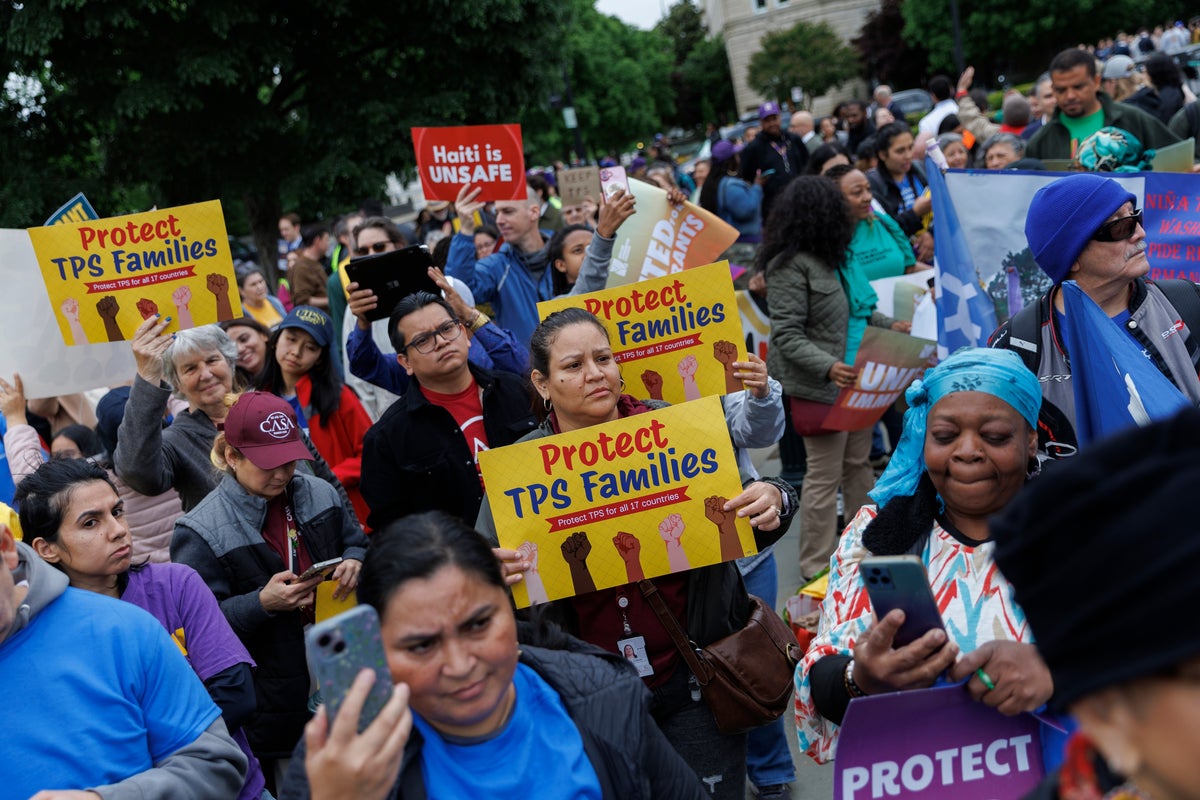
Hundreds of thousands of people who built lives, paid taxes, and raised families in the United States legally are suddenly facing the reality of a deportation notice. The U.S. Supreme Court just handed the Trump administration a massive victory, ruling 6-3 in Mullin v. Doe and Trump v. Miot that the executive branch has unchecked power to dismantle Temporary Protected Status (TPS).
This isn't just about technicalities in immigration law. It's a fundamental shift in how America treats foreign nationals who were explicitly invited to stay under humanitarian protection. For decades, TPS served as a reliable shield for people whose home countries were torn apart by war, earthquakes, or political chaos. Now, that shield has been completely shattered.
The Reality Behind the 6-3 Ruling
The conservative supermajority on the Court made one thing very clear: what the Department of Homeland Security (DHS) gives, it can take away, and the judiciary can't stop it. Writing for the majority, Justice Samuel Alito declared that the original 1990 TPS statute completely bars courts from reviewing the administration's decisions to terminate the program.
Essentially, the Court ruled that the DHS Secretary has absolute discretion. It doesn't matter if lower courts previously found that the administration skipped crucial steps, ignored its own career staff, or failed to evaluate actual country conditions. The judiciary has officially removed itself from the equation.
Even the explosive argument that the termination was fueled by racial animus—pointing directly to Donald Trump’s infamous, false campaign rhetoric about Haitian immigrants eating pets in Springfield, Ohio—was dismissed by the majority. Alito wrote that the public statements from the administration expressed policy views that could rest on "race-neutral justifications," suggesting the White House simply opposes the TPS program as a whole.
In a blistering dissent, Justice Elena Kagan warned about the immediate human cost, noting that "hundreds of thousands of lives will be uprooted" while families are left with few options but to face the next plane out.
Who is Impacted by the Decision
While the specific cases before the Court focused on roughly 350,000 Haitians and over 6,000 Syrians, the legal precedent acts as a green light to end protections across the board. Before DHS Secretary Kristi Noem began systematically winding down these programs, nearly 1.3 million people lived in the U.S. under TPS.
The immediate fallout will hit several distinct communities hardest:
- Haitians: The vast majority entered legally and received protection after catastrophic earthquakes and the 2021 assassination of President Jovenel Moïse.
- Syrians: Protected since 2012 due to the brutal, ongoing civil war.
- Venezuelans: More than 600,000 individuals were clinging to the hope of a favorable ruling to maintain their legal status.
- Long-term Residents: Nearly 200,000 Salvadorans have held TPS for over 25 years, deeply rooting themselves in American neighborhoods and businesses.
This chart breaks down the status of the largest protected groups now exposed to deportation:
| Country | Approximate TPS Holders | Original Crisis Event |
|---|---|---|
| Venezuela | 600,000+ | Economic & Political Collapse |
| Haiti | 350,000 | 2010 Earthquake / 2021 Political Violence |
| El Salvador | 200,000 | 2001 Earthquakes |
| Ukraine | 50,000 | 2022 Russian Invasion |
| Syria | 6,100 | 2012 Civil War |
The Economic and Community Shockwaves
Losing TPS doesn't just mean changing a legal designation on a piece of paper. It terminates work authorization instantly. When these protections expire, individuals become "undocumented overstays" overnight, making them targets for workplace enforcement and immediate detention.
The economic fallout will be felt directly by everyday Americans, particularly in health care. Thousands of Haitian immigrants work as nurses, home health aides, and nursing home assistants. Stripping their right to work creates an immediate labor shortage in an industry that's already struggling to keep up with an aging population.
Furthermore, the general counsel for DHS, James Percival, celebrated the ruling, stating that the "T in TPS stands for TEMPORARY" and framing the decision as a victory for the rule of law. But for employers who have relied on these legal workers for a decade or more, it’s an administrative nightmare.
What Happens Next if You Have TPS
With the judicial branch stepping aside, the executive branch has an open runway to execute what advocates call the largest mass "de-documentation" effort in modern U.S. history. If you or a loved one are currently holding TPS, relying on court injunctions to stay the clock is no longer a viable strategy.
You need to take immediate, proactive steps to understand your remaining legal options.
- Audit Your Immigration History: Meet with a licensed immigration attorney immediately to screen for alternative pathways. Look into family-based petitions, employer sponsorships, or adjustment of status options that you might have overlooked while relying on TPS.
- Secure Your Records: Gather all employment histories, tax returns, clean background checks, and documentation of deep community ties. If Congress eventually introduces a legislative fix or a registry update, having a bulletproof paper trail will be mandatory.
- Know Your Workplace Rights: While your TPS remains valid up until its specific, announced expiration date, ensure your employer understands current auto-extension rules. Do not let employers prematurely terminate your employment based on headline panic alone.
The harsh truth is that without a literal act of Congress to grant permanent residency to long-term TPS holders, the legal safety net is gone. The administration has the power, the legal backing, and the explicit intent to end these programs country by country.
To see a detailed breakdown of how the legal battle evolved in the lead-up to this decision, you can watch this report outlining the initial community reactions and legal arguments in Springfield: Supreme Court allows Trump administration to end Temporary Protective Status for Haitians. This video provides crucial local context on how these federal policies directly disrupt cities where immigrant communities have heavily integrated.


