Stop looking at SpaceX as just a rocket company.
If you're still tracking them by how many boosters they land or how bright their satellites shine in the night sky, you're missing the real story. Space exploration is cool, but the actual money is moving toward data. Serious data.
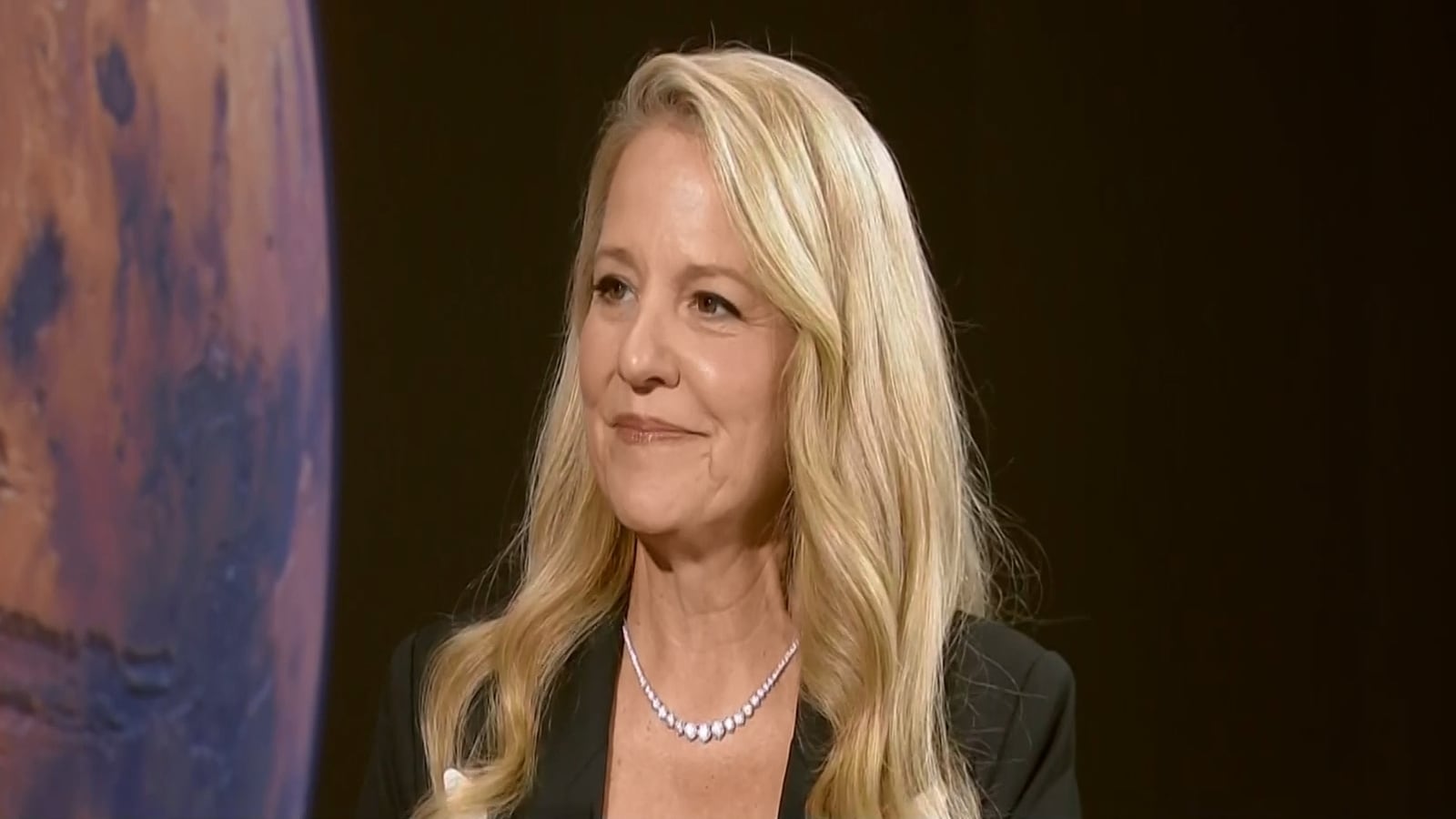
On June 12, 2026, SpaceX went public in a historic IPO that immediately valued the company at $1.77 trillion, soaring past $2 trillion by the end of its first trading day on the Nasdaq. Right in the middle of this madness, President and COO Gwynne Shotwell dropped a massive hint about where that fresh cash is actually going. SpaceX doesn't want to just carry cargo to orbit anymore. It's building a global network of data centers both on the ground and directly in space.
"I look at us as an infrastructure company," Shotwell said.
This isn't a minor pivot. It's a massive shift in how the world will handle artificial intelligence, cloud compute, and global communications. By absorbing Elon Musk's xAI startup earlier this year, SpaceX isn't just launching tech for other people anymore. They're positioning themselves to dominate the global compute market.
The Massive Energy Crisis Hiding Behind the AI Boom
Let's look at the actual problem nobody wants to talk about. AI requires an absurd amount of power.
If you build a massive data center on Earth to train next-generation models, you run into immediate roadblocks. You need massive amounts of land. You need access to a power grid that is likely already strained. Most importantly, you need millions of gallons of water to cool down thousands of humming microchips. Silicon Valley is desperately scrambling for power, eyeing everything from nuclear plants to specialized grids just to keep the lights on.
SpaceX wants to bypass the terrestrial power grid entirely.
The plan involves launching a network of massive, dedicated AI satellites. The first major prototype, codenamed AI1, is scheduled to fly by the end of next year. Pre-IPO investor presentations revealed that these aren't your typical small Starlink boxes. The AI1 satellite features massive solar arrays with a 70-meter wingspan. That single satellite is designed to handle a continuous computing load of 120 kilowatts, spiking up to 150 kilowatts in full sunlight.
Musk wants to scale this up to an annual deployment of 1 gigawatt of orbital AI computing capacity by late 2027, with plans to scale ten times over every year after. To put that in perspective, the company filed documents with the FCC detailing a long-term roadmap that includes up to 1 million low-Earth orbit AI satellites.
Processing Data at the Edge of the Atmosphere
Why put a microchip in a vacuum? It sounds like an engineering nightmare, but it solves a few massive bottlenecks.
When a standard Earth-imaging satellite or a military drone collects data, it has to beam raw, uncompressed files back down to a ground station. That process takes time, eats up massive amounts of bandwidth, and creates a lag.
If you place the data center directly in orbit, the processing happens at the edge. A reconnaissance satellite can capture imagery, feed it directly to an adjacent orbital AI node via laser cross-links, process the data instantly, and beam a tiny, actionable text alert down to a ground team in seconds.
SpaceX already confirmed it's testing this model right now. Before the massive AI1 satellite launches, the company is deploying edge computing hardware onto existing Starlink broadband and mobile communication satellites to test the software and heat management.
Then there's the cooling issue. Space is notoriously cold, but it's also a vacuum, meaning there's no air to carry heat away from a hot processor. Instead of relying on water or fans, these orbital data centers have to use massive radiators to bleed heat away as infrared radiation. It's a complex engineering hurdle, but Shotwell and her engineering team have a track record of solving hardware issues that legacy aerospace companies called impossible.
The Starship Dependency Nobody Can Ignore
Wall Street is currently drunk on the hype of this $2 trillion valuation, but let's look at the cold reality. This entire space-based data center network lives or dies by one vehicle: Starship.
You simply can't build a 1-gigawatt orbital computing mesh using Falcon 9 rockets. Falcon 9 is an incredible workhorse, but its payload fairing is too small and the launch costs, while cheap for the industry, are too high for heavy infrastructure.
To launch thousands of satellites with 70-meter solar wings, you need the massive volume and weight capacity of Starship. A single Starship launch can carry more than 20 times the payload weight of a Falcon 9. It’s the only vehicle big enough to carry heavy radiators, massive solar panels, and specialized AI microchips in bulk.
Right now, Starship's rapid reusability timeline is still the biggest question mark for skeptical investors. The rocket has made incredible progress, but it hasn't reached the point of ultra-low-cost, daily turnaround flights required to deploy a million data satellites. If Starship development slows down, the orbital AI dream gets pushed back right along with it.
The Ground Game and the Neocloud Threat
Don't assume SpaceX is abandoning Earth. Shotwell made it clear that their infrastructure plans are a hybrid model. They're building data centers on the ground right alongside their orbital assets.
SpaceX recently signed deals with major tech players, including Alphabet and Anthropic. When asked if SpaceX should now be categorized alongside "Neocloud" providers—the fast-moving, AI-focused cloud platforms challenging Amazon Web Services and Microsoft Azure—Shotwell didn't hesitate.
"100%. We are builders," she said.
By combining terrestrial data centers with Starlink’s existing ground infrastructure, SpaceX can offer something no other cloud provider can touch: a closed-loop ecosystem. They own the rockets that launch the hardware, the satellites that transmit the internet, the ground stations that route the traffic, and soon, the chips that process the AI models.
This gives them an insane advantage in capturing what their prospectus outlines as a massive $28.5 trillion total addressable market. Skeptics pointed out that AI alone can't generate that much cash. Shotwell corrected the narrative, explaining that the figure makes perfect sense when you factor in globally deployed autonomous vehicles, robotics, and defense systems. Every single one of those machines requires high-bandwidth connectivity and instant compute power.
What to Watch Next
If you're trying to figure out if SpaceX can actually pull off this transformation into a global data utility, ignore the flashy marketing and focus on three specific milestones over the next 18 months:
- Starlink Mobile User Growth: Check if the direct-to-cell mobile service is scaling rapidly. This provides the immediate, high-margin cash flow needed to fund heavy capital expenditure.
- Orbital Compute Tests: Watch for the early software and hardware computing tests on standard Starlink satellites. Successful data processing tests mean the architecture is sound.
- The AI1 Launch Timeline: Keep a close eye on the late 2027 launch window for the first dedicated AI1 satellite. If that massive 70-meter solar wing deploys successfully, the era of space-based cloud computing becomes a reality.