The concept of a trillion dollars is impossible to visualize. If you spent a million dollars every single day, it'd take you nearly three thousand years to burn through it.
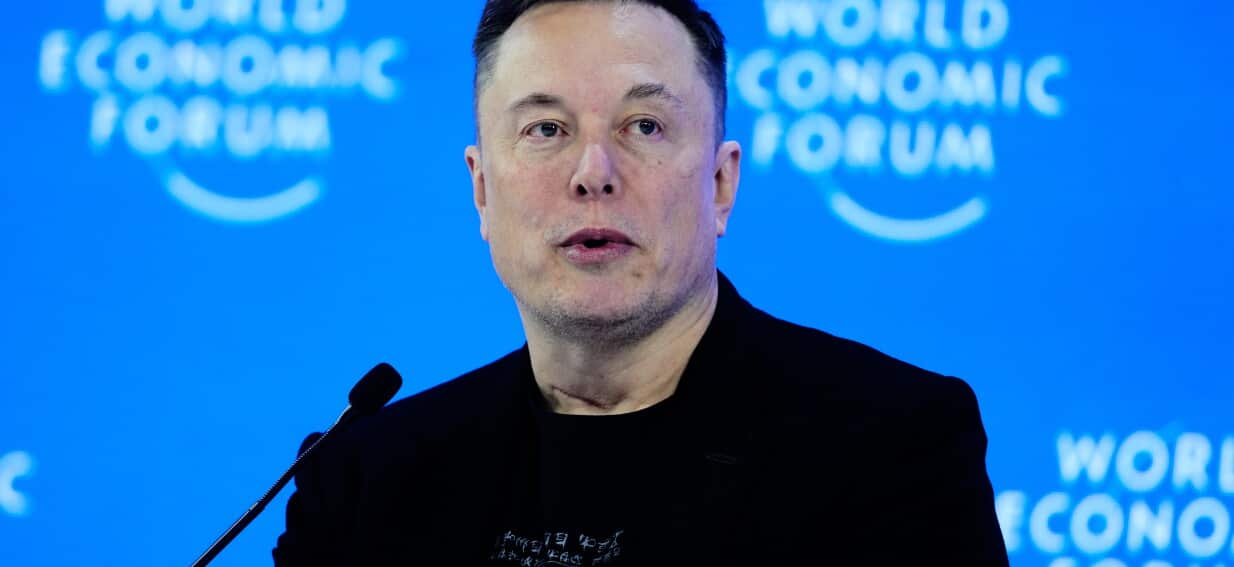
Elon Musk doesn't have to visualize it. He's living it. Following the historic initial public offering of SpaceX on the Nasdaq exchange, Musk officially crossed the threshold to become the first trillionaire in human history. For an alternative look, see: this related article.
This isn't just a win for space nerds or another milestone for a polarizing billionaire. The record-breaking stock debut under the ticker SPCX fundamentally alters the tech world and your personal financial future. Whether you love the guy or absolutely detest his social media rants, you can't ignore the seismic shift that happened when the opening bell rang.
Let's cut through the corporate spin and break down exactly how this happened, why the numbers look so wild, and how this public listing hooks ordinary savers directly into Musk's interstellar ambitions. Related insight on this trend has been shared by ZDNet.
The Anatomy of a Massive IPO
SpaceX priced its initial public offering at $135 a share, aiming for a market value of just under $1.8 trillion. Wall Street didn't just accept that massive number; investors actively demanded more. By the time trading closed on Friday afternoon, the stock had jumped nearly 20 percent to end at $161.50 per share. At its midday peak, it even touched $176.
That single-day surge pushed the company's valuation past the $2.1 trillion mark.
To put that in perspective, SpaceX is now comfortably sitting among the ten most valuable public companies in America. It's officially larger than its electric vehicle sibling, Tesla, and it has bypassed massive legacy giants like Meta and Walmart.
The fundraising haul itself broke every financial record in the book. The company raised $75 billion upfront, an amount that could climb to $86 billion if underwriters exercise their option to sell extra shares. The investment banks handling the deal shared a historic $500 million fee pool. Goldman Sachs and Morgan Stanley pocketed $100 million each for their trouble.
How Musk Hit Twelve Zeroes
Before the listing, Musk's net worth hovered around $813 billion. While that already made him the wealthiest person on Earth, the public market valuation of SpaceX added more than $62 billion to his name in a single afternoon.
Here's how his personal portfolio breaks down right now:
- SpaceX Stake: Musk holds a 42 percent equity stake in the company. At the closing price, that holding is worth more than $800 billion. Crucially, he didn't sell a single share during the IPO and retains over 82 percent of the company's voting control.
- Tesla Holdings: His remaining wealth stems from his $280 billion stake in Tesla, alongside smaller holdings in his other ventures.
- Total Net Worth: Forbes currently places his personal fortune at a staggering $1.1 trillion.
Why Is a Loss-Making Rocket Company Worth Trillions?
If you look at standard accounting metrics, the valuation looks completely insane. SpaceX brought in $18.7 billion in revenue last year, but it posted a net loss of $4.9 billion. Usually, a company bleeding billions doesn't get valued at a hundred times its revenue.
So, why are sovereign wealth funds, hedge funds, and everyday retail investors fighting over shares?
The short answer is artificial intelligence. This wasn't pitched to Wall Street as a simple rocket business. Earlier this year, SpaceX absorbed Musk's AI startup, xAI, folding the Grok chatbot and its massive tech infrastructure into the parent company.
Investors are betting heavily on a future where space and artificial intelligence merge. The IPO prospectus pitched an addressable market of $28.5 trillion. Underwriter Goldman Sachs predicts a 100-fold surge in the company's AI-driven revenues to $322 billion by 2030. Morgan Stanley goes even further, modeling a future where overall revenues scale to $3.4 trillion by 2040, flipping that current $4.9 billion loss into an annual profit of $2.7 trillion.
The capital raised from the IPO is earmarked for highly speculative infrastructure projects that sound like straight science fiction:
Orbital Data Centers
Instead of building massive server farms in the desert, SpaceX plans to launch high-performance AI compute infrastructure directly into low Earth orbit. These space-based data centers will plug into the existing Starlink satellite web, bypassing ground-based fiber networks entirely.
Total Satellite Dominance
Through Starlink, SpaceX already controls roughly two-thirds of all active satellites in orbit—more than 10,300 operational units. This system provides unprecedented control over global internet access and defense communication networks.
The Mars Expansion
The financial runway will fund the ongoing development of the skyscraper-sized, fully reusable Starship rocket system. Musk explicitly stated at the Starbase launch event in Texas that the ultimate goal remains building a self-sustaining city of a million people on Mars.
How This Listing Automatically Impacts Your Savings
You might think you have no skin in this game if you didn't buy SPCX shares on Friday. You'd be wrong.
The mechanics of this specific IPO mean your retirement funds are likely about to purchase SpaceX shares whether you like it or not. On May 1, the Nasdaq 100 implemented a new "fast entry" rule specifically designed to fast-track massively valued private companies into the public index within days of their debut.
Because SpaceX entered the market as an instant multi-trillion-dollar behemoth, passive index-tracking funds linked to the Nasdaq, FTSE, and MSCI benchmarks are legally required to buy up chunks of the stock to mirror the market accurately.
This means a portion of ordinary pensions, retirement accounts, and mutual funds will automatically tie themselves to Musk's volatile corporate performance. If SpaceX continues to soar, your retirement nest egg benefits. If the massive AI and Mars hype cycle deflates, ordinary savers will directly absorb the damage.
The Heavy Pushback Against Unchecked Capital
Unsurprisingly, the concentration of a trillion dollars in a single pair of hands has triggered intense political blowback. Critics point out that the financial guardrails keeping corporate power in check have been systematically dismantled to accommodate this listing.
For starters, standard shareholders have zero say in how the company runs. Every share Musk owns carries ten times the voting power of a public share. The corporate board acts essentially as an advisory group with no real teeth to block his decisions.
Furthermore, the IPO structure allowed corporate insiders to bypass traditional multi-month lockup periods. Insiders can sell off their stock almost immediately, riding the wave of automated buying from index funds and cashing out long before the company ever has to prove its lofty AI revenue projections are real.
Democratic Senator Elizabeth Warren led the political pushback, stating directly that the world has hit its first trillionaire while everyday citizens are struggling to scrape together enough money to retire.
There's also the reality of Musk's deep entanglement with the political system. His recent stint leading the highly controversial government-slashing "DOGE" effort under President Donald Trump’s administration has turned him into an incredibly divisive figure. While his fans see an unmatched visionary, critics see a hyper-wealthy mogul using immense regulatory influence to secure satellite dominance and defense contracts without real public accountability.
What You Should Do Next
The SpaceX IPO changes how we have to look at tech investing, speculation, and the public markets. If you want to handle the fallout properly, don't just sit back and watch the headlines. Take these practical next steps to protect and optimize your portfolio:
- Check Your Index Exposure: Take a close look at your retirement or brokerage accounts. If you hold heavy allocations in Nasdaq 100 tracking funds, understand that you now own a piece of SpaceX. Ensure your tech exposure matches your actual risk tolerance.
- Evaluate Your Tesla Holdings: The creation of SPCX gives investors a direct way to bet on Musk's aerospace and AI dreams without buying Tesla stock. Keep a close eye on whether capital starts migrating away from the automotive arm and into the new rocket giant.
- Watch the AI IPO Pipeline: The massive Wall Street reception for SpaceX has completely reopened the public markets for tech blockbusters. Expect OpenAI and Anthropic to accelerate their own public listings in the coming months. Keep cash on hand if you plan to play the upcoming AI market wave.
We've officially entered the era of the trillion-dollar founder. The old economic rules of supply, demand, and standard price-to-earnings ratios don't apply when sheer hype and orbital monopolies take over. Love him or hate him, Musk's financial orbit now pulls your money right along with it.