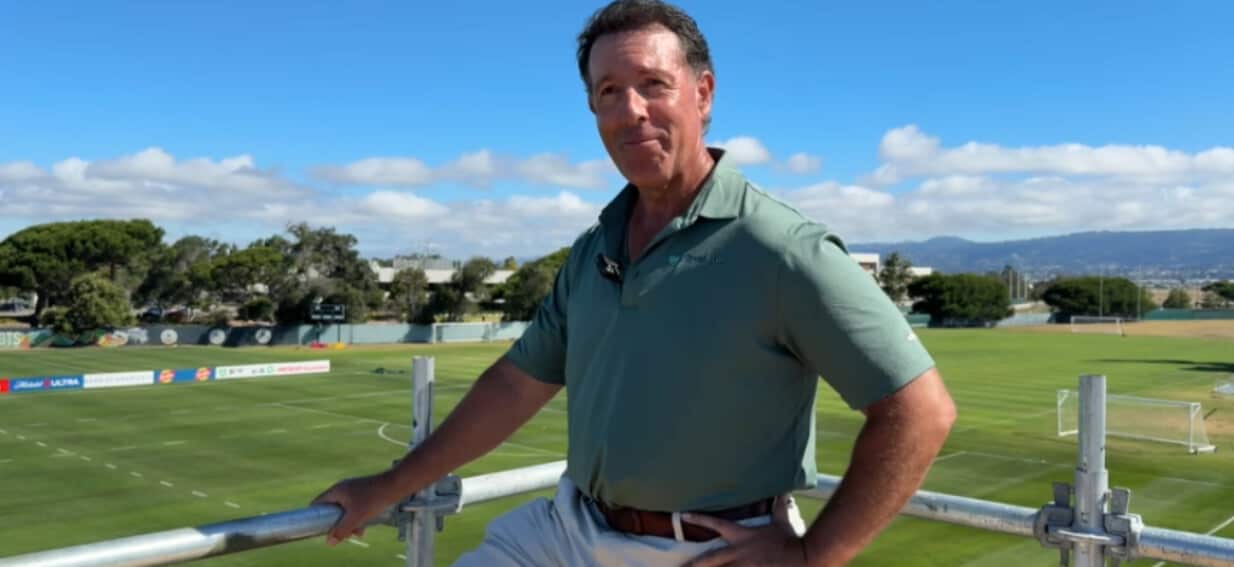
Walk onto the pitch at the Oakland Roots training facility in Alameda, California, and you might experience a strange flash of geographical confusion. The Northern California sun is bright, but look closely at the grass beneath the boots of the Australian national team, and you are actually looking at a piece of Western Australia. Look toward the sidelines, and a plastic dingo is staring right back at you.
This isn't a case of severe homesickness or a bizarre PR stunt. It's the reality of the Socceroos' home away from home as they prepare for their opening World Cup fixture against Türkiye in Vancouver.
When national teams travel across the globe for a tournament of this scale, they usually expect sterile, hyper-secured, completely corporate environments. Instead, Tony Popovic’s squad managed to land in a training base that feels weirdly, beautifully Australian. It didn't happen by accident, but the sheer level of coincidence waiting for them in California feels like a script nobody would dare write.
The Expat Groundskeeper and His Aussie Soil
The immaculate, FIFA-standard pitch the Socceroos are tearing up in preparation for Sunday's opener was engineered by Marc Logan. He's an Australian turf expert who has spent the last 27 years in the United States working on high-end golf courses and Major League Soccer pitches. When Oakland Roots SC bought the former training headquarters of the NFL’s Oakland Raiders with the dream of turning it into an official FIFA World Cup base camp, they handed the keys to Logan.
When the tournament draw came out, Logan realized his home country was coming to his facility. He didn't just prep the grass to basic specifications; he quite literally injected Australia into the dirt.
For years, Logan has been importing a specialized turf conditioning product called Mineral Magic, sourced directly from Western Australia. It is an amorphous silica compound that retains moisture and optimizes soil structure under intense athletic wear.
"We use a product that I import out of Australia called Mineral Magic, so a little bit of Australia is actually in the field," Logan said.
Then there is the dingo. Standing on the edge of the training field is a realistic model of Australia's famous wild dog. Logan brought it to the facility for two very practical reasons. First, it serves as a highly effective, low-tech scarecrow to keep local Californian birds from tearing up the pristine turf. Second, it gives him a chance to lean into his roots.
"I thought, 'what the heck?' I needed to have a dingo, just so I could say, has anybody seen my dingo?" Logan joked. "So it was important that I keep a little bit of Australia here."
The Six Degrees of Mat Ryan
The cosmic alignment inside the Alameda facility doesn't stop with the dirt or the wildlife. Football is a remarkably small world, but the connection waiting for Socceroos captain and veteran goalkeeper Mat Ryan takes it to an entirely different level.
Oakland Roots left-back Jesus de Vincente happens to be from Valencia, Spain. He grew up living just down the street from where Mat Ryan lived during his stint playing in La Liga. The connection goes deeper: de Vincente's mother actually works on the medical team at Ryan's former Spanish club, Levante.
When the local USL players go through their routines, or when the medical staff interacts, the overlap is immediate. De Vincente already knew Ryan as an elite professional from his home city, and now they share a training pitch on the other side of the Atlantic Ocean. These tiny, bizarre intersections remove the clinical, isolating feeling that usually defines a high-stakes World Cup camp.
Why Oakland Was the Smart Tactical Choice
Forget the emotional coincidences for a moment. From a pure performance standpoint, the decision by Football Australia to lock down this particular corner of the East Bay was a massive operational win.
Assistant coach Hayden Foxe noted that the federation undertook a brutal, exhaustive reconnaissance mission to find a spot that balanced elite infrastructure with genuine peace. The World Cup brings a circus of media, screaming fans, and suffocating corporate obligations. Players can easily feel imprisoned if they are stuck in a downtown luxury hotel or a hyper-visible stadium complex for a month.
The Alameda facility sits in a quiet, sun-soaked pocket right near the Oakland airport. It offers absolute privacy for Popovic to hammer home his tactical shape away from prying eyes, yet it provides enough open space for players to walk around, clear their heads, and live like normal human beings between sessions.
The club hosting them also mirrors the identity of the Australian squad. Founded by Edreece Arghandiwal, a former refugee from Afghanistan who found safety in Oakland, the Oakland Roots are built entirely around community identity, diversity, and grit. They are the ultimate sports underdogs in a city that recently lost the Raiders, the Golden State Warriors, and the Oakland Athletics to other markets. The Roots stepped into that void, bought this facility to secure a piece of the World Cup legacy, and built a world-class surface that will benefit local football for decades after the Socceroos head north.
What This Means for the Group Stage
The familiar vibe at camp could be the ultimate differentiator for a squad that historically thrives on culture and camaraderie. Turning a foreign American training ground into a place where the dirt is familiar, the groundskeeper talks like your neighbor, and the local players know your family isn't just a feel-good narrative. It keeps heart rates lower, keeps minds sharper, and eliminates the emotional fatigue of long-haul tournament travel.
The real test arrives on Sunday in Vancouver against a dangerous Türkiye side. But as far as the grueling, unseen work of preparation goes, the Socceroos couldn't have asked for a better foundation. They are standing on Australian silica, guarded by an Australian dingo, and fueled by a community that operates with the exact same underdog mentality that has defined Australian football for generations.
If you want to track how this unique preparation translates to the pitch, make sure your schedules are set for Sunday afternoon. The entire World Cup campaign is broadcasting live and free across Australia via SBS and SBS On Demand.