You get a passive-aggressive email from a colleague at nine in the morning. It ruins your entire day. You spend your lunch break mentally drafting a scathing reply. You snap at your partner over dinner. By midnight, you are still staring at the ceiling, blood pressure spiking, replaying the insult.
The person who sent that email? They forgot about it hours ago. They are sleeping soundly. You, however, are suffering.
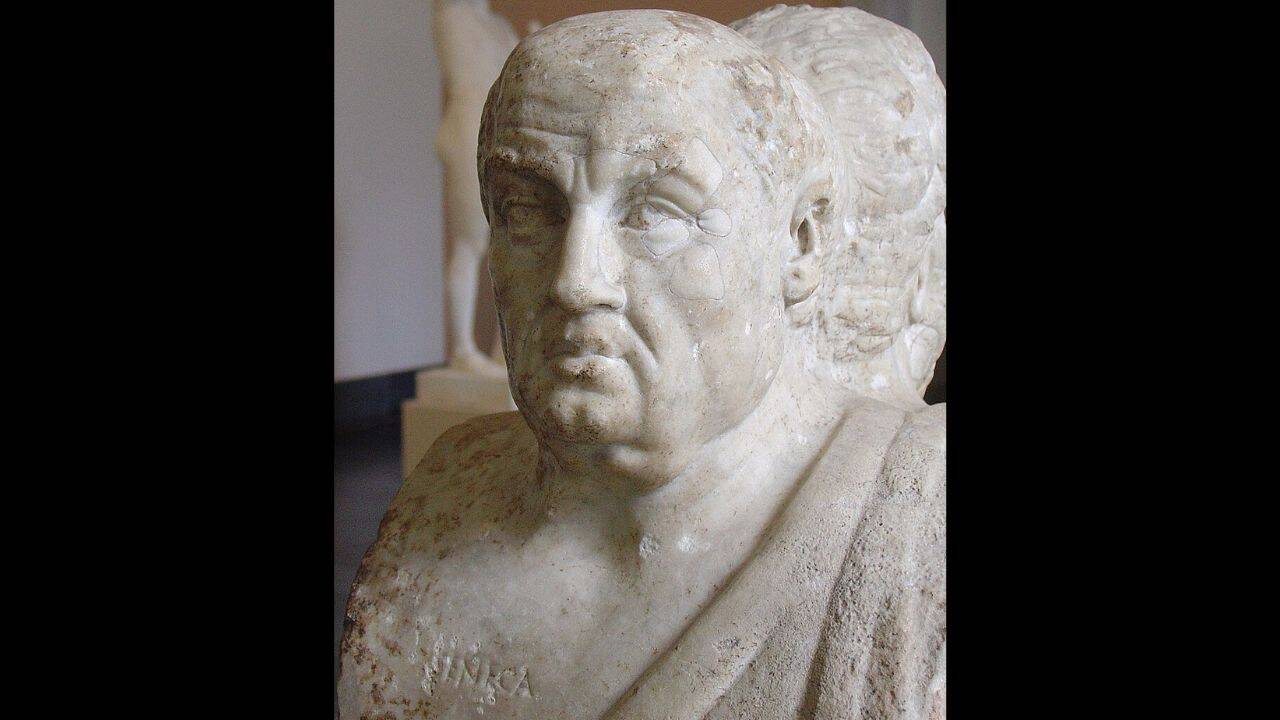
This is exactly what the Roman philosopher Seneca meant when he wrote that anger, if not restrained, is frequently more hurtful to us than the injury that provokes it.
We tend to look at anger as a weapon we wield against others. We think it shows strength, sets boundaries, or punishes bad behavior. But Seneca saw it for what it truly is. A trap. When you give in to rage, you are essentially setting fire to your own house just to fill your neighbor's yard with smoke. The math simply does not add up.
Inside Nero Court
Seneca did not think up this advice while sitting in a quiet, peaceful vacuum. He lived it. As a high-ranking advisor and tutor to the Roman emperor Nero, Seneca spent years working alongside one of the most volatile, dangerous tyrants in human history. He watched firsthand what happens when a human being completely removes the brakes from their emotions.
In Nero's court, a bad mood did not just mean a tense meeting. It meant executions. It meant close friends becoming enemies overnight based on raw suspicion. Seneca saw that Nero's unchecked fury destroyed the emperor's own sanity, reputation, and stability long before it ruined his enemies.
Because of this intense environment, Seneca wrote a massive, three-part essay called De Ira (On Anger). He did not view anger as a normal human emotion that just needed a little venting. He called it a temporary madness. He argued that while other vices merely warp our judgment, anger completely replaces it. It makes us blind, deaf, and entirely stupid right at the moment we need our wits most.
The Anatomy of a Second Injury
Think about the last time someone wronged you. Maybe someone cut you off in traffic. Maybe a friend made a thoughtless remark about your appearance.
The initial offense is what we can call the first injury. It lasts for a few seconds. It is a tiny, localized event.
When you get angry, you create a second injury. You take that small, temporary slight and invite it to live rent-free inside your head. You replay it. You amplify it. You turn a ten-second traffic incident into a two-hour foul mood.
"Anger always outlasts hurt," Seneca warned.
The person who cut you off is already miles away, completely unaware of your existence. They aren't suffering. You are the one driving with white knuckles, a racing pulse, and a ruined morning. You have effectively volunteered to punish yourself on behalf of a stranger's bad manners. It is an absurd way to live, yet we do it constantly.
Why We Secretly Love Being Mad
Let's be honest about something. Anger can feel incredible in the short term. It gives you a sudden rush of energy. It floods your system with adrenaline, making you feel righteous, powerful, and deeply justified. There is a strange, toxic comfort in adopting a victim mindset and declaring that you have every right to burn the world down around you.
We use anger as a shield. It is a lot easier to feel angry than it is to feel hurt, rejected, or scared. Anger covers up our vulnerabilities. If a partner forgets an important date, feeling sad requires acknowledging that we feel unvalued. Feeling angry, however, lets us go on the offensive.
But this temporary feeling of power is a complete illusion. You aren't in control when you are furious. The emotion is controlling you. You become entirely predictable. Anyone who knows how to push your buttons can manipulate your behavior at will. True strength is not about blowing up at people. True strength is having the internal restraint to look at an insult and decide it is too small to merit your attention.
The Real Cost of Unchecked Fury
When you let your temper run wild, you pay a massive bill across every area of your life. The damage isn't just emotional. It is physical, professional, and relational.
The Physical Toll
Modern medicine routinely confirms what Seneca suspected two millennia ago. Constant anger destroys the body. When you fly into a rage, your nervous system triggers a massive fight-or-flight response. Your cortisol and adrenaline levels skyrocket. Your blood vessels constrict.
Over time, keeping your body in this high-alert state leads to genuine, long-term health issues:
- Chronic high blood pressure
- Increased risk of cardiovascular disease and heart attacks
- Tension headaches and chronic muscle pain
- A weakened immune system that leaves you vulnerable to illness
You think you are throwing your rage at someone else, but your own internal organs are taking the hit.
The Professional Price
In the modern workplace, a reputation for being hot-headed is a career death sentence. Nobody wants to work with the manager who yells, the client who throws tantrums, or the coworker who takes every piece of constructive feedback as a personal declaration of war.
Anger destroys your ability to think strategically. It narrows your focus so drastically that you miss the bigger picture. You make impulsive decisions based on pride rather than logic. You say things in meetings that you can never take back, destroying years of built-up professional trust in a matter of seconds.
The Relational Decay
The people closest to us usually bear the brunt of our unearned fury. We come home stressed from external pressures and vent that poison onto our partners, children, or friends.
Anger creates distance. It breaks psychological safety. Once people realize that you might snap at any moment, they start walking on eggshells around you. They stop telling you the truth. They hide mistakes. They pull away emotionally to protect themselves. You end up isolated, wondering why everyone seems so distant, entirely blind to the fact that your own temper drove them away.
A Modern Roadmap to Outsmarting Your Own Rage
Seneca was a highly practical writer. He didn't just tell people that anger was bad and leave it at that. He outlined actionable strategies to dismantle the emotion before it takes over your brain. Here is a modern framework based on his ancient logic that you can start using today.
Stop Paying the Double Tax
When someone treats you poorly, that is a single tax imposed on you by the world. It happens. People are frequently selfish, tired, incompetent, or flat-out mean. You cannot control their actions, and you cannot completely prevent bad things from happening to you.
But when you choose to dwell on that treatment, when you nurse your resentment and let your temper run the show, you are voluntarily paying a second tax. You are allowing their bad behavior to steal your peace of mind, wreck your health, and ruin your relationships.
Stop paying the double tax. The next time someone provokes you, protect yourself. Keep your cool, look at the provocation, and recognize that your own rage is far more dangerous to you than anything they could ever say or do. Walk away, let the heat clear, and keep your power exactly where it belongs. With you.