When back-to-back 7.2 and 7.5 magnitude earthquakes ripped through northern Venezuela, Craig De Meillon didn't wait for a formal international committee to clear his travel. He texted his boss, grabbed a flight from Miami, and headed straight toward Caraballeda, the capital of the hard-hit La Guaira state.
The 43-year-old Australian volunteer firefighter landed with zero local contacts, absolutely no Spanish, and a specialized telescopic micro camera packed into his gear.
What he found was a country in absolute freefall.
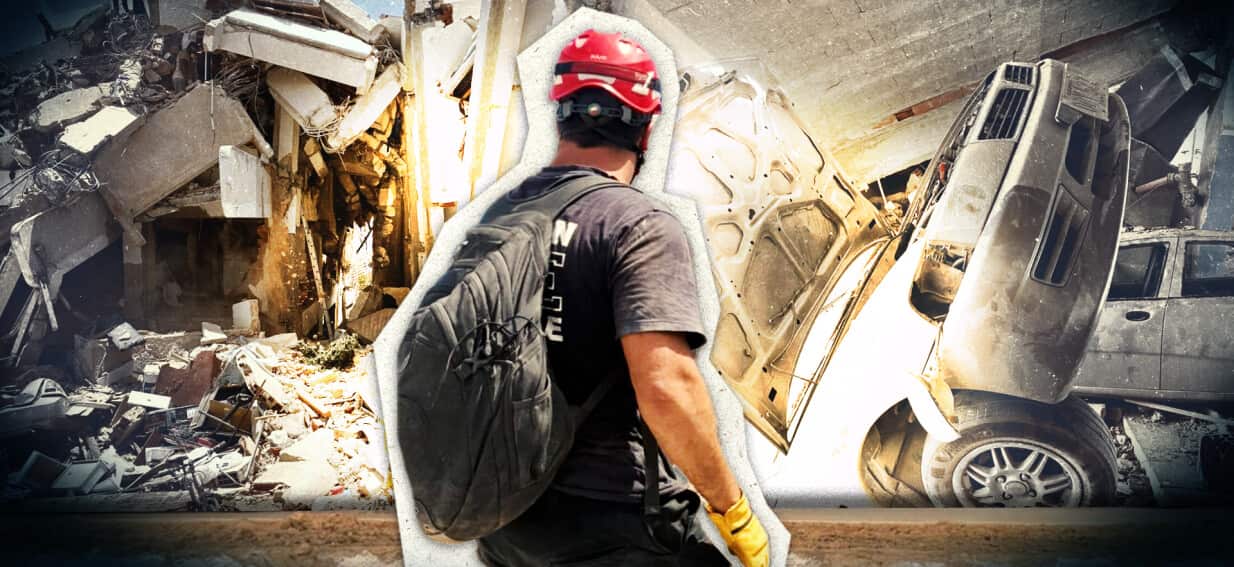
Official figures paint a grim picture. Over 1,400 dead, 50,000 missing, and an estimated 6.7 million people impacted across the region. Residential complexes have completely flipped on their sides. The power grid is entirely dead, mobile coverage is non-existent, and clean water has vanished.
While bureaucratic red tape usually stalls early international aid, De Meillon is part of a small, hyper-specialized contingent of independent operators who intentionally bypass the system to beat the brutal 72-hour survival window. It is chaotic, hot, and dangerous. But sometimes, going rogue is the only way anyone gets out alive.
Why Independent Rescuers Are Beating Official Aid Flights
In the immediate aftermath of a major seismic disaster, the official international relief pipeline is painfully slow. Passports need visas. Governments must negotiate entry protocols. Large non-governmental organizations (NGOs) have to secure logistical supply lines before sending teams into active disaster zones.
That process takes days. Under the concrete of a collapsed apartment building, days mean deaths.
De Meillon, who balances a corporate day job with intense volunteer disaster recovery work, relies on a highly controversial tactic, self-deployment. In the global disaster response community, jumping on a plane without an official invitation or structural support is considered a massive breach of protocol. It strains local resources and risks putting untrained people in harm's way.
But for someone with a decade of disaster relief experience spanning catastrophic earthquakes in Türkiye, Indonesia, and Nepal, the rules take a back seat to the clock.
Operating independently grants an unmatched level of tactical flexibility. Instead of waiting at a staging area for a centralized command to assign a grid, independent operators move directly into the debris fields alongside local residents.
The Chaos on the Ground in La Guaira
The scene in La Guaira is a mix of desperation and sheer community will. Local residents wearing nothing but sandals are clawing at mounds of twisted metal and heavy concrete with their bare hands. They are trying to reach family members buried deep beneath the ruins of 189 totally collapsed buildings.
The political environment complicates things further. Fury is boiling over across Venezuela. Citizens are actively confronting public officials over the perceived stagnation of the government's response. While interim president Delcy Rodríguez declared a national state of emergency, the local emergency infrastructure is completely overwhelmed. Roving teams of local police, firefighters, and medics are stretched to their absolute limits, forced to triaging which buildings to save and which to leave behind.
Into this organizational vacuum stepped De Meillon and his specific tool, a flexible telescopic pole camera.
Venezuela Earthquake Impact Data (La Guaira Region)
- Initial Shocks: 7.2 and 7.5 Magnitude
- Severely Damaged Buildings: 774
- Completely Collapsed Structures: 189
- Estimated Displaced Population: Millions without basic utilities
In a city with no electricity and zero communications, tech like a micro camera changes the entire dynamic of a rescue. Instead of guessing where to dig, rescuers feed the camera into tiny gaps in the rubble.
During his first night in the ruins, De Meillon used the camera to scan a void under a collapsed structure. The lens caught a glimpse of movement. Local volunteers converged on the spot, digging frantically with whatever tools they could find. Moments later, a 13-year-old girl crawled out of a hole in the earth, alive.
The Moral Dilemma of Going Rogue
You cannot talk about self-deployment without addressing the massive structural risks involved. The UN and major international coordination bodies explicitly discourage independent rescue efforts for several valid reasons:
- Resource Drain: Independent operators require food, clean water, and shelter in a zone where those exact resources are already depleted.
- Communication Gaps: Without central coordination, multiple teams might search the same building while others are totally ignored.
- Safety Hazards: Uncoordinated digging can trigger secondary collapses, trapping both the original victims and the rescuers.
Yet, when local systems collapse completely, these rogue operators fill a terrifying void. They don't arrive with massive trucks or shipping containers of food. They arrive with a highly specific skill, specialized tools, and the willingness to take a massive personal gamble. De Meillon acknowledges the reality of the situation, calling himself a "rare breed" precisely because most people cannot or will not drop everything to fly into a disaster zone completely unassisted.
The United Nations estimates that millions of affected citizens will need long-term emergency shelter, clean water, and sanitation. International aid flights from the United States and Europe are finally starting to touch down in Caracas, bringing the heavy equipment and massive supply chains needed for the long haul.
But for the people trapped under the immediate wreckage of La Guaira during those first critical hours, the macro-level logistics didn't matter. What mattered was anyone with a camera, a flashlight, and a willingness to dig.
If you want to support legitimate, coordinated relief efforts currently on the ground providing medical care, clean water, and food infrastructure to the millions displaced across Venezuela, consider directing donations to verified international agencies like the International Federation of Red Cross (IFRC) or Doctors Without Borders (MSF). They possess the established supply chains required to handle a crisis of this scale over the coming months.