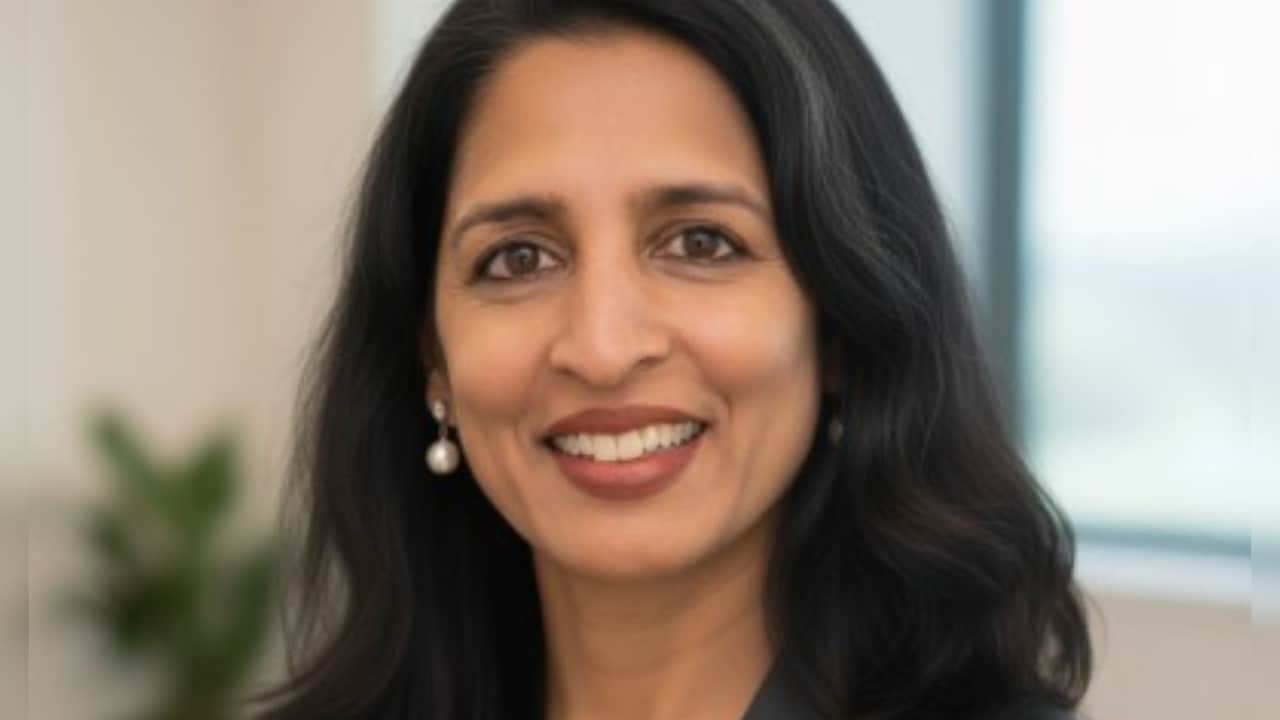
You don't need to found a tech company from your garage to build a multibillion-dollar fortune in Silicon Valley. The obsessed obsession with 20-something founders drops a blind spot right over the real wealth builders of the tech industry. Look at the Forbes 2026 America's Richest Self-Made Women list. Sitting comfortably at number seven is Jayshree Ullal, sporting an estimated net worth of $6.8 billion. She's the highest-ranked Indian-origin woman on that list, yet she never technically founded the company that made her rich.
Her wealth comes from execution. It's the byproduct of taking an early-stage, zero-revenue startup called Arista Networks in 2008 and scaling it into a cloud networking titan pulling in $9 billion in annual revenue. Most corporate executives settle for a comfortable salary and nice stock options. Ullal played a different hand. By walking away from a massive, secure executive job at Cisco Systems to lead a tiny competitor, she proved that world-class leadership can yield founder-level financial rewards.
The Big Corporate Exit That Made Millions but Set Up Billions
Most people dread starting over when they're already at the top. In 2008, Ullal ran Cisco Systems' data center and switching business. It was a massive operation generating roughly $15 billion in direct and indirect revenue. She spent 15 years climbing that ladder, arriving there after Cisco acquired her previous employer, Crescendo Communications, back in 1993.
At Cisco, she was one of the most powerful executives in the entire networking space, working alongside legendary CEO John Chambers. She oversaw more than 20 mergers and acquisitions, mastering how the plumbing of the internet worked. Then she walked away.
When co-founders Andy Bechtolsheim and David Cheriton came knocking to offer her the CEO position at Arista Networks, the company had no revenue. It was just a small, talented engineering group with an idea. Cisco completely dominated the enterprise networking world. Going head-to-head with them looked like career suicide to outside observers. But Ullal saw a massive structural shift coming that her giant employer couldn't pivot toward fast enough.
Betting Everything on the Cloud Shift
The traditional tech playbook favored massive, expensive, proprietary hardware. Big companies bought big boxes from Cisco to run their offices and data centers. Ullal realized that the upcoming explosion of data required something totally different: fast, flexible, open software running on standardized hardware.
She focused Arista on building high-speed Ethernet switches tailored specifically for giant data centers. It wasn't about selling to every small business down the street. It was about capturing the few giants who were quietly building the modern internet. Arista's software-driven approach caught the attention of early hyper-scalers who needed to move massive amounts of data without buying overpriced, rigid corporate equipment.
It took six years of relentless execution to get the company ready for the public markets. When she led Arista Networks to its initial public offering on the New York Stock Exchange in 2014, the industry realized this wasn't a temporary flash in the pan. The company became a legitimate alternative to the old guard.
Why the AI Boom Sent Arista Stock Soaring
If cloud computing made Ullal a billionaire, the generative AI boom solidified her position near the top of the wealthy elite. Everyone talks about the companies making the actual AI chips. Those graphic processing units get all the headlines. But those thousands of chips are useless if they can't talk to each other instantly.
That's where Arista comes in. The massive language models running in modern data centers require incredibly fast speeds to process petabytes of information. Arista’s deployment of high-speed 10, 25, 40, 100, 400, and 800 Gigabit Ethernet networking became the actual backbone of the artificial intelligence buildout.
Because Arista sells the heavy-duty infrastructure to tech giants like Microsoft and Meta, its revenue has surged, hitting approximately $9 billion. Ullal owns roughly 3% of Arista’s stock. As Wall Street sent tech valuations sky-high to fund the infrastructure of AI, her net worth scaled alongside it.
Hard Engineering Over Financial Engineering
Ullal didn't get here by being a smooth-talking generalist who happened to sit in the big chair. Her background is intensely technical. Born in London and raised in New Delhi, she moved to the United States to study electrical engineering at San Francisco State University before earning a master's in engineering management from Santa Clara University.
Her early career involved working as a senior strategic development engineer at Fairchild Semiconductor and designing high-speed memory chips for IBM and Hitachi at Advanced Micro Devices.
- Fairchild Semiconductor: Learned the baseline physics of modern computing.
- Advanced Micro Devices (AMD): Designed high-speed memory chips for heavy enterprise clients.
- Ungermann-Bass: Directed the internetworking business unit, bridging chips and networks.
- Crescendo Communications: Mastered the marketing and scale of first-generation Ethernet switching.
This foundation meant she couldn't be fooled by engineering teams making empty promises. She knew exactly what could be built, how long it would take, and why a specific layout would beat out the competition. That baseline technical authority is why Arista didn't collapse when competing against giants with ten times their budget.
The Reality of Her Billion Dollar Portfolio
Ullal's wealth isn't just tied up in a single basket anymore either. Her boardroom influence has expanded significantly across the enterprise software ecosystem. She sits on the board of directors of Snowflake, the cloud data company that executed one of the largest software IPOs in history back in 2020.
Her financial footprint shows a deliberate approach to family wealth too. Unlike tech founders who hoard their equity until a sudden exit, Forbes notes that a significant portion of her Arista holdings has been systematically allocated over the years to a family foundation, her two children, and her niece and nephew. Part of this structure honors her late sister, Susie Nagpal, who served as a Saratoga City Councilwoman before passing away from lung cancer.
What Ambitious Operators Can Learn From Her Move
The lesson here isn't just that tech stocks go up. The lesson is that the transition from a highly paid operator to an owner of equity is where true wealth happens.
If you want to replicate this type of trajectory in your own career, you have to look for specific structural opportunities.
- Identify the platform shift early: Ullal didn't leave Cisco for just any startup; she left because she knew the cloud would break the traditional networking model. Look for where infrastructure is struggling to keep up with current software demands.
- Trade corporate safety for equity control: Leaving a massive business division you spent 15 years building is terrifying. But salaries don't create billions. Equities do. If you have deep domain expertise, look for early-stage companies where your leadership can command serious equity stakes.
- Build a deep technical foundation first: You can't lead an engineering-first culture if you only understand spreadsheets. Take the time to understand the core product architecture of whatever industry you operate in.
Stop looking for a garage to start a company from if that isn't your strength. Find an exceptional engineering team that doesn't know how to scale, take the reins, and build the infrastructure that the world actually runs on.