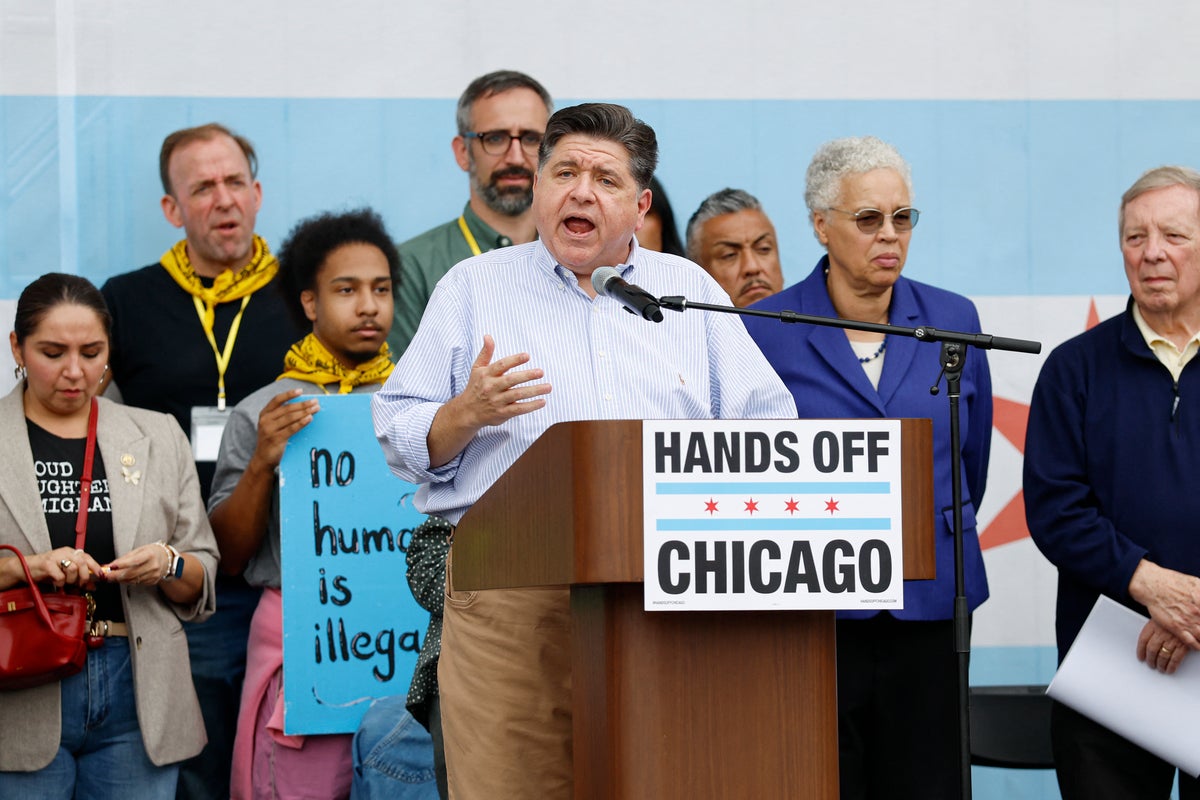
Every summer, a familiar script plays out in American politics. The temperatures rise, shooting numbers in major cities tick up, and politicians immediately line up to weaponize the headlines. Right on cue, Donald Trump fired off a social media post slamming Chicago following a violent weekend in mid-June 2026. He asked why Illinois Governor J.B. Pritzker hadn't called him for federal help, bragging that he could make the city safe in a month.
Pritzker and Chicago Mayor Brandon Johnson hit back fast. They called it political theater and told the president to stay away.
If you only watch cable news, you probably think Chicago is an active war zone. You might think it is the most dangerous square mile on earth. But if you actually look at the data, the reality is far more complicated than a short social media blast. The city isn't a single monolith of violence, nor is it completely safe. It's a place caught between massive statistical improvements and real, localized trauma.
The Math Behind the Headlines
The biggest trick in political rhetoric is confusing total numbers with per capita rates. Because Chicago is the third-largest city in the United States with over 2.7 million residents, its raw counts are always going to look huge. If a city has millions of people, it will naturally have more incidents than a city with 100,000 people.
When critics call Chicago the murder capital, they're looking strictly at raw totals. It's a lazy way to read data.
To understand true risk, you have to look at the rate per 100,000 residents. When you do that, Chicago doesn't even break into the top 50 most dangerous cities globally, and it ranks well below dozens of other American communities.
FBI crime reports show that cities like Memphis, Detroit, St. Louis, and Baltimore consistently see much higher violent crime rates per capita than Chicago. In fact, Chicago ranked 92nd in violent crime per capita among the nation's 200 largest cities in recent federal data reviews. Memphis routinely takes the top spot. Yet you rarely hear national politicians talking about Memphis with the same obsessive frequency. Chicago has become a symbolic shorthand for urban failure, used to score points with suburban and rural voters who rarely step foot in the city.
The Reality of Recent Trend Lines
The political attacks obscure a vital truth. Violent crime in Chicago has been falling significantly for years.
The city hit a terrible modern peak during the pandemic in 2021, logging over 800 homicides. It was a dark time, but it wasn't unique to Illinois. Crime spiked everywhere across the country as social safety nets tore apart. Since then, the numbers have steadily plummeted.
Data compiled by the University of Chicago Crime Lab outlines a staggering turnaround. In 2025, Chicago saw a 30% reduction in homicides compared to the prior year. Non-fatal shootings dropped by 35%. Carjackings were cut in half. This wasn't just a minor statistical blip. It was one of the sharpest drops in violent crime recorded by any major American city in decades, outpacing national averages.
So why does the perception of danger remain so high? Because a single mass shooting can wipe out months of quiet statistical progress in the public mind. During the Juneteenth holiday weekend in 2026, a drive-by shooting in Princeton Park on the far South Side injured 13 people in a single moment. Six people died across the city over those few days.
When something like that happens, nobody wants to hear a presentation on a 30% downward trend line. The pain is raw, and it's real. Politicians know this, so they leap on the tragedy to claim the city is out of control.
A Tale of Two Cities in One
To truly understand crime in Chicago, you have to discard the idea that the city experiences danger equally. I have spent years analyzing urban development and community metrics. The single most vital thing to know about Chicago is its hyper-segregation.
If you are a tourist visiting the Loop, walking down Michigan Avenue, or eating at a high-end restaurant in the West Loop, your statistical chance of experiencing violent crime is incredibly low. These areas are heavily policed, well-lit, and economically vibrant. They are as safe as downtown districts in any wealthy global city.
The vast majority of gun violence is concentrated within a handful of blocks on the South and West Sides—neighborhoods like Englewood, Garfield Park, and North Lawndale. Decades of systemic disinvestment, redlining, and a lack of economic opportunities have left these areas vulnerable.
According to historical Chicago Police Department logs, over 75% of homicide victims in the city are Black, and the violence is intensely localized.
For residents in these neighborhoods, the danger isn't a political talking point. It's an everyday reality. But using their struggle to paint the entire city as a lawless wasteland is dishonest. It ignores the structural issues driving the violence while scaring away investment that these communities desperately need to heal.
The Policy Battleground
The public spat between Trump and Pritzker isn't just about mean words on social media. It represents a fundamental ideological divide on how to fix American cities.
Trump's solution is purely militaristic. He has repeatedly threatened to deploy the National Guard or federal troops to occupy the streets of Chicago, claiming his administration could clean up the city instantly. He points to temporary federal crackdowns in other cities as a blueprint for success.
Local leaders see this as a dangerous power grab that mirrors authoritarian regimes rather than effective policing. They also point out a massive contradiction in the federal approach. While the administration threatens military intervention, the Department of Justice terminated $811 million in federal public safety and crime prevention grants.
Out of that money, $158 million was specifically earmarked for community-based gun violence prevention. Chicago lost roughly $16 million in that single funding cut, forcing prominent anti-violence groups to furlough workers and halt programs.
Local advocates argue that if the federal government wanted to help, it would fund street pastors, mental health workers, and violence interrupters instead of sending armored vehicles down residential streets. Street-level intervention programs like Chicago CRED and building alliances have proven that reaching high-risk individuals directly can drop shooting rates dramatically without relying solely on incarceration. When you cut their funding, you pull the rug out from under the very people making the city safer.
Actionable Steps to Understand Urban Safety Data
When reading about city crime statistics, stop falling for the political spin. Use this quick framework to analyze the real safety metrics of any urban area.
Check the denominator
Always look for the rate per 100,000 residents, not the total raw number of incidents. Small towns with high crime rates can easily look safer than massive cities simply because their total counts are small.Map the concentration
Look at district-by-district maps from local police data dashboards rather than citywide averages. Crime is almost always a hyper-local issue tied to specific blocks, not an entire zip code.Track year-over-year trends
Ignore single-weekend spikes driven by weather changes or holidays. Look at rolling six-month or twelve-month trend lines to see if local safety policies are actually working.Verify funding allocations
Look at whether a city is investing in long-term root-cause prevention or short-term reactive policing. True safety stability takes years of economic stabilization, not just a temporary surge of law enforcement.
The political war over Chicago's streets will likely keep raging through the next election cycle. But the next time you see a headline bashing the Windy City, remember to check the actual numbers before buying into the panic. Turn off the talking heads and look at the real data trends instead. It tells a completely different story.