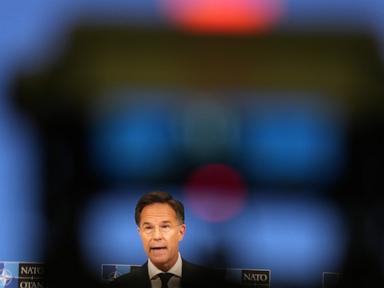
Mark Rutte just landed in Washington with the hardest job in global politics. He has to convince Donald Trump not to blow up the oldest military alliance in the West. It is not going to be an easy sell.
The NATO Secretary General is heading into a White House that feels increasingly hostile to the 77-year-old treaty. This face-to-face meeting comes exactly two weeks before the alliance gathers for its annual summit in Ankara, Turkey. The stakes are much higher this time around. We are not just talking about the usual complaints over European defense budgets. The current fight is deeper, messier, and tied directly to an active war in the Middle East.
Trump has renewed his threats to pack up and leave the alliance entirely. If you want to understand why the relationship is cratering right now, you have to look at what happened earlier this year.
The Iran War is Fracturing the Transatlantic Alliance
The breaking point arrived on February 28 when the United States and Israel launched a coordinated military campaign against Iran. Washington did not consult its European allies before pulling the trigger. The sudden outbreak of the Iran war sent shockwaves through European capitals, where leaders immediately faced intense domestic blowback.
When Trump demanded that European allies help him reopen the shuttered Strait of Hormuz and secure oil trade routes, the response from Europe was mostly silence. Some member countries openly criticized the American strategy. Others dragged their feet, hiding behind arcane legal debates or citing domestic political constraints.
Trump did not take the rejection well. He spent the last few days fuming publicly, telling reporters at the White House that the numbers the US spends on the alliance are crazy. He complained that when America needed help on small stuff, European leaders simply said no. He called it a stupid thing to say and explicitly warned that the US might show them the same indifference when they need protection from Russia.
The Pentagon is already turning those angry words into policy. Defense Secretary Pete Hegseth went to Brussels last week and laid into European defense ministers during a closed-door meeting. He scolded them for a long era of demilitarization and mocked them for prioritizing climate change over hard military capabilities. More importantly, Hegseth announced a sweeping six-month Pentagon review of the entire American military footprint in Europe.
The cutbacks have already started. The US military recently informed allies that it will scale back the emergency assets it dedicates to NATO's primary defense plans. We are talking about pulling back an aircraft carrier, support ships, aerial refueling planes, and dozens of fighter jets that were supposed to be on standby for a European crisis. The US is also drawing down its security forces in places like Kosovo. It is a clear message that the American umbrella is no longer guaranteed.
How Mark Rutte Plugs Into the Trump Persona
This is exactly where Mark Rutte comes in. The former Dutch prime minister did not get the job of NATO Secretary General because he is a brilliant military strategist. He got it because he knows how to handle Donald Trump. Over the years, Rutte earned a reputation as the ultimate Trump whisperer, a man who can defuse a presidential meltdown with a well-timed compliment and a heavy dose of pragmatism.
Rutte understands that arguing about treaties or abstract geopolitical ideals does not work with this White House. Instead, he focuses on giving Trump the win.
Look at what Rutte did just hours before his White House meeting. He booked an interview on Fox News Channel, knowing the president would be watching. During the broadcast, Rutte went out of his way to praise Trump's leadership. He declared that he is completely behind the president regarding the conflict with Iran. He shrugged off Europe's refusal to grant overflight and basing rights, calling those decisions isolated cases that did not represent the broader alliance. He even claimed that hundreds of US planes used European bases anyway to support the war effort.
It is a masterclass in public sycophancy, and it is entirely intentional. Rutte has done this before. During a previous summit, his extreme flattery raised eyebrows globally when he reportedly referred to the president as daddy during a closed session. He followed that up by sending a fawning text message that copied Trump's own favorite writing style, complete with random capitalized words. He told Trump that Europe was going to pay in a BIG way and that it would be his win. Trump loved the message so much he blasted it out on social media. He did the same thing in January when Rutte signed off a note with the phrase, can't wait to see you, yours, Mark.
Purists in European foreign policy circles find this behavior embarrassing. They think a NATO chief should not be groveling to an American president. But Rutte knows the alternative is the total collapse of Western security. If a few flattering text messages and a Fox News appearance keep American troops in Poland and Germany, Rutte thinks it is a price worth paying.
The Problem With the Five Percent Defense Target
The core of Rutte's strategy on Wednesday involves presenting Trump with massive new defense spending numbers. Trump has been shouting for years that Europeans are freeloaders who rely on American taxpayers to fund their security. Last year, under intense pressure from Washington, NATO leaders agreed to a massive new target. They pledged to invest 5% of their gross domestic product annually on defense by 2035.
That is an astronomical number. For decades, the alliance struggled to get members to hit a measly 2% target. Now, countries from Poland to Denmark are ballooning their military budgets. They are buying American-made fighter jets, missile systems, and artillery. Rutte plans to frame this massive wave of spending as a direct victory for Trump's aggressive negotiating style.
The strategy has a glaring flaw. Even though European countries are spending more money, they cannot build an independent military capability overnight. It takes years to build factories, train troops, and assemble advanced radar networks. Right now, Europe remains completely dependent on the US for logistics, intelligence, and nuclear deterrence.
If Trump decides to execute a sudden troop withdrawal, Europe cannot simply fill the gap by writing a bigger check. The Pentagon's current retreat from NATO's emergency response model means European commanders are already scrambling to create emergency backup plans. They are realizing that the American hardware they took for granted for 70 years might not be there when a crisis hits.
What Needs to Happen Before Ankara
Rutte's immediate goal in Washington is damage control. He needs to walk out of the Oval Office with enough of a consensus to prevent the upcoming Ankara summit from turning into a public disaster. If Trump spends the July summit attacking allies and trashing the mutual defense pact, the alliance will effectively be dead in the water, regardless of what the treaty says on paper.
European leaders need to stop hoping for Trump to change his mind. He won't. They have to change their own approach instead.
First, European capitals must stop publicly criticizing American actions in the Middle East if they expect American protection in Europe. You cannot expect Washington to guarantee your security while you actively undermine its wartime strategies. Rutte is trying to smooth this over by calling the disagreements isolated cases, but European prime ministers need to back that up with actual diplomatic cooperation.
Second, Europe has to accelerate its own defense industrial production. Buying weapons from the US keeps Trump happy in the short term because it supports American factory jobs. But Europe needs to build its own defense infrastructure so it can survive a potential US exit. The current reliance on American refueling planes and aircraft carriers is a massive vulnerability that Hegseth's recent cuts have exposed.
Rutte's visit to the White House will show us whether flattery still works as a tool of high-stakes diplomacy. He is gambling everything on his ability to soothe an angry president. If he succeeds, he buys Europe a little more time to get its act over. If he fails, the Western military alliance could fall apart before the summer is over.
To protect your own interests in this changing environment, you should closely monitor the official joint statements coming out of the White House over the next 24 hours. Look past the generic diplomatic language. Pay attention to whether Trump softens his rhetoric regarding the upcoming Ankara summit and check if the Pentagon offers any adjustments to its six-month troop review. The future of European security depends entirely on those details.