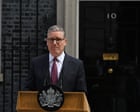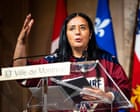
When the mayor of a major metropolis admits her own husband gets targeted by her own police force, the debate over street stops is officially over. Montreal Mayor Soraya Martinez Ferrada recently dropped a bombshell. Her husband, who is Black, was pulled over five times in a single year for no reason at all. None. He wasn’t speeding. His taillights worked fine. He was just driving while Black.
This personal revelation didn't happen in a vacuum. It follows a grotesque policing scandal that has completely shattered what little trust remained between the Montreal police (SPVM) and the communities they are paid to protect. A specialized night patrol unit in the Montreal-North borough, Station 39, was quietly dismantled. Sixteen officers face intense scrutiny. Two are suspended and could face criminal charges, while 14 others have been stripped of public contact.
The details are stomach-turning. Officers allegedly targeted Black and Arab residents, handed out bogus tickets, and even cut off chunks of people's dreadlocks to keep as trophies. Yes, trophies. In 2026.
This isn't just a case of a few bad apples. It is the predictable result of a broken system that relies on random police checks. It's time for a permanent moratorium.
Inside The Scandal That Disbanded Station 39
The crisis came to light during a rare, late-night press conference held by Montreal Police Chief Fady Dagher. Dagher looked visibly shaken. He admitted the allegations tarnished the uniform and stated he didn't think this kind of behavior was possible today. The investigation began in March after other officers blew the whistle on their colleagues.
Most of the officers under investigation are young men with less than five years on the force. They operated in Montreal-North, an area known for its rich multicultural fabric and historically tense relationship with law enforcement. Instead of building ties, this unit allegedly terrorized the neighborhood.
The public didn't find out until the unit was completely broken up. Now, Quebec's director of criminal and penal prosecutions is reviewing files to see if criminal charges are warranted. Meanwhile, the city’s Black public servants are furious. A committee representing Black municipal employees released a scathing letter demanding immediate internal reforms. They are tired of working for a city that permits this treatment of its citizens.
The Political Sidestepping Of Systemic Racism
While Mayor Martinez Ferrada is directly addressing the core problem, provincial leadership is playing semantic games. Quebec Premier Christine Fréchette called the actions of the officers unacceptable but explicitly denied that the problem is systemic. Fréchette argued that because it involves a small group of 16 officers, it can't be labeled systemic. According to her logic, systemic requires a much larger, organized scale.
Honestly, that argument is completely blind to reality. This is the exact same political tap-dance we saw from previous provincial leaders. By focusing solely on the number of bad actors, politicians ignore the environment that allowed these actions to thrive for years.
If a system lets rookies collect human hair as trophies without immediate intervention, the system is broken. Defining systemic racism out of existence won't make it disappear for the people who face it daily.
A Legal History of Biased Street Stops
We have piles of evidence proving this isn't a new phenomenon. In 2024, a Quebec Superior Court judge ruled on a massive class-action lawsuit brought against the city by citizens who were racially profiled and detained without justification. The judge ordered Montreal to pay damages, noting that Black and racialized residents were vastly overrepresented in street checks. The ruling stated plainly that racial profiling was the only plausible explanation for the massive statistical disparity.
Go back even further to 2022. A landmark Quebec court decision ruled that random traffic stops under article 636 of the Highway Safety Code were unconstitutional. The court found that the law gave police an arbitrary blank check to stop drivers, which naturally led to systemic racial profiling.
Yet, here we are four years later, and the mayor’s husband is still getting pulled over five times a year. The laws change on paper, but police culture on the street stays exactly the same.
Why Body Cameras Alone Won't Fix This
The mayor point-blank demanded that officers get equipped with body-worn cameras. The city already set aside $40 million in its budget for the tech, but they're waiting on provincial approval. Martinez Ferrada admitted herself that cameras aren't a silver bullet.
They aren't. Cameras only record the abuse; they don't change the underlying mentality of the person wearing the badge. A camera didn't stop officers in Station 39 from allegedly filing false reports or harassing youth. Tech is fine for accountability after the fact, but we need prevention.
The real solution is stopping the practice of random police checks entirely. If an officer does not have reasonable grounds to suspect a specific crime, they should not be allowed to initiate an interaction. Period.
What Needs To Happen Next
The annual Montreal police report was supposed to be released recently, but city hall postponed it. Instead, city councillors called Chief Dagher to a tense, closed-door meeting to answer for his force. That's a start, but the public needs answers too.
If you live in Montreal and want to see actual change, look at these concrete steps moving forward.
- Attend the Public Meeting on July 8: The city scheduled an open public forum where residents can directly question the Montreal police leadership about these allegations. Mark your calendar and show up.
- Push for an Independent Public Inquiry: Civil rights groups are demanding a full, independent inquiry outside of the SPVM's internal affairs. Provincial observer status isn't enough. Write to your Member of the National Assembly (MNA) to demand a real inquiry.
- Demand a Total Stop to Article 636 Loopholes: Police still use minor traffic pretexts to conduct random verifications. Call on the provincial government to rewrite police stop guidelines to strictly forbid stops without clear, objective criminal suspicion.
We don't need more political statements expressing shock. We need a permanent end to the arbitrary power that lets police turn regular citizens into targets.