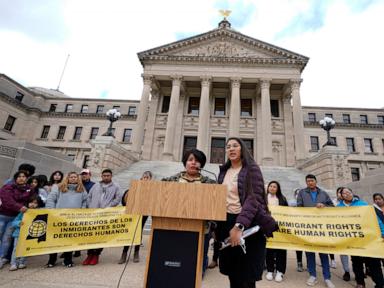
Mississippi is trying to build a first-of-its-kind database to track down every single undocumented immigrant living within its borders.
A state law going into effect this week hands the Mississippi Department of Public Safety the sweeping authority to compile a running registry of names, addresses, countries of origin, and criminal histories of people living in the state illegally. While conservative lawmakers pitch it as a common-sense safety measure, immigrant advocates are sounding the alarm. They see it as a dangerous blueprint for mass surveillance and a direct pipeline for federal deportation squads.
But beyond the intense political crossfire, there is a quieter, messier reality that nobody in the state capitol seems willing to admit. The law is a logistical nightmare that relies on an absolute misunderstanding of how federal immigration data actually works.
Inside the Registry What the Law Demands
The mechanics of Senate Bill 2114 are aggressive. The state's top law enforcement agency is instructed to use "all reasonable lawful investigative means available" to build this local registry.
This isn't just a simple head count. The state wants a granular tracker that records:
- Legal names and known aliases
- Physical addresses and movement histories
- Country of origin and age status (adult vs. minor)
- Ongoing deportation proceedings, locations, and federal case statuses
- Complete criminal histories within the state
The law mandates that state authorities share this database with local police and sheriffs. Interestingly, the text neither explicitly requires nor forbids sharing this list with U.S. Immigration and Customs Enforcement (ICE). But given the current federal push for mass deportations, the intention behind the data collection is clear to everyone involved.
Republican State Senator Angela Hill, the sponsor of the measure, argues that states have an absolute obligation to assist the federal government in discouraging illegal entry. In her view, you can't fix a problem until you know the exact scope of it.
But civil rights groups see a completely different motive. Advocacy managers at the ACLU of Mississippi point out that creating a state-sanctioned list of a specific group of people invites rampant profiling. It transforms immigrant communities into immediate targets, regardless of individual legal nuances.
The Administrative Trap of "Real-Time" Tracking
The fatal flaw of the Mississippi registry isn't just its ethics. It's the sheer functional math.
Federal immigration status is fluid. It isn't a permanent sticker slapped on your chest. You can be undocumented on a Monday, receive an adjusted visa status on a Wednesday, and have that status shift again three months later due to administrative backlogs or standard marriage filings.
Because people constantly move across state lines, overstay temporary visas, or enter new phases of legal appeals, a state database will inevitably become obsolete the moment it is saved to a server. For an agency like the Mississippi Department of Public Safety—which is built to handle highway patrols and driver's licenses—running a dynamic, real-time international border tracking system is a massive stretch of resources.
Even conservative immigration think tanks like the Center for Immigration Studies acknowledge the administrative wall. While they support the law's intent, their analysts openly state that officials will need a nearly foolproof mechanism to verify statuses without accidentally trapping legal residents, green card holders, or naturalized citizens in the dragnet.
Historically, when states try to parse federal immigration data on their own, they fail. Florida attempted a somewhat similar investigative push via an executive order by Governor Ron DeSantis in 2021, targeting migrants flown into the state. The results of that database remain largely invisible and shrouded in administrative quietness.
Smallest Population, Biggest Target
The strangest part of this massive legislative push is the target size. Mississippi has one of the absolute smallest percentages of undocumented residents in the entire country.
Data from the American Immigration Council shows that fewer than 28,000 undocumented immigrants live in Mississippi. That is less than 1% of the state's total population. The vast majority of these individuals work in agriculture, poultry processing plants, and hospitality—industries that keep the state's rural economy afloat.
By redirecting state troopers and local investigators to hunt down a tiny fraction of the population, the state risks breaking the fragile trust between local immigrant communities and everyday law enforcement. When people fear that talking to a local cop will land their family on a state deportation registry, they stop reporting domestic abuse. They stop pointing out local drug dealers. They stop acting as witnesses to violent crimes.
In trying to enforce federal immigration policies at a state level, Mississippi might accidentally make its own local neighborhoods a lot less safe.
What Happens Next
If you are an advocate, a community leader, or a resident concerned about how this new registry will impact your local community, here are the immediate, concrete realities to watch out for:
- Monitor Local Law Enforcement Compliance: Watch how your specific county sheriff interacts with the Department of Public Safety. The law mandates coordination, but local pushback over strained municipal budgets and broken community trust could create massive gaps in how the law is actually enforced on the ground.
- Track Legal Challenges: Civil rights organizations are already preparing statutory challenges to the registry. Expect federal lawsuits arguing that Mississippi is unconstitutionally stepping on the toes of federal immigration authority, similar to the legal battles that killed Arizona's infamous SB 1070 law years ago.
- Know Your Rights Campaigns: Expect local advocacy groups to ramp up education efforts. Even under this new law, individuals retain constitutional protections against unlawful stops and searches. Knowing exactly what local police can and cannot ask you during a traffic stop will be the primary line of defense against database profiling.