You think you know what a bad trip looks like. You imagine underground clubs, experimental synthetic compounds, or teenagers experimenting in a dark basement.
You don't expect it to happen in a tidy, modern kitchen on the 27th floor of an apartment building, triggered by a traditional home-cooked meal. If you enjoyed this article, you might want to read: this related article.
A man surnamed Xue just found out the hard way that the line between a family dinner and a life-threatening psychotic break is exactly 15 minutes of cooking heat. Xue, a resident of Yunnan province in southwestern China, ate a batch of improperly prepared wild mushrooms. Hours later, completely convinced his ancestors were calling him to "cross the tribulation and attain immortality," he opened his window and stepped out onto the narrow ledge of his 27th-floor flat.
He didn't intend to jump. In his altered reality, he was climbing toward spiritual transcendence. He scrambled down a vertical water pipe, tearing up his stomach against the metal as he descended into open space. For another look on this development, refer to the recent update from Wikipedia.
He survived by pure, mathematical luck. A neighbor on the 26th floor heard the scraping against the wall, looked out the window, and physically dragged Xue inside before gravity could do its job. Xue immediately fell into a profound coma and spent days hooked up to emergency gastrointestinal cleansing machines at the Affiliated Hospital of Yunnan University.
This isn't an isolated case of a reckless amateur. Xue had safely foraged and cooked wild fungi every single year for four decades. His mistake wasn't ignorance; it was a simple, everyday kitchen oversight that nearly cost him his life.
The See Hand Blue Phenomenon
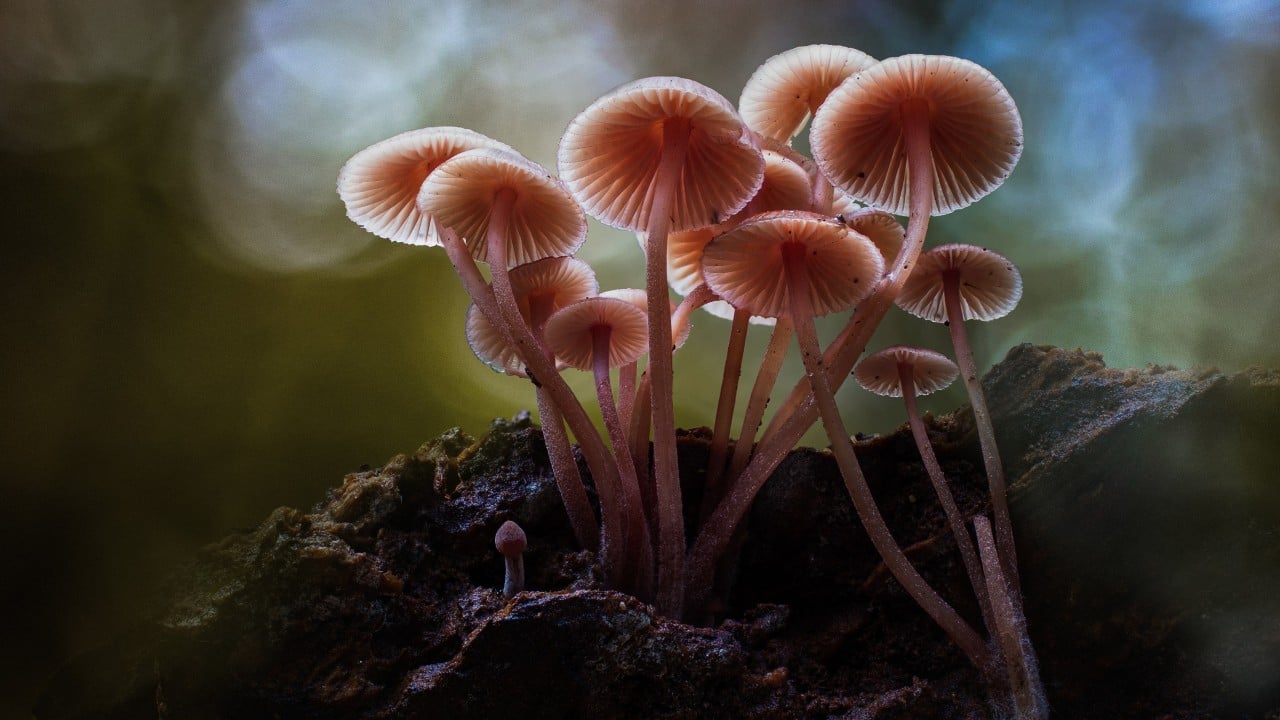
Western media quicky labeled the culprit a "magic mushroom," but that conjures up images of psilocybin, the active ingredient in standard hallucinogenic fungi. This was something entirely different. Xue ate jianshouqing, a highly sought-after wild bolete variety native to Yunnan. The name translates literally to "see hand blue" because the flesh of the mushroom instantly bruises an intense, indigo blue the moment it's cut or touched.
Jianshouqing is actually Lanmaoa asiatica, a species scientifically distinct from Western psychedelic mushrooms. It doesn't cause the abstract geometric patterns or emotional shifts associated with classic psychedelics. Instead, it triggers a very specific, clinically recognized psychiatric condition known as Lilliputian hallucinations.
When you overdose on jianshouqing, you see tiny people.
Data from Yunnan hospitals shows that a staggering 96% of patients admitted for this specific poisoning report seeing an abundance of tiny elves, soldiers, or miniature humans dancing and marching across their furniture. In Xue's case, the hallucination mapped directly onto his cultural background, morphing the visual distortions into a vivid, mythological quest for Daoist immortality.
The terrifying part is how easily the toxin is activated. Jianshouqing is perfectly edible, delicious, and considered a premium delicacy across Asia. But it contains potent, heat-sensitive neurotoxins that require a strict culinary threshold to break down: it must be cooked at a temperature above 120°C (248°F) for at least 15 continuous minutes.
The Cold Storage Trap
If Xue was an experienced cook who prepared these mushrooms every year, how did he end up on a 27th-floor water pipe?
He fell into a classic leftovers trap.
Xue originally sliced and fried two large portions of the mushrooms. He ate the first portion hot from the wok on day one with zero adverse effects; the initial cook time had successfully neutralized the toxins. He packed the second portion into a container and slid it into his refrigerator.
The next day, he took the cold mushrooms out and gave them a quick, casual toss in the pan just to warm them up. He didn't let them sit in the high heat long enough to achieve a deep, thorough recooking. To make matters worse, he paired the meal with alcohol.
Mixing these specific wild fungi with alcohol creates a toxic chemical synergy in the human body. Ethanol inhibits the liver enzymes responsible for processing foreign compounds, effectively supercharging the undercooked neurotoxins and sending them straight to the brain's receptors.
Even medical professionals aren't immune to this mistake. Dr. Zhu, the attending physician who treated Xue, openly admitted that he and his own family had accidentally poisoned themselves with jianshouqing for three consecutive years due to minor undercooking errors at home.
Managing Foraged Fungi Safely
The wild mushroom season spans from June to August, drawing thousands of culinary tourists and local foragers into the mountains. If you ever intend to cook or consume wild boletes or traditional varieties like jianshouqing, you cannot treat them like standard button mushrooms from the supermarket.
Stick to a non-negotiable safety protocol:
- Use a kitchen timer to ensure the mushrooms fry continuously at a high sizzle for a full 15 to 20 minutes before serving.
- Never casually reheat leftover wild mushrooms in a microwave or a brief pan-toss; they must reach boiling or high frying temperatures all the way through a second time.
- Keep alcohol completely away from the table when wild or exotic fungi are on the menu.
Xue survived his ordeal, but the psychological shock has altered his lifestyle permanently. Recovering in his hospital bed, he stated flatly that he has completely quit drinking, smoking, and eating wild mushrooms altogether. When a 40-year culinary tradition ends with you clinging to a high-rise drainpipe, the thrill of the forage quickly loses its appeal. If you lack professional culinary training or a flawless tracking system for your kitchen heat, stick entirely to cultivated, store-bought varieties.