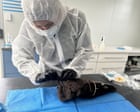
Australia is no longer the final safe haven. For years, our isolation protected us from the devastating wave of high-pathogenicity avian influenza sweeping the rest of the planet. That protection officially ended. The confirmation that a sick southern giant petrel found on a beach in South Australia tested positive for the deadly H5N1 strain means the virus is moving fast along our coastlines.
This isn't a drill anymore. It's the third confirmed case on the Australian mainland within a matter of days, following closely behind two detections in Western Australia. If you think this is just an issue for wild birds, you're missing the bigger picture. This specific virus has rewritten the rules of animal biosecurity globally. Now that it's here, our unique wildlife, our multi-billion dollar poultry industries, and even our pets face a direct threat.
Understanding what happened, why it happened now, and how we must adapt is vital to limiting the fallout. The old playbooks won't cut it anymore.
The Timeline of a Beachfront Arrival
The arrival of the virus in South Australia unfolded quickly, starting with a routine wildlife rescue that quickly escalated into a biosecurity response. On June 14, 2026, volunteers from the Wildlife Welfare Organisation spotted an unwell southern giant petrel on Knights Beach in Port Elliot. The beach sits roughly 70 kilometers south of Adelaide. The bird was clearly in a bad way, looking weak and completely exhausted by the ocean currents.
Rescuers took the bird to a care facility in Goolwa. At the time, they didn't know that Western Australia was about to announce its first wild bird cases. The state government's Department of Primary Industries and Regions, known as PIRSA, only caught wind of the situation on June 19. They spotted a social media post from the rescue group talking about the influx of beach-washed petrels.
PIRSA stepped in immediately. They took over care, euthanised the suffering animal, and sent off samples. An initial swab came back negative, then an subsequent test looked inconclusive. Finally, the Commonwealth Scientific and Industrial Research Organisation, or CSIRO, ran definitive tests. On Wednesday, June 24, 2026, South Australian Premier Peter Malinauskas stood alongside Federal Agriculture Minister Julie Collins in Canberra to deliver the news. The bird had H5N1.
Right now, a fourth case is suspected across the border in Western Australia. A dead southern giant petrel was found in the Quindalup region in the state's southwest. If the CSIRO confirms that one too, we are looking at four rapid-fire cases across thousands of kilometers of southern Australian coastline.
The Pelagic Warning Signs from Subantarctic Islands
For a long time, experts assumed that if H5N1 made it to Australia, it would slip in through the north. The theory was that migratory shorebirds flying down from Asia along the East Asian-Australasian Flyway would bring it. Instead, the virus blindsided us from the freezing south.
Pelagic birds—species like skuas and petrels that spend almost their entire lives out on the open ocean—brought the disease to our southern beaches. They rarely touch land on the mainland unless they are deeply sick or battered by severe weather. Unusual storm systems over the Southern Ocean likely pushed these infected, weakened birds toward our shores.
The source of the infection isn't a mystery. Genome testing on the brown skua found in Western Australia traced the virus directly back to subantarctic territories. Specifically, it points to Heard Island and the McDonald Islands, located thousands of kilometers southwest of Perth.
What happened on Heard Island over the last year was an absolute horror show. Researchers recently confirmed that an estimated 13,000 southern elephant seal pups died on the island during late 2025 and early 2026. In the worst-hit breeding groups, 97% of the pups died. Hundreds of adult king penguins, skuas, and petrels dropped dead right alongside them. The virus tore through those dense colonies with terrifying speed.
Because petrels and skuas scavenge on dead animal carcasses, they fed on the infected seal pups and penguins. They contracted the H5N1 clade 2.3.4.4b strain, took flight, and carried the pathogen straight north to the Australian mainland.
The Real Danger to Local Ecosystems and Farms
We need to address a common misconception. Australia has dealt with bird flu outbreaks before, including recent cases in Victoria and New South Wales. Those domestic outbreaks involved H7 strains of the virus. While H7 is highly destructive to commercial chicken farms and requires massive culls, it generally stays contained within agricultural zones. It doesn't spill over into wild bird populations at scale.
H5N1 is an entirely different beast. This strain adapted to thrive in wild birds. It doesn't need crowded poultry sheds to spread. It uses the natural movements of wild flocks to travel across continents.
The primary worry right now is the sheer vulnerability of Australia's native species. Our wildlife has zero evolutionary immunity to this pathogen. Black swans, fairy penguins, swift parrots, and even unique mammals like Tasmanian devils are in the firing line. If the virus establishes a foothold in local populations, it could push already endangered species directly toward extinction. The Invasive Species Council is calling for an urgent 200 million dollar funding injection from governments to protect native wildlife and manage the fallout.
Then there's the commercial farming side. The Australian poultry industry is on absolute high alert. Major producers like Inghams have already locked down their facilities in Western Australia to keep wild birds away from commercial stock. If H5N1 gets inside a commercial egg or chicken farm, the results are devastating. In the United States alone, farmers had to cull over 200 million chickens to control the spread.
The threat doesn't stop at poultry. In the US, H5N1 mutated to infect dairy cattle, turning up in milk supplies and spreading across multiple states. It also popped up in Canadian wild pigs. Our agricultural sector faces a massive financial risk if this virus jumps from our beaches into our pastures.
Pet Safety and Commercial Blindspots
If you own a cat or a dog, you need to pay attention. This specific strain of bird flu is incredibly virulent to felines. Cats that come into contact with infected bird carcasses or drink contaminated water can develop severe neurological symptoms, blindness, and rapid organ failure. The mortality rate for domestic cats infected with this strain is incredibly high.
Dog owners aren't entirely safe either. If your dog loves to sprint down the beach and sniff or pick up dead birds, they are putting themselves at risk.
Biosecurity agencies are warning pet owners to alter their daily habits immediately. If you live anywhere near a coastal area where migratory birds rest, keep your cats strictly indoors. When you walk your dog on the beach, keep them securely on a leash. Do not let them explore rock pools, sand dunes, or kelp wash lines where dead or dying seabirds might be hidden.
A major blindspot in our current response is a heavy reliance on passive surveillance. Government agencies found out about the South Australian case because a volunteer group posted about it on social media. That's a massive risk. We cannot rely on casual internet scrolling to track a highly contagious global pandemic. Our authorities need to transition to active, aggressive testing regimes along high-risk coastal zones before the virus slips past our radar completely.
Exactly What to Do If You Spot a Sick Seabird
The federal government has put up 113 million dollars to prepare for this outbreak, but money alone won't stop the spread. The general public forms the actual frontline of defense. If you spend time near the ocean, you need to know how to spot the signs of infection and what actions to take.
Look out for wild birds showing clear signs of neurological distress. This includes swimming or walking in circles, an inability to fly, a drooping head, tremors, or severe breathing difficulties. If you notice a cluster of five or more dead wild birds of any species, or even a single dead or dying seabird or bird of prey, you must act.
Follow these direct steps to handle the situation safely.
Avoid all physical contact
Do not touch the bird, its feathers, or its immediate environment. Keep children and your pets far away from the area. The virus sheds heavily in bird feces and respiratory secretions.Record the exact details
Take photos or videos from a safe distance. Note down the precise geographic coordinates using your phone's map app. Look for distinct landmarks if you are on a remote stretch of beach.Report the sighting immediately
Call the national Emergency Animal Disease Hotline on 1800 675 888. This line connects you directly to biosecurity officers who can dispatch trained personnel to collect the animal and conduct testing.
Do not try to be a hero by rescuing the bird yourself. Bringing an infected pelagic bird into a local vet clinic or an unequipped wildlife shelter risks contaminating the entire facility and spreading the pathogen to other animals or handlers. Let the professionals handle the collection under strict quarantine protocols.
The arrival of H5N1 bird flu in South Australia proves the virus is moving along our coastlines. By staying alert, keeping your pets restrained, and reporting sightings instantly, you can help protect our fragile ecosystems from a full-scale ecological disaster.