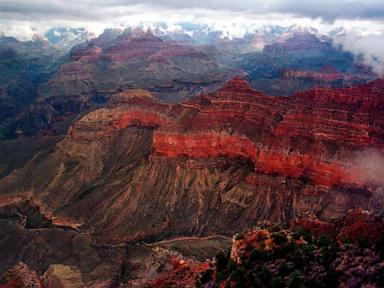
The Grand Canyon looks beautiful from the rim. It looks peaceful. It looks like a postcard. But down inside that massive expanse of rock, the Earth is hiding a thermal trap that catches hundreds of hikers off guard every single year.
We just saw the tragic cost of getting fooled by this terrain. Three hikers lost their lives in a single week due to suspected heat illness. On June 12, 2026, a 72-year-old man fell ill on the South Kaibab Trail and died before help could arrive. Just four days later, on June 16, a 67-year-old man and a 68-year-old woman were found dead on the North Kaibab Trail under similar brutal conditions. Earlier in June, an 18-year-old man also died after experiencing severe heat-related symptoms.
The National Weather Service issued an extreme heat watch covering the inner canyon, warning that temperatures at the bottom will soar past 110 degrees Fahrenheit.
Most people don't understand how a hike can turn fatal so quickly. They think they're fit. They think they brought enough water. They don't realize that the canyon operates under an entirely different set of physics than almost any other mountain trail in the country.
The Reverse Mountain Illusion
When you climb a normal mountain, the hardest part comes first. You sweat your way to the top, enjoy the view, and then coast downhill back to your car. Your body works hardest when you have the most energy.
The Grand Canyon flips this logic completely on its head.
You start at the top, where the air is cool and breezy. Walking down is easy. Gravity does all the work. You feel like a champion. You breeze past the first few miles, descending deeper into the gorge. But every step down is a step into a hotter, denser environment.
The temperature change is radical. For every 1,000 feet you descend, the temperature climbs by about 5.5 degrees Fahrenheit. When the South Rim sits at a comfortable 75 degrees, Phantom Ranch at the very bottom can easily hit 100 degrees or more. You don't feel the true weight of the heat until you turn around to head back up.
By then, you're already exhausted. You've used up half your water. Your legs are tired from braking on the descent. Now you have to climb thousands of vertical feet in an oven. That's when the panic sets in.
What Heat Actually Does to Your Body
Heat isn't just uncomfortable. It changes how your organs function. When your core temperature rises, your heart has to pump furiously just to push blood to your skin to release heat. That means less oxygen is getting to your muscles and your brain.
Your body relies on sweating to cool down. In the dry Arizona air, sweat evaporates almost instantly. You might feel completely dry even though you're losing liters of fluid. If you aren't replacing that fluid along with essential salts, your system shuts down.
Heat Exhaustion vs Heatstroke
You need to know the difference before you step onto the dirt. Heat exhaustion makes you feel dizzy, nauseous, and weak. Your skin gets clammy. You might get a headache that feels like a vice grip around your skull. If you stop, get into the shade, and drink water with electrolytes, you can usually recover.
Heatstroke is an emergency. It means your body has lost the ability to cool itself. Your core temperature spikes above 104 degrees. Your skin turns hot and dry, or sometimes heavily sweating but completely flushed. You get confused. You lose coordination. Your speech slurs. Once a hiker reaches this stage, their brain and organs are cooking. Without immediate medical intervention, they will die.
In the inner canyon, emergency crews can't just drive an ambulance to you. They have to fly a helicopter or ride mules. If the wind is too high or the air is too thin from the intense heat, helicopters can't even lift off. You're entirely on your own.
The Death Traps Inside the Canyon Rock
The rocks themselves make the climate worse. The dark schist and sandstone layers at the bottom of the canyon absorb solar radiation all day long. They act like bricks in a pizza oven.
Even when the sun goes down, these rocks radiate heat back into the air. The canyon walls trap this energy, preventing the lower elevations from cooling off at night. This means that if you start your hike at 5:00 AM thinking you're beating the heat, the bottom of the canyon might already be hovering around 90 degrees from the night before.
The air at the bottom is also under higher atmospheric pressure. As air sinks into the canyon, it compresses. Compression naturally heats air up. You aren't just dealing with the sun; you're dealing with a giant atmospheric heat pump.
The Truth About Water and Hydration
Drinking water isn't enough. In fact, drinking too much plain water can kill you faster than dehydration.
When you sweat, you lose water and sodium. If you chug gallons of pure water without replacing the salt, you dilute the sodium left in your blood. This triggers a dangerous condition called hyponatremia. It causes your brain cells to swell, leading to confusion, seizures, coma, and death.
Experienced desert hikers track their food intake just as closely as their water. You need salty snacks. Pretzels, chips, sports drinks, and electrolyte powders are mandatory. If you aren't eating, you shouldn't be drinking water.
A good rule of thumb is to balance your fluid intake. Drink a sports drink or an electrolyte mix for every bottle of plain water you consume. Keep munching on snacks even if the heat makes you lose your appetite. Your life depends on it.
How to Survive a Grand Canyon Summer
If you still choose to visit during the hottest months of the year, you have to change your strategy completely. Forget your usual hiking habits.
First, stay off the trails between 10:00 AM and 4:00 PM. This is non-negotiable. The National Park Service screams this warning at every trailhead, yet rangers still find people hiking down the bright Angel trail at noon with a single plastic bottle of water. If you're out on the trail during these hours, find a shadow, sit down, wet your clothes, and wait it out. Do not keep moving.
Second, understand your limits. The North Kaibab Trail is notoriously steep and long. The South Kaibab Trail has almost zero shade. If you aren't an elite athlete conditioned for extreme desert environments, do not attempt to hike to the river and back in a single day. It's a recipe for disaster.
Third, use the wet method. If you pass a water station or a stream, soak your shirt. Soak your hat. Soak your hair. Artificial sweating keeps your core temperature down without forcing your body to deplete its own fluid reserves.
Check the Local Conditions Right Now
The current weather setup is highly volatile. Along with the extreme heat watch at the canyon, a wildfire called the Pocket Fire broke out just 90 miles south near Sedona, forcing evacuations in Oak Creek Canyon. The air throughout the region is dry, the humidity is practically nonexistent, and fire danger is off the charts.
Don't assume conditions will be fine because they looked good online last week. Check the official National Park Service alerts before you leave your hotel room. If they say stay off the trails, stay off the trails.
Pack twice as many electrolytes as you think you need. Pack a flashlight in case your hike takes hours longer than planned. Most importantly, leave your pride at the rim. Turning around early isn't a sign of weakness; it's how you make sure you get to hike another day.