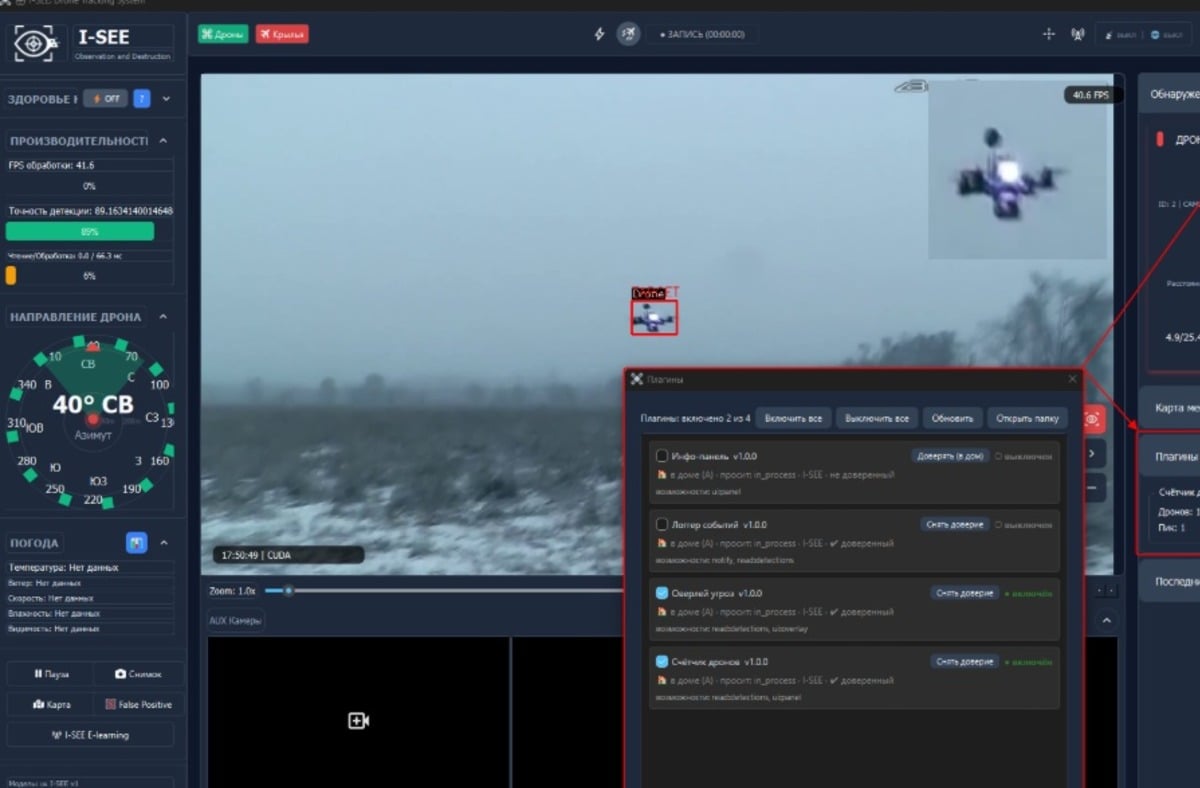
Traditional military procurement is too slow to handle the speed of modern drone warfare. By the time a defense contractor designs, builds, and fields a proprietary counter-UAS system, the enemy has already changed their drone frequencies, updated their navigation algorithms, and rendered that expensive hardware obsolete. Frontline units cannot afford to wait six months for a vendor to issue a patch or build a custom hardware adapter. They need tools that adapt on the fly.
Ukrainian defense tech firm I-SEE is tackling this issue directly. The company just opened its core artificial intelligence drone detection and tracking ecosystem to frontline engineers, third-party software developers, and outside hardware integrators. Instead of keeping their system under lock and key, they are providing an Application Programming Interface (API), a Software Development Kit (SDK), and a flexible plugin framework.
This move directly answers a massive problem plaguing modern military forces: the desperate need to tie completely different sensors and weapons into a single, cohesive defensive web without getting bogged down in proprietary friction.
The Architecture of Open Warfare
If you have ever tried to integrate military-grade hardware from different manufacturers, you know it is usually a nightmare of proprietary code and incompatible protocols. I-SEE is shifting away from that closed-product mentality. Their new architecture splits the system into two distinct zones: the unchangeable core brain and the modular edge extensions.
The core stays closed for safety and performance reasons. It handles the critical heavy lifting. It does the computer vision drone detection, real-time tracking, ballistic calculations, target selection, and safety interlocks. Everything else can be modified by third parties.
The execution layers are handled through three specific integration points:
- The API: Allows external software, like a localized command post or a digital tactical map, to pull real-time target data directly from the system.
- The SDK: Gives developers a pre-built toolkit, including client libraries and a web tester, to build custom tracking applications in days rather than months.
- The Plugin Framework: Lets engineers write a new module, drop it into the software, and have the interface automatically verify and load it as a new panel or video overlay.
This design means a forward-deployed unit can take a newly captured electronic warfare jammer or a freshly delivered automated turret, write a custom plugin over a weekend, and link it straight to the AI tracking brain. No reverse engineering. No waiting for a corporate update.
Processing at the Edge When the Network Goes Down
A major flaw in many Western defense systems is a heavy reliance on cloud processing or active high-bandwidth networks. On a modern battlefield, the radio frequency spectrum is incredibly messy. Electronic warfare systems jam everything they can, and cloud-reliant systems quickly turn into expensive paperweights.
The I-SEE system handles this by using local Edge AI. The software does not send video feeds back to a distant server for analysis. Instead, it processes data right on the device. It can turn practically any standard optical camera or thermal sensor into an intelligent tracking station using local computer vision. It does not need an active internet connection to see, classify, and track an incoming target.
Right now, the platform is already integrated and working with kinetic net-launchers. The company is actively conducting laboratory tests to link the core brain to automated machine-gun turrets, electronic warfare jamming blocks, and autonomous interceptor drones.
Breaking the Vendor Lock-In Trap
Big defense contractors love closed systems because lock-in guarantees long-term revenue. If you want to connect a new radar to an existing missile or gun system, you have to pay the original manufacturer millions of dollars to write the interface code.
That model is failing. Look at recent field tests conducted by the US Army, like Operation Condor Rebirth, where teams had to manually bolt together sensors from Echodyne, turrets from Moog, and networks from Picogrid just to get different systems to communicate. The industry is realizing that the software connecting the pieces matters just as much as the weapons themselves.
By handing the keys over to the open-source and third-party developer community, I-SEE is bypassing the traditional corporate gatekeepers. If a frontline unit needs to feed target data into an adjacent unit's software, they can use the API to bridge the gap immediately. If a plugin crashes, the system isolates it, keeps the core tracking brain running, and flags the error to the operator without dropping the defense network.
What This Means for Your Next Deployment
If you are an engineer, system integrator, or defense acquisition officer, the shift toward open counter-UAS platforms changes how you should evaluate technology.
First, stop buying single-purpose, closed counter-drone hardware. If a vendor cannot provide an open SDK or API to let you export target data to your broader command networks, that system will likely become obsolete within months of deployment.
Second, utilize the available developer toolkits. If you are working with the I-SEE platform, download the client libraries and experiment with the provided template modules. You can build functional prototype integrations with your existing sensor packages on a local test bench without waiting for corporate permission.
The future of drone defense belongs to the fastest software iteration cycle, not the biggest defense budget. Keeping platforms open is the only way to stay ahead of the threat.