French retail giant Carrefour has been trying to conquer Spain for decades. Yet, despite throwing billions into price wars, massive acquisitions, and frantic convenience store rollouts, the French group remains firmly stuck in second place.
The real problem isn't just that Carrefour is losing. It's that Juan Roig's Mercadona has turned Spanish grocery shopping into a cultural phenomenon that standard retail playbooks can't break.
By mid-2026, Mercadona sits comfortably on an iron throne, commanding nearly 30% of the entire Spanish grocery market share. Carrefour, trailing far behind at roughly half that figure, faces a harsh reality. The hypermarket model that made the French company a global powerhouse is structurally misaligned with how Spanish consumers actually want to buy their food.
The Proximity Trap and the Dying Hypermarket
Go to any major city in Spain—Madrid, Valencia, Seville. You won't find locals driving twenty minutes to a massive suburban hypermarket to buy a month's worth of food. They walk down the street.
Mercadona realized this early. They focused almost exclusively on a single format: a clean, bright, 1,500-square-meter neighborhood supermarket. They placed these stores strategically within a 10-minute walk of millions of apartments.
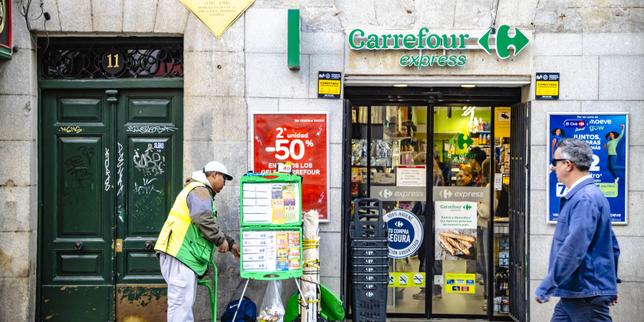
Carrefour built its legacy on the hypermarket. These massive suburban warehouses sell everything from flat-screen televisions to Iberian ham. It's a great model for rural France, but it's a dragging anchor in Spain. To counter their dropping hypermarket traffic, Carrefour went on an aggressive convenience store expansion, opening scores of Carrefour Express and Carrefour City locations.
They even hit a milestone by opening their 100th Spanish proximity store of the year. But these smaller shops feel like an afterthought. They suffer from erratic pricing, cramped aisles, and fragmented product selections.
Mercadona stores, by contrast, offer a uniform experience. When you walk into one, you know exactly where the milk is, exactly how much it costs, and exactly what quality you're getting.
Hacendado vs No Berries: The Private Label War
If you want to understand why Carrefour is struggling, you have to look at the psychological hold of Mercadona private labels. In most countries, store brands are the cheap option you buy when you're trying to save money. In Spain, Mercadona private brands like Hacendado (food), Deliplus (cosmetics), and Bosque Verde (household cleaning) are treated like premium goods.
Consider the cult-like following of Deliplus olive oil body cream or Hacendado frozen churros. French tourists and cross-border shoppers literally load their car trunks with these specific items because the quality rivals high-end brands at a fraction of the cost.
Spanish Grocery Market Share (2026 Estimate)
┌────────────────────────────────────────┐
│ Mercadona                    ~30%      │
├─────────────────── Graf ───────────────┤
│ Carrefour         ~15%                 │
├────────────────────────────────────────┤
│ Lidl              ~6-7%                │
└────────────────────────────────────────┘
Carrefour relies heavily on a strategy of aggressive promotions—the classic "3 for 2" deals, seasonal discounts, and complex loyalty club points. It's exhausting for the consumer.
Mercadona uses a strict Siempre Precios Bajos (Always Low Prices) policy. No confusing coupons, no rotating weekend sales, no loyalty apps. This predictability builds massive consumer trust during inflationary cycles. Spanish shoppers don't want to calculate discounts at the register; they want everyday stability.
The 2026 Pivot: Automation vs Expansion
The battleground has shifted dramatically this year. Mercadona is currently rolling out its new Tienda 9 store concept across Madrid. It's a highly automated, hyper-efficient model focused heavily on ready-to-eat meals, ditching traditional open butcher and fishmonger counters for pre-packaged, high-margin alternatives.
Paradoxically, Mercadona rejects fully autonomous self-checkout lanes for this format. They understand that their highly paid, friendly staff is part of the brand's local appeal. They keep human cashiers to maintain a welcoming neighborhood atmosphere while optimizing the back-end supply chain.
Carrefour is taking a completely different gamble. The French group is executing a global "data-centric, digital-first" strategy, pouring 3 billion euros into e-commerce expansion, retail media, and digital operations. They've set an ambitious target to triple their global e-commerce gross merchandise value.
But digital retail media doesn't solve Carrefour's foundational Spanish problem: their physical stores feel cold compared to the competition. While Carrefour optimizes algorithms and pushes home delivery apps, Mercadona is perfecting the physical act of buying fresh tortilla de patatas down the street.
What Carrefour Must Do Next
Carrefour isn't going to leave Spain; it's their second-most important European market. But to stop losing ground to both Mercadona and a surging Lidl, the French executive team needs to stop applying French solutions to Spanish cultural habits.
If you're tracking this corporate rivalry or managing retail investments in Southern Europe, here are the real structural shifts to watch for:
- Aggressively downsize underperforming hypermarkets: Convert excess suburban floor space into automated fulfillment centers for e-commerce rather than trying to lure shoppers with non-food items they buy on Amazon anyway.
- Kill the promotional noise: Shift away from confusing loyalty schemes and match Mercadona flat-rate transparent pricing on core staple goods.
- Standardize the proximity brands: Clean up the chaotic product mix inside Carrefour Express locations so they feel like premium neighborhood hubs, not overpriced corner bodegas.
Carrefour has the financial muscle and the logistics network to survive, but until they realize that Spanish grocery shopping is driven by neighborhood proximity and simple, high-quality private labels, they'll remain an expensive second option.