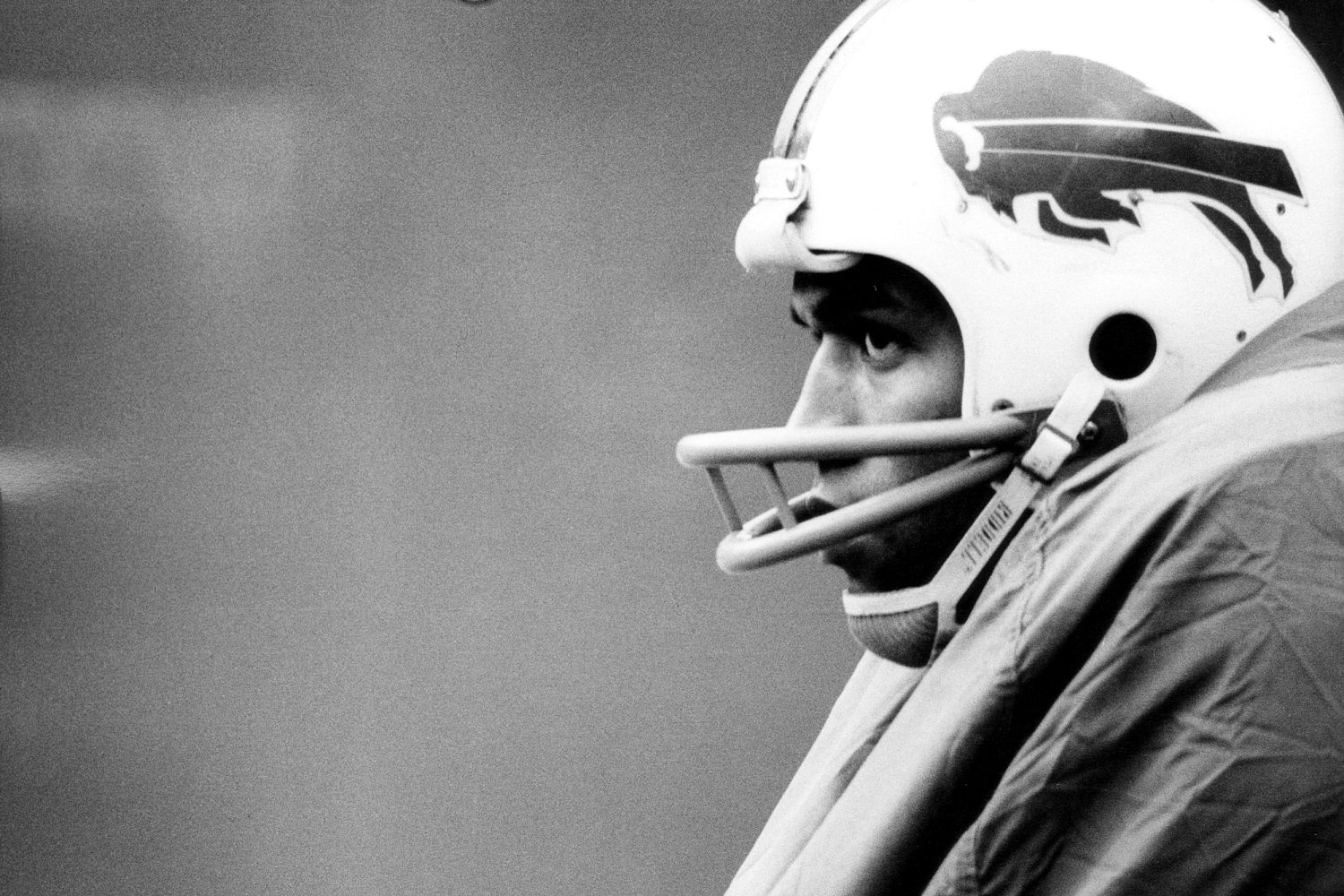
The Buffalo Bills are finally closing the book on their most complicated franchise icon. As the team gears up to move into its brand-new Highmark Stadium, the front office made a quiet but massive declaration. O.J. Simpson will not be honored at the new venue. He won't be on the new Wall of Fame. He won't have a plaque in the "Family Circle" plaza outside the gates.
Honestly, it's about time.
For decades, the Bills handled the Simpson situation by doing essentially nothing. His name stayed bolted to the old stadium walls despite years of fierce public debate, a double-murder trial that captivated the planet, and a subsequent $33.5 million civil court judgment that found him liable for the deaths of Nicole Brown Simpson and Ronald Goldman. The old regime chose inertia. The new regime, led by Bills president of business operations Pete Guelli, chose a clean break.
The team's official stance is simple. They stated that he is just "not a fit" for the new era of Bills football.
The problem with separating the art from the artist
Sports fans love talking about legacy. We look at numbers. We analyze stats. On paper, Simpson's tenure in Buffalo from 1969 to 1977 was legendary. He was the number one overall draft pick out of USC. He won the NFL MVP in 1973 after rushing for 2,003 yards in just 14 regular-season games—a feat that still boggles the mind. He racked up 10,183 rushing yards for the franchise, sitting right behind Thurman Thomas on the all-time list.
He was the very first guy inducted into the team’s Wall of Fame back in 1980.
But you can’t look at a stadium monument in a vacuum. A Wall of Fame isn't a history textbook; it is a permanent marketing tool meant to inspire community pride and corporate sponsorship. Keeping Simpson's name on a gleaming new $1.7 billion facility would mean forcing every fan, employee, and family to confront a dark history every single Sunday.
When Simpson died of cancer in April 2024, neither the Bills nor USC released public statements. The silence was deafening, but it tipped the organization's hand. They were waiting for a natural transition point to fix a decades-old public relations headache.
Building a culture without the baggage
Look at how the team plans to structure the new stadium layout. The Bills are designing a dedicated "Family Circle" plaza right outside the main entrance. It is supposed to be a gathering space celebrating the 31 legends who shaped the franchise.
By omitting Simpson, that number drops to 30.
It is a deliberate structural choice. If you are building a multi-million dollar stadium meant to anchor the community for the next thirty years, you do not start by pouring concrete around a lightning rod. Critics will say the Bills are erasing history. That is nonsense. Simpson's bust is still sitting in the Pro Football Hall of Fame in Canton, Ohio. His 273-yard rushing game against Detroit in 1976 is still in the NFL record books.
History records the facts. Honor is a choice.
Leaving him off the walls isn't about altering the past; it is about choosing who represents your future. The Bills kick off their first regular-season game at the new Highmark Stadium on September 17 against the Detroit Lions. When fans walk through those gates for the first time, they will see names like Jim Kelly, Bruce Smith, and Thurman Thomas. They won't have to look at the number 32.
The franchise is moving forward, and they are finally leaving the baggage in the old parking lot.