We like to think British railways are basically bulletproof. For over two decades, the UK mainline network has boasted a safety record that looked almost impossible to break. Then Friday night happened. Just south of Bedford, the unthinkable cut through the rush-hour quiet. A moving passenger train smashed directly into the back of a stationary one.
When the metal stopped grinding and the smoke cleared, a sixty-year-old rail professional named Shaun Burton was dead in his cab. Eight people are still fighting for their lives in critical condition. Over a hundred others have passed through hospital doors with shattered limbs, deep lacerations, and severe psychological trauma.
This is not just another bad day on the network. It is a structural wake-up call. The collision at Alstone near the Elstow interchange involves the first fatal passenger train-to-train impact on a British mainline this century. If you think our automated signaling and safety blankets made this kind of horror a thing of the past, you are dead wrong. Here is exactly what happened on that stretch of track and why the fallout will alter how we look at rail travel for years.
The Raw Reality of the Alstone Collision
Let us look at the bare facts before we look at the systemic failures. At 5.15pm on Friday, June 19, 2026, the 4.40pm East Midlands Railway service from Corby was heading south toward London St Pancras. Ahead of it on the same line sat the 3.50pm service from Nottingham, also bound for London. It was stationary.
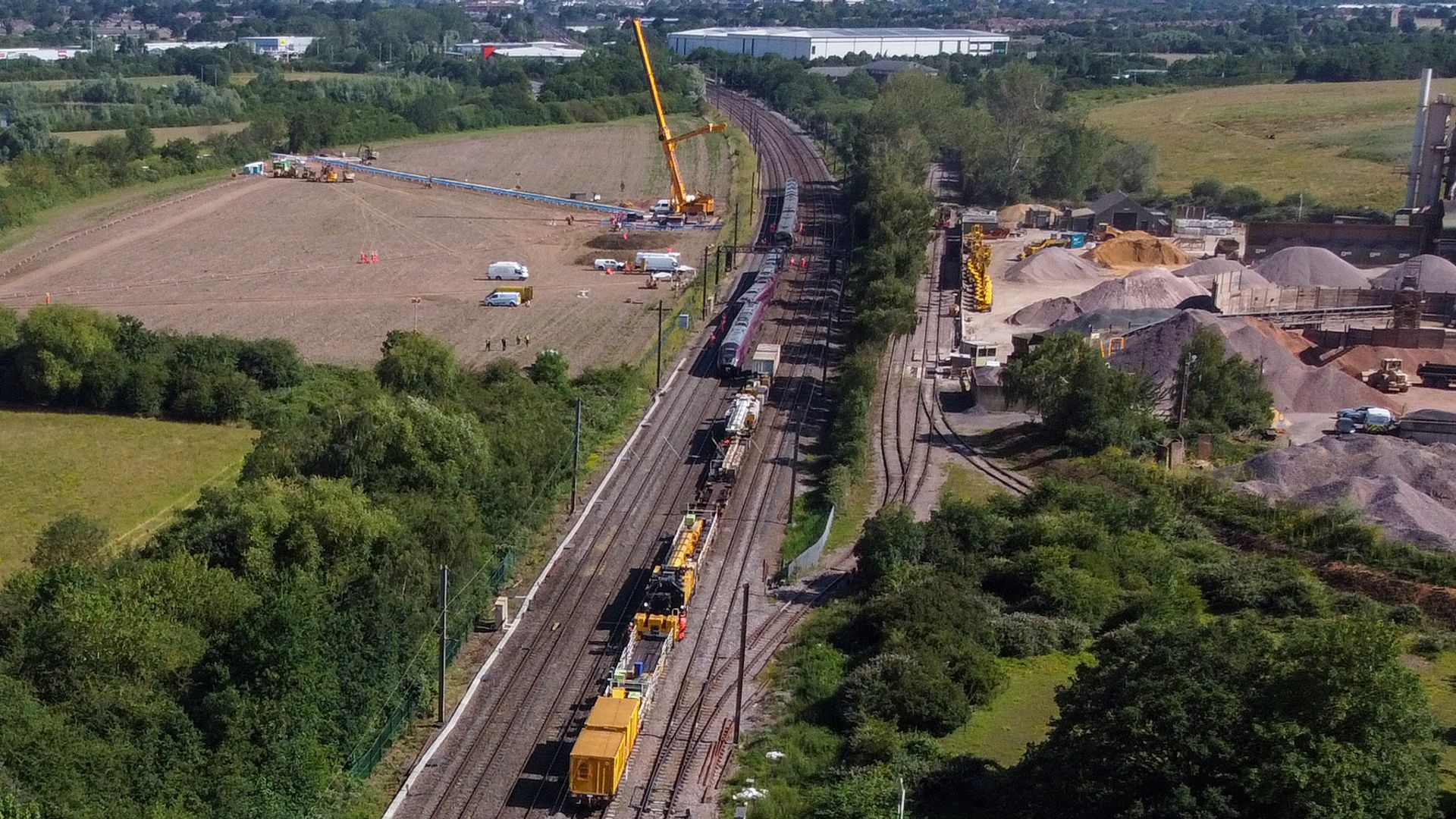
Why was it stopped? We do not fully know yet. What we do know is that the Corby train slammed into the rear of the Nottingham service at speed. The front of the moving train was completely crushed. The impact sent a massive shockwave through both vessels. It shunted rear carriages into forward ones, crumpling the steel frames and transforming ordinary commuter interiors into a chaotic mess of flying glass and metal.
I have talked to people who track rail safety for a living, and they are stunned by the sheer scale of the injuries. This wasn't a minor low-speed bump. The East of England Ambulance Service had to deal with eleven people with very serious injuries right off the bat, while dozens more required urgent hospital transfers. As of Monday, fifty-three people remain stuck in hospital beds.
Carriages Transformed Into Weaponry
If you want to understand why so many people are critically injured, look at how modern train carriages are built inside. Survivors have begun detailing the terrifying seconds inside the cabins, and their stories expose a massive design flaw that regular passengers never consider.
Brett Byatt, a school teacher who managed to survive the crash without injury because he was standing near the doors, described scenes that sound like a war zone. He estimated that ninety percent of the people in his carriage were injured. The layout of the seats turned out to be a massive hazard.
In many East Midlands Railway trains, seats face each other in blocks of two or three, separated by fixed wooden or plastic tables. When the Corby train struck the Nottingham train, passengers in first class were thrown forward with immense velocity. They did not just hit soft seatbacks. They slammed directly into the edges of those fixed tables, causing horrific internal, stomach, and rib injuries.
Worse still, the force of the human bodies flying forward caused the seats themselves to snap backward, crushing the passengers sitting directly behind them. People suffered broken necks, snapped legs, and deep wounds. Dr Peter Knapp, another passenger who escaped the front carriage, said there was no warning. No screeching wheels. No alarms. Just a sudden impact that felt like a bomb going off, leaving the carriage filled with smoke and bloodied faces.
Local residents from Elstow rushed to the fence lines, throwing water and food over to help stranded commuters before the emergency services took full control. All passengers were finally cleared from the site by 11pm, but the physical wreckage is only half the story.
The Ghost of Train Protection Systems
To understand why this crash sends a massive shiver down the spine of every rail engineer in the country, you need a brief history lesson. Britain used to have a terrible reputation for rail disasters. The late 1990s and early 2000s were defined by horrific accidents like Ladbroke Grove and Hatfield, where systemic failures killed dozens.
In response, the industry rolled out the Train Protection and Warning System. This network of track loops and sensors acts as an automated emergency brake. If a train passes a red signal, or if it approaches a junction or stationary block too fast, the system overrides the driver and stops the train dead.
It worked brilliantly. For more than twenty years, train-to-train fatalities on the mainline dropped to zero. We grew comfortable. We assumed that even if a human driver had a medical emergency or lost focus, the computer would step in and save the day.
The Bedford crash completely shatters that illusion.
Investigators from the Rail Accident Investigation Branch are currently on-site south of Bedford trying to figure out a terrifying puzzle. Did the signaling system fail to show a red light to the oncoming Corby train? Did the on-train safety hardware fail to deploy the emergency brakes? Or did environmental factors like oil or rail contamination prevent the brakes from gripping the steel tracks?
We had a warning sign recently. In 2024, a collision in Talerddig, Powys, resulted in a fatality when a train failed to stop on a single-track line. In 2021, two trains collided near Salisbury. Both of those incidents involved low adhesion—basically, the tracks were too slippery for the brakes to function as intended. If the Bedford investigation reveals that a premium mainline service equipped with modern systems can still plow into another train at high speed during a clear June evening, our entire understanding of modern rail safety must be rebuilt.
The High Cost of Cutting Corners on Infrastructure
Network Rail has already warned that the mainline between Bedford and Luton will remain totally closed for the rest of the week. Engineers are forced to cut down overhead electrical wires just to build a temporary access road across the fields so heavy cranes can lift the crushed carriages away.
The train that bore the brunt of the impact was one of the new East Midlands Railway Aurora models, which only entered service last year. These trains are supposed to represent the future of British rail—fast, efficient, and packed with modern technology. Seeing the driver cab of a brand-new fleet completely destroyed tells us that new shiny trains cannot protect human life if the underlying infrastructure or tracking data breaks down.
Transport Secretary Heidi Alexander stood up in the House of Commons on Monday to appeal for patience, telling the public to avoid empty speculation. That is standard political damage control. The reality is that the rail industry is terrified of what the black boxes will reveal. If the automated safeguards failed, then every single mile of upgraded track on the Midland mainline is suddenly under suspicion.
What Needs to Happen Next
We cannot simply treat this as an unfortunate isolated incident and move on. If you are regular commuter on the UK rail network, you deserve actual answers and immediate structural changes. The investigation will take months, but the industry needs to take action right now.
First, the Rail Safety and Standards Board must re-examine the internal geometry of passenger carriages. The fact that fixed tables in first class and standard sections caused severe torso and abdominal injuries shows that our current impact models are outdated. Seats should not snap backward under human weight, and tables must be designed with energy-absorbing crumple zones to avoid impaling passengers during sudden decelerations.
Second, Network Rail needs to audit the real-time tracking systems on the Midland main line immediately. We need absolute certainty that when a train stops on a live line, the system flags it instantly to every approaching vehicle within a five-mile radius, bypassing standard signal block delays if necessary.
The railway family is grieving the loss of Shaun Burton, a man who spent his life working on public transport before achieving his dream of driving trains seven years ago. The best way to honor his memory isn't through solemn political statements in Parliament. It is by pulling apart the safety systems that failed him and fixing them so no other driver goes to work and never comes home.
If you usually travel along this route, cancel any non-essential trips for the next few days. The line is dead, the recovery is messy, and the psychological scars across the network will take a whole lot longer to heal than the tracks.