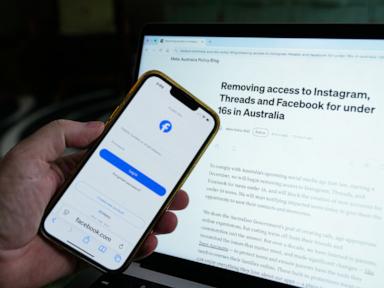
Australia is losing patience with Silicon Valley. Six months after launching a world-first ban on social media for kids under 16, the federal government is watching its landmark policy get completely bypassed by teenagers. The response from Canberra is loud, clear, and exceptionally expensive.
Prime Minister Anthony Albanese announced that Australia will double the maximum financial penalties for tech companies failing to block underage users. Under the new legislation, the ceiling for systemic compliance failures will jump from A$49.5 million to a staggering A$99 million ($68 million USD).
If you think this is just a quick cash grab or political posturing, you're missing the bigger picture. The move signals a major regulatory shift. Governments are realizing that simply asking tech platforms to take "reasonable steps" doesn't work. When left to their own devices, social media giants usually do the absolute bare minimum.
The Six Month Failure That Triggered the Crackdown
When the Online Safety Amendment took effect on December 10, 2025, it was hailed as a revolutionary step for youth mental health. Platforms like Instagram, TikTok, Snapchat, Facebook, X, and YouTube were legally obligated to keep kids under 16 off their applications.
On paper, the tech companies complied. The government notes that more than 5 million underage accounts have been deactivated, blocked, or restricted since the law kicked in. That sounds impressive until you look at how kids actually behave online.
A recent study published in the British Medical Journal tracked 408 adolescents to see how the ban affected them. The results are embarrassing for regulators. Three months into the ban, 85% of Australian kids aged 12 to 15 were still using social media regularly.
How are they doing it? It's not complex hacking. Two-thirds of those underage users stayed online by simply lying about their birth year or uploading a selfie that the platform's weak age-estimation tools flagged as over 16. In many cases, the apps never even asked them to prove their age in the first place.
Minister for Communications Anika Wells didn't hold back when addressing the situation, stating that social media platforms are using tricks straight out of the big tech playbook. They're doing just enough to avoid immediate legal trouble while keeping their highly profitable teenage user base active.
More Than Fines, Closing the Loophole
Doubling the fines makes for great headlines, but the real teeth of this new legislation lie in the updated powers given to Australia’s internet watchdog, the eSafety Commissioner.
Previously, tech platforms could dodge accountability by blaming third-party vendors. If an age-estimation tool failed, the platform could simply point its finger at the software developer and claim they tried their best. That loophole is closing fast.
The upcoming amendments will expand the eSafety Commissioner’s information-gathering powers. Regulator Julie Inman Grant will soon have the legal authority to compel not just the social media platforms, but also third-party age-assurance businesses and app store providers to hand over internal evidence.
Current Maximum Fine: A$49.5 Million
Proposed Maximum Fine: A$99.0 Million
Active Regulatory Targets: Meta (Instagram/Facebook), Google (YouTube), Snap (Snapchat), TikTok
The regulator is actively investigating five major platforms for non-compliance:
- Meta's Facebook
- Meta's Instagram
- Google's YouTube
- Snap's Snapchat
- TikTok
With these expanded powers, tech companies can no longer hide behind proprietary algorithms or vague compliance reports. They have to prove exactly what steps they are taking, and if the data shows millions of 14-year-olds are still scrolling, the A$99 million penalties will start landing.
The Global Ripple Effect
The world is watching Australia's experiment closely. For years, western governments have complained about the impact of algorithms on youth mental health, but few have tried a flat-out ban.
Now that Australia has laid the groundwork, other nations are moving quickly to catch up or even surpass them. The UK government announced its own upcoming social media ban for under-16s, modeled directly on the Australian system. However, the British version plans to go even further by targeting live-streaming apps and communication features inside online gaming platforms.
Not everyone is taking this lying down. Message board giant Reddit is currently challenging the Australian ban in the High Court, aiming to overturn the law on free speech grounds. The Australian government maintains it will aggressively defend the policy in court.
What Happens Next for Platforms and Users
If you run an online platform or manage digital compliance, the days of the simple "Are you 18?" checkbox are officially over. The standard for what constitutes "reasonable steps" has changed dramatically.
To survive this regulatory environment without facing catastrophic fines, platforms need to pivot immediately.
Implement Multi-Layered Age Assurance
Relying entirely on facial age estimation or self-declaration is a fast track to a regulatory audit. Platforms must integrate alternative verification methods, including secure digital ID options and third-party credit checks, ensuring that users have alternative ways to verify without compromising data privacy.
Audit Third-Party Vendors
Because the eSafety Commissioner can now demand data from app stores and verification partners, you need to ensure your vendors are completely transparent. If their error rates are too high, your platform bears the financial responsibility.
Brace for Litigation
The battle lines are drawn. With Reddit taking the fight to the High Court and tech giants facing multi-million dollar fines, expect heavy legal sparring over the definitions of user privacy and corporate responsibility throughout the rest of 2026.