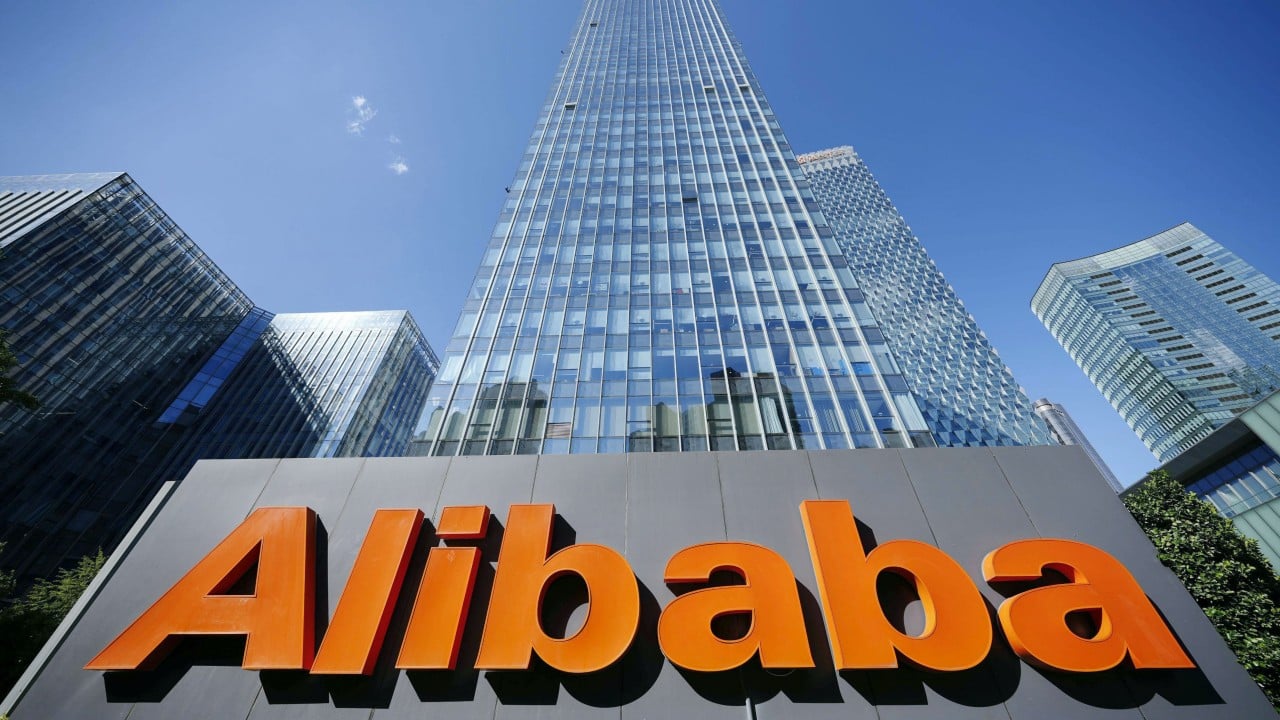
Washington just poked a hornets' nest. When the US Department of Defense updated its Section 1260H blacklist earlier this month, officials probably expected the usual grumbling from Beijing. Instead, they got a massive federal lawsuit from one of the largest e-commerce companies on earth. Alibaba Group Holding Ltd. has officially sued the Pentagon, dragging the US military into a California federal court to demand its name be stripped from a list that labels it a puppet of the People's Liberation Army.
This is not just another minor squabble over trade tariffs. It is a major legal showdown that challenges how Washington uses national security designations to choke out foreign corporate giants. If you think this list is just a harmless piece of paper with no real teeth, you are completely misreading the situation. The stakes are massive for global investors, retail supply chains, and the future of corporate cross-border operations. You might also find this connected article interesting: Why The Spacex Massive Bond Deal Makes Perfect Sense For Elon Musk.
Alibaba filed its lawsuit in San Jose, California, on June 23, 2026. The timing tells you everything. It came just weeks after the Pentagon expanded its registry of "Chinese military companies" to include 188 entities, catching consumer-facing giants like Alibaba, Baidu, and the electric-vehicle titan BYD in its dragnet. Alibaba is fighting mad about it, calling the move arbitrary and capricious. They are right to fight it. Branding a platform that primarily sells consumer goods, cloud storage, and logistics services as a military enterprise is a massive stretch of imagination.
The Corporate Giant Takes On Washington
The legal paperwork filed by Alibaba pulls zero punches. The company argues that its placement on the Section 1260H registry has zero basis in fact or law. It points out that an independent board governs the company, and not a single board member has any military affiliation. As discussed in recent reports by Bloomberg, the results are significant.
Think about what Alibaba actually does. It is essentially the Amazon of China. It handles retail transactions, matches buyers with suppliers, operates cloud infrastructure, and moves packages around the globe. None of these core functions involve manufacturing cruise missiles or designing radar systems. The lawsuit explicitly emphasizes that Alibaba builds products for everyday commerce, logistics, and enterprise IT. It does not deal in weapons, defense systems, or espionage.
The Pentagon insists that Alibaba connects deeply to China's defense industrial base through ties to government entities involved in military-civil fusion programs. Specifically, Washington pointing fingers at Alibaba's interactions with China's Ministry of Industry and Information Technology, or MIIT. In the eyes of US defense hawks, any contact with a Chinese state agency equals active military cooperation.
Alibaba counters that the Pentagon chose to disregard a mountain of contrary evidence. The company claims it handed over documentation showing it has no role in military strategies, yet the Defense Department ignored it completely. By rushing to label the firm, the lawsuit argues, the government violated constitutional due process and infringed upon the company's free speech rights.
Inside the Pentagon Section 1260H Blacklist
To understand why this legal brawl is happening now, you have to understand the mechanism behind Section 1260H itself. This designation originates from the National Defense Authorization Act for Fiscal Year 2021. Congress mandated that the Pentagon keep a running tally of companies operating directly or indirectly in the US that qualify as Chinese military companies.
Initially, the list targeted obvious defense players, like aviation firms and state-owned shipbuilders. But the June 8 expansion modified that entirely. By bumping the list up to 188 entities, the Pentagon shifted its focus from literal arms manufacturers to broad technological and consumer pillars of the Chinese economy.
The immediate misconception is that a Section 1260H designation acts like a Treasury Department sanction. It does not. It will not freeze Alibaba’s US bank accounts tomorrow, nor does it immediately stop Americans from buying items on AliExpress. But the reputational damage is devastating. It acts like a scarlet letter in the financial world.
Furthermore, the legal restrictions build up over time. Under current US regulations, the Pentagon cannot enter into direct business contracts with any listed group. A more severe hammer drops later on. Starting in 2027, the US military will face a total ban on buying products or services from these listed firms through third-party vendors. For a massive cloud provider like Alibaba Cloud, that means getting locked out of a web of indirect corporate and governmental contracts.
The list also feeds into wider legislative crackdowns. Look at what happened with the Biosecure Act passed by Congress last year. It bars the US government from working with specific biotech firms tied to the 1260H list after a five-year grace period. For companies like WuXi AppTec, which also sued the Pentagon over its listing, the designation is an existential threat to their US operations. Alibaba sees the writing on the wall. They know that if they let this label stick, Congress will eventually use it to bar them from the US market entirely.
Why the Military Civil Fusion Claim Fails for E-commerce
Washington's favorite buzzword when discussing Chinese tech is military-civil fusion. It is the idea that Beijing forces private enterprises to hand over all proprietary tech, data, and resources to the military. While that strategy certainly exists on paper within China, applying it blindly to a massive consumer-focused public company misses the operational reality.
Alibaba has millions of public shareholders worldwide and trades on the New York Stock Exchange. If it were secretly retooling its logistics algorithms to guide military supply lines, that would show up somewhere in its massive, publicly audited financial footprint. Instead, the US government relies heavily on classified intelligence memos to make these sweeping declarations.
Reports emerged last year highlighting a declassified White House memo suggesting Alibaba supported military operations against US targets. Alibaba denied those claims flatly. The problem with relying on classified intelligence for a public blacklist is that the accused company cannot defend itself against ghosts. You cannot disprove a secret document you are not allowed to read.
If the US government can label a retail giant a military threat because of vague regulatory cooperation with a ministry, then almost any global firm could face the same fate. Amazon provides massive cloud architecture to the US intelligence community and the Pentagon. Yet, no foreign government would rationally label Amazon an active branch of the US military. The Pentagon is playing a dangerous game of regulatory overreach here, and Alibaba is calling their bluff.
What Happens When a Foreign Firm Fights Back in Federal Court
Can a Chinese company actually beat the Pentagon in an American courtroom? History says yes. This is not unmapped territory.
A few years ago, the smartphone manufacturer Xiaomi found itself in the exact same position. The Pentagon slapped it with a military designation, and Xiaomi immediately sued. The federal courts sided with the smartphone maker, ruling that the US government lacked substantial evidence to back up its claims. The court blocked the designation, forcing the Pentagon to remove Xiaomi from the list entirely.
Alibaba is using that exact blueprint. By retaining top-tier legal representation through the law firm Sidley Austin, they are signaling a long, expensive war of attrition in court. They are betting that judges will demand hard evidence from the Pentagon rather than political rhetoric. If the Defense Department cannot produce specific, unclassified proof that Alibaba is actively building military capabilities, the court will likely toss the designation out.
The broader geopolitical fallout is already landing. Beijing does not just watch these lawsuits from the sidelines. Just days before Alibaba filed its suit, China’s Ministry of Commerce retaliated. They imposed strict commercial restrictions on 10 US entities, including Aveox Inc., hitting back directly at companies tied to the defense industrial base and rare earths sectors. The tit-for-tat escalation turns private corporate legal battles into proxy wars between Washington and Beijing.
The Real Impact for NYSE Investors and Global Tech Supply Chains
If you hold Alibaba stock or trade in global tech, you need to watch this case like a hawk. The biggest threat to Alibaba right now isn't the Pentagon procurement ban. It is the cascading effect on US state-level investment funds.
In its court filing, Alibaba spelled out this hidden danger clearly. Dozens of US states have passed laws that mandate state pension systems and public universities to divest from any company flagged by the federal government as having ties to the Chinese military. If the federal 1260H designation stands, it sets off a domino effect across the country.
Millions of shares could be dumped automatically by state pension funds, cratering the stock price and harming ordinary retail investors. There is also a vocal faction in Congress pushing to delist every single 1260H company from the New York Stock Exchange entirely. Alibaba is fighting this lawsuit to protect its very access to Western capital markets.
Actionable Steps for Corporate Leaders Navigating Washington Policy
The Alibaba lawsuit changes the playbook for any international firm operating in the crosshairs of US-China tensions. If your business relies on cross-border supply chains or international digital infrastructure, you cannot afford to sit back and hope for the best.
First, audit your public and regulatory touchpoints with foreign state entities. The Pentagon used Alibaba’s interactions with the MIIT as the core justification for its blacklist. Look closely at your own compliance records, joint research projects, and government advisory panels. If you interact with state-backed industrial groups, document the civilian nature of those meetings obsessively.
Second, build an explicit compliance firewall between commercial products and any dual-use technologies. If your enterprise software, cloud services, or logistics tools could theoretically be repurposed for defense applications, clearly state your end-user restrictions in public terms of service.
Finally, do not wait for a formal designation to build your legal and public relations defense. Alibaba had already provided evidence to the Pentagon before the June update dropped. Have an emergency response plan ready that includes top-tier Washington legal counsel and a clear public messaging strategy. When the government moves fast, your legal team must move faster.
The era of assuming commercial tech remains insulated from geopolitical warfare is dead. Alibaba is taking a stand in federal court because the alternative is a slow, regulatory chokehold that destroys its global business. Watch the San Jose court docket closely over the coming months. The outcome will redefine the boundaries of national security overreach for the next decade.
To stay ahead of these regulatory updates, review the published Federal Register notices for Section 1260H additions and consult with international trade counsel to review your current portfolio exposure.